



AI agents have roots in the 1950s, with early embodied examples appearing in the late 1960s. Agent theory became more formal in the 1990s, while the LLM agents associated with today’s generative AI developed in the 2020s. The starting date depends on whether you mean the idea, a working autonomous system, or the modern language-model implementation. IBM’s account of agent evolution and its history of artificial intelligence support this layered history.
An AI agent is a system that can pursue tasks autonomously, make decisions, and interact with an external environment using available tools. IBM’s definition emphasizes the ability to design workflows, solve problems, and act. That definition connects the history of physical robots with today’s software agents: both involve deciding what to do and carrying out actions.
A timeline of AI agent development
| Period | Milestone | What it establishes |
|---|---|---|
| 1950s–1960s | Turing’s work on machine intelligence and Wiener’s cybernetics | Theoretical foundations for thinking about intelligent machines |
| Late 1960s–1980s | Early embodied systems, including Shakey the Robot | Practical integration of perception, planning, and physical action |
| 1990s–2000s | Formal agent theory, including Belief-Desire-Intention architecture and multi-agent systems | Structured approaches to autonomous, goal-directed behavior |
| 2020s | LLM-driven agents | Language models used within systems that support tools, memory, and multi-step planning |
These periods organize overlapping developments rather than identify a single invention. They also distinguish the development of an idea from the engineering needed to make it operate in an environment.
The theoretical foundations: 1950s–1960s
Alan Turing’s 1950 paper on machine intelligence and Norbert Wiener’s work in cybernetics helped establish the intellectual foundations of AI agents. IBM’s historical accounts connect these strands to the emergence of systems capable of intelligent behavior.
Their place in this history is foundational. A theory of machine intelligence is different from a deployed agent that perceives its surroundings, chooses an action, and executes it. Using the 1950s as the origin therefore answers when the underlying ideas began to take shape; it does not imply that modern tool-using agents already existed then.
Early embodied agents: late 1960s–1980s
Shakey the Robot provides a concrete early example. Developed in the late 1960s, it was among the first embodied AI systems to combine locomotion, perception, and problem-solving, according to IBM’s history of AI.
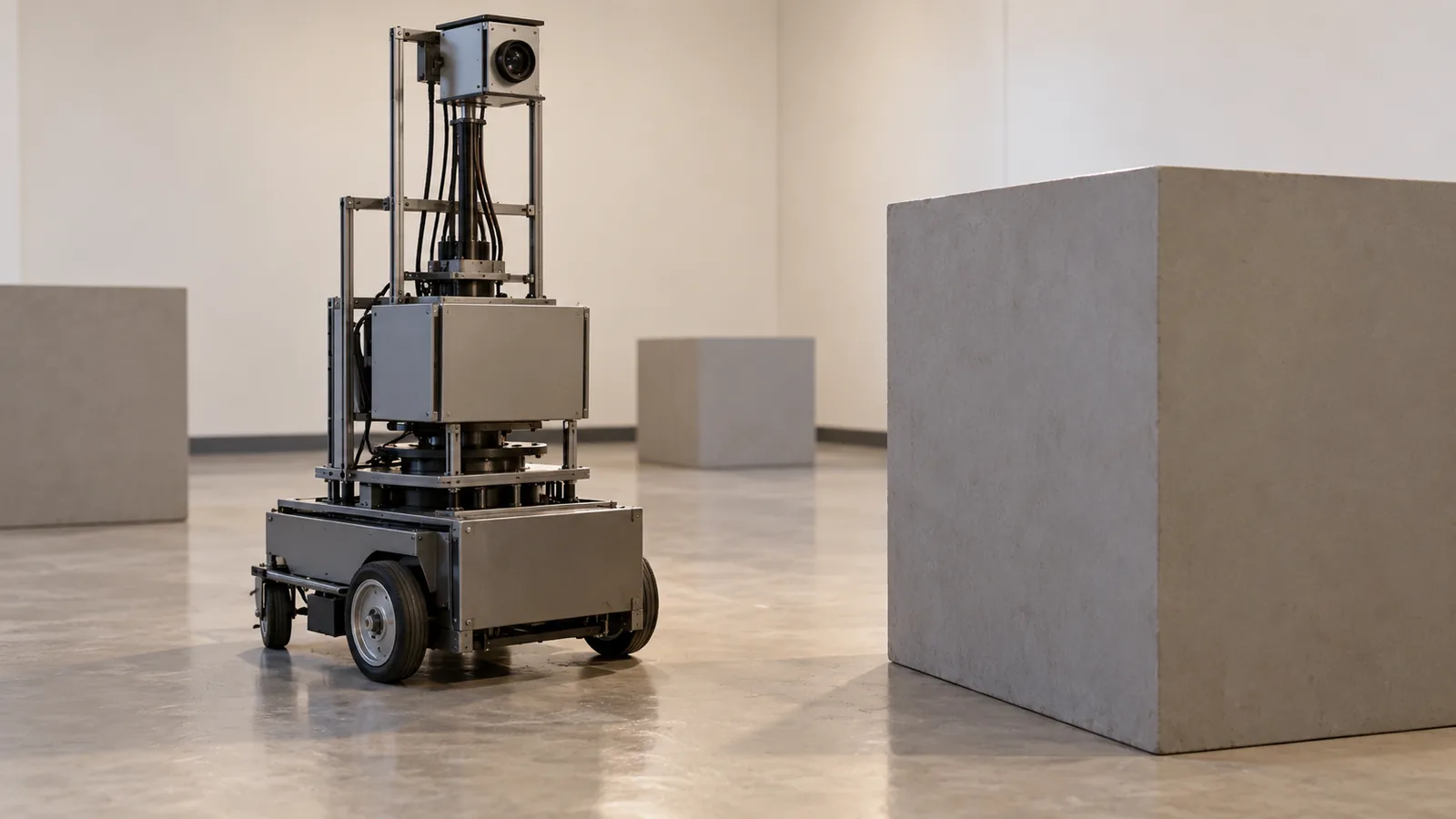
Shakey brought perception, planning, and action into one physical system. Perception supplied information about the environment, planning addressed what to do, and locomotion allowed the robot to act. Its importance to agent history lies in that integration: intelligence was connected to activity outside the system itself.
This makes the late 1960s a useful answer for readers asking when practical, embodied AI agents appeared. It is a more specific milestone than the earlier philosophical foundations, though it should not be treated as the origin of every form of agent.
Formal agent theory: 1990s–2000s
In the 1990s, Belief-Desire-Intention, or BDI, architecture helped formalize agent theory and support structured reasoning in multi-agent systems. IBM’s account also associates this period with the adoption of multi-agent frameworks and a transition toward autonomous, goal-directed agents.
Here, the milestone is a framework for organizing behavior. The focus extends beyond demonstrating that a machine can act: agent architectures make structured reasoning and the organization of multiple agents explicit parts of system design.
The 1990s therefore matter when the question concerns intelligent agents as a formal technical approach. They sit between the earlier physical demonstrations and the later use of language models as part of an agent’s decision-making system.
LLM-driven agents: 2020s onward
Large language models such as GPT-3 and GPT-4 expanded the flexibility of AI agents. IBM’s evolution and history accounts describe systems capable of tool use, multi-step planning, and memory-supported task execution.
The distinction between a model and the surrounding agent system matters. A model contributes language and reasoning capabilities; tools, memory, and orchestration make those capabilities usable across a task. Long-term memory is part of the system architecture, rather than something that should be assumed from the presence of an LLM alone.
An illustrative task sequence is to use a tool, retain useful task context, and use that context when planning a subsequent step. This shows how the supplied capabilities fit together without implying a particular product implementation. The practical architecture that supports such a sequence is the subject of the next section.
Building reliable AI agents
The harness around the model
An AI harness is the surrounding infrastructure that turns a raw model into a functional agent. NineTwoThree’s explanation identifies prompts, tools, memory, orchestration, evaluation, and guardrails as its components. Orchestration sequences steps and manages retries, fallbacks, and, where used, sub-agents.
The following schematic shows those components together. It is a component map, not a specification of execution order.
AI harness
┌──────────────────────────────────────────┐
│ Model guided by prompts                  │
│                                          │
│ Tools             Memory                 │
│ Orchestration     Guardrails             │
│ Evaluation                               │
└──────────────────────────────────────────┘
Diagram description: An AI harness surrounds a model guided by prompts with tools, memory, orchestration, guardrails, and evaluation. The diagram groups the supporting components without prescribing connections between them.
For a production-oriented design, Andrii Furmanets’s architecture guidance recommends explicit state machines, deterministic state transitions, and robust tool contracts. These are useful design recommendations rather than a guarantee of reliability.
That guidance also describes memory in layers: working memory, summaries, and long-term preferences. The distinction gives task context and information retained over time separate roles, rather than treating all memory as one undifferentiated store.
Guardrails and evaluation
Datadog’s discussion of guardrail placement identifies policy-as-code and prompt-injection defenses as ways to reduce production risks. Guardrails need to be considered as part of the agent architecture, alongside the mechanisms that let it take action.
Evaluation addresses a different question: whether the agent’s sequence of decisions produces the intended outcome. Furmanets recommends testing full trajectories, including tool choice and results. Assessing only the final response leaves those intermediate decisions outside the evaluation.
Taken together, these recommendations provide a practical harness example: orchestration manages the sequence of steps, explicit state transitions structure execution, tool contracts govern interactions, guardrails constrain behavior, and evaluation examines the resulting trajectory. This is an architectural synthesis, not a verified implementation or a claim that failures are eliminated.
Implementation checklist
Use this checklist to review an agent design against the supplied architecture guidance:
- [ ] Identify the prompts, tools, memory, and orchestration that surround the model.
- [ ] Make workflow states and deterministic transitions explicit.
- [ ] Define robust contracts for the tools the agent uses.
- [ ] Distinguish working memory, summaries, and long-term preferences where those layers are needed.
- [ ] Specify how orchestration handles retries and fallbacks.
- [ ] Include guardrails such as policy-as-code and prompt-injection defenses.
- [ ] Evaluate complete task trajectories, including tool selection and outcomes.
The implementation question is whether these components work together over a complete task. A capable model is one part of that assessment; the behavior of the surrounding system determines how its decisions become actions.
Explore more AI Agents coverage.