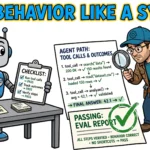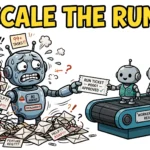



Coinbase’s Autopilot puts a different part of AI customer support under automation: the work of maintaining and testing the procedures that support bots follow. In its engineering account, Coinbase describes a pipeline that uses agents to write, test, probe, score and analyze those procedures, with human involvement when changes are written. The significance is a shift toward treating conversational support as software that needs repeatable validation, rather than a collection of prompts that pass a manual spot check. (Coinbase)
That distinction matters when assessing what Autopilot demonstrates. Coinbase describes customer-facing bots that inspect account information, perform limited actions and hand cases to people when greater judgment is required. Autopilot is the quality system around those bots. Its architecture offers a concrete account of how a company proposes to keep automated support reliable as procedures, models and third-party systems change. It does not, in the supplied evidence, establish a measured improvement in customer outcomes.
The maintenance problem behind automated support
The broader appeal of AI support is familiar. DevRev describes round-the-clock responses, ticket triage and self-service as ways to extend availability while leaving more difficult interactions to people. Giva similarly presents automation as a means of handling repetitive requests and helping human agents respond to complex cases. These are vendor descriptions of potential benefits, rather than evidence of Coinbase’s results. (DevRev, Giva)
Coinbase’s account focuses on what happens after support automation exists. Its bots follow versioned procedures: internal decision trees that specify data retrieval, branching conditions and possible end states. Examples include checking a transfer, explaining an account hold and addressing an account restriction.
Several moving parts can alter the outcome. Editing a procedure changes what a bot may say or do. Changes to tools and data interfaces affect the information it can access. A model update can change how instructions are interpreted. Coinbase also says its own chatbot and third-party bots can behave differently while using the same underlying procedure. (Coinbase)
This makes correctness a continuing maintenance task. A procedure that worked under one combination of model, tools and runtime needs a basis for comparison when those components change. That is the operational problem Autopilot addresses.
From manual conversations to repeatable tests
Coinbase describes its earlier validation process as an engineer or conversation designer opening a chat widget, signing in as a test customer and manually trying a normal interaction, sometimes alongside adversarial prompts. The company says one procedure’s user acceptance testing cycle could require days of preparation, conversation testing and result collection.
Autopilot brings that work into a standardized pipeline with test fixtures, release checks and human involvement in writes. Fixtures supply controlled test conditions; release checks provide a point at which proposed changes can be evaluated before shipping. The stated aim is to identify failing flows and demonstrate that fixes work before release. These are descriptions of the system’s design and purpose, not independently verified performance findings. (Coinbase)
A central architectural choice is the division between agents and deterministic services. Coinbase assigns agents work that benefits from language interpretation and exploration, including investigating unusual customer behavior and malicious attempts. Repeatable services provide the test harness needed to compare procedures across bots and over time.
The analytical lesson is about assigning responsibility. Exploratory testing can search for failures, while controlled execution gives teams a consistent basis for assessing them. The usefulness of either depends on the other: discovering an unusual failure is more actionable when the conditions and expected behavior are explicit.
Shared contracts make comparisons possible
Coinbase says its procedures use a constrained domain-specific language, a structured format for expressing steps, branches, lookups and outcomes. This makes the procedure an executable playbook for the support system rather than customer-facing prose.
Its procedure and test contracts specify five elements:
- The customer utterance or scenario.
- The mock account or system state required for the test.
- The expected behavior or final outcome.
- The bot being tested.
- The aspect of behavior being evaluated.
According to Coinbase, that shared structure allows one test plan to run against both its own bot and partner bots with consistent inputs and grading. (Coinbase)
For a support organization, the implication is that choosing a model or bot does not settle the evaluation question. A comparison also needs agreement on the customer problem, the information available and the expected result. Autopilot’s documented approach makes those conditions part of the testing contract.
It also places requirements on implementation. Teams adopting this approach would need to express their procedures and expected outcomes in a shared structure. The design therefore entails more than adding an agent to an existing chat interface; its repeatability rests on standardizing the work being tested.
Prioritizing customer goals across channels
Coinbase also describes a common classification of customer intent across its Help Center, chat and voice channels. Intent means what the customer is trying to accomplish. The company separates that from the procedure executed and the product area responsible for reducing the need for support.
Those distinctions serve different purposes. Intent routes a conversation to a procedure and lets Coinbase compare bots handling the same customer goal. Procedure labels record what the system ran. Product themes identify responsibility for the underlying source of contacts.
Coinbase says it prioritizes flows using intent volume alongside resolution and customer satisfaction, or CSAT, so heavily used intents with weaker outcomes receive attention first. (Coinbase)
This connects quality work to a specific customer need. The editorial implication is that maintaining automation involves deciding where failures matter, as well as testing whether a proposed change behaves correctly. A shared intent classification provides the link between those decisions.
Human judgment and the limits of the evidence
Human involvement appears at two levels in Coinbase’s description: customer-facing bots escalate cases requiring greater judgment, and Autopilot retains people in the procedure-writing loop. The company explicitly frames Autopilot as reducing manual maintenance effort while preserving judgment.
That boundary is relevant to the wider implementation risks. Customer-service vendor Chatarmin identifies difficulty with complex inquiries, disconnected workflows, missing integrations and data silos as obstacles to effective AI support. Its account concerns the broader market and does not establish that Coinbase experiences those specific problems. (Chatarmin)
The available Coinbase excerpt gives meaningful architectural detail, but no quantified post-deployment reduction in testing time, improvement in resolution or CSAT, or savings in support costs. It also does not specify the human review criteria for writes or the thresholds used to pass release checks. The description of manual testing taking days is therefore a baseline account, not a demonstrated before-and-after result.
Autopilot’s strongest supported contribution is a concrete model for maintaining agentic support: structured procedures, shared tests, comparable execution and human judgment at consequential points. Whether that model delivers better customer service remains a question for outcome evidence beyond the supplied account.