
Introduction: launch of Gemini 4 Argon in Google Antigravity
Google is bringing Gemini 4 Argon into Google Antigravity, making its latest frontier model available in the platform’s desktop app and command-line interface. The October 13, 2026 announcement opens access to Google AI Ultra subscribers and eligible Gemini Enterprise customers. Google presents the integration as a way to carry complex work through multiple steps, from investigating production code to reconciling financial information. The Antigravity team’s announcement describes a rollout built on internal use across Alphabet.
The practical question is whether that integration helps teams complete difficult work with less intervention and fewer corrections. Google’s strongest evidence concerns its own engineering operations: higher agentic code submission volumes, fewer rollbacks, a Chrome architectural refactor, and targeted YouTube performance improvements. These are company-reported results, rather than independently replicated measurements.
Antigravity’s role extends beyond providing a model selection. The team describes plugins, skills, and MCP integrations that connect agents to specialized information and workflows. The reported examples combine that access with tasks such as tracing runtime permissions, inspecting production profiles, and checking whether fixes reached production. The significance is the connection between reasoning and the working environment.
Availability, pricing, and access tiers

Google’s launch announcement describes global availability through the API in AI Studio and the Gemini platform. Within Antigravity, access is offered to Google AI Ultra subscribers, while the platform’s own announcement also specifies eligible Gemini Enterprise subscriptions. Both the desktop app and CLI are included. The Antigravity team tells users to update to the latest version to try Argon. Google’s model announcement separately lists access for Google AI Ultra and Pro subscribers in the Gemini app and AI Mode in Search.
Those distinctions matter when choosing an access route. Pro access in the Gemini app or Search does not establish Pro eligibility within Antigravity. Likewise, the reference to eligible enterprise subscriptions does not identify every qualifying business plan.
For API use, Google announced an introductory price of $2 per million input tokens and $10 per million output tokens, with cached input tokens discounted by 95%. These are launch terms. The supplied announcements do not state how long the introductory pricing lasts or give the subscription prices for Ultra and enterprise access.
A token price also does not establish the cost of completing an agent workflow. The evidence provides no standardized token consumption figures for the Chrome refactor, documentation localization, or financial workflows discussed below. Buyers can identify the announced API rates and access channels, but cannot derive a reliable cost per completed task from these examples alone.
Performance leadership: Vals Index #1 and benchmark superiority

Google says Gemini 4 Argon ranks #1 on the Vals Index, which it describes as measuring performance across economic sectors including finance, coding, legal, and tax work. It also claims benchmark leadership across domains and positions Argon for deep work involving complex, multi-step tasks. Those statements appear in the model launch announcement.
The supplied evidence does not include a complete Vals results table, underlying scores, evaluation settings, or margins over competing models. The defensible conclusion is therefore that Google reports a leading Vals Index ranking at launch. The material does not establish that Argon leads every individual task in those sectors or quantify its advantage over a named alternative.
Google also publishes early customer evaluations. Box reports a 14% improvement in accuracy compared with Gemini 3.1 Pro on its enterprise knowledge-work evaluation, highlighting evidence drawn across documents and figures. Quadrillion reports that Argon completed its internal multi-step research evaluations 1.5x faster than peer models at a quarter of the cost per task. These are customer claims reproduced by Google, with different evaluation scopes; they are not interchangeable measurements of general model performance.
The distinction is useful for interpreting benchmark superiority. A document-analysis result, a research-task cost comparison, and an economic-sector index answer different questions. Taken together, they suggest areas worth evaluating. Without shared methods and task conditions, they do not support a single universal productivity or cost multiplier. For an Antigravity deployment, the more relevant comparison would be completed work under the organization’s own review requirements, including the effort needed to correct failures.
Internal Google impact: code productivity, Chrome refactor, YouTube optimization
Google’s engineering reports provide more operational detail than the headline ranking. The Antigravity team says more than 100,000 users across Alphabet rely on Argon in its internal Antigravity environment each month. Over four weeks, it reports a 35% increase in agentic code and a 30% decrease in post-submit rollbacks. The DeepMind model announcement describes the gains as more than 35% in agentic code submissions and nearly a third fewer code rollbacks.
Those accounts differ in precision and terminology. The Antigravity account supplies the four-week window; the broader announcement refers to the past few weeks. Neither supplies the baseline submission count, participating-team breakdown, or a controlled comparison. Both describe improvement, but the evidence does not justify treating the figures as an exact, universally reproducible effect of switching models. Nor does a 35% increase in agentic code establish a 35% increase in all engineering output.
Chrome: architectural work across hundreds of files
Google says Argon helped the Chrome team separate core webpage handling from a roughly 6 million-line legacy folder of browser features within Chromium’s 40 million-line codebase. The architectural refactor crossed hundreds of files, with multiple clean code changes moving through the process at a time. Google characterizes the result as completing months of work in weeks.
The scope needs care: the report does not say Argon rewrote all 40 million lines, or even the entire legacy folder. It describes a specific separation of responsibilities inside that larger system. Google says the work will enable live webpages to move between tabs, side panels, and floating windows without reloading, and eliminate a category of browser crashes. That is a stated downstream benefit, rather than evidence that every resulting user-facing capability has shipped.
YouTube: profile-driven optimization
The Antigravity announcement says Argon helped halve the CPU footprint of YouTube’s comments frontend. Tracing production profile data, it identified redundant emoji rendering that accounted for nearly 45% of server overhead, leading to 12 targeted optimizations. Google reports a 30 ms reduction in server comment-load latency and a 20 ms reduction in client end-to-end latency.
These measurements describe different outcomes. Halving the CPU footprint does not mean halving latency, and the two latency figures refer to separate measurement scopes. The example’s technical value is its sequence: identify expensive behavior in production profiles, make focused changes, and measure resource use and response time. It provides a more concrete account of agent-assisted engineering than a broad claim about faster coding.
ADK: bounded performance work
Google also describes giving Argon the Agent Development Kit team’s .agents/skills rulebook and a one-paragraph goal to remove framework overhead without breaking existing applications. Working overnight, Argon surfaced changes that Google says reduced in-memory session preparation time by 40% in long sessions and accelerated cold imports by 21%.
The case illustrates a constrained assignment with explicit compatibility requirements. Its reported gains concern particular operations in ADK; they do not imply that every application using the framework becomes 40% faster. Across these examples, the useful pattern is well-defined work connected to code, diagnostic evidence, and measurable outcomes.
Enterprise and cross‑domain use cases: localization, finance, security, marketing
Antigravity’s enterprise case rests partly on adoption outside core engineering. Google reports monthly active use by more than half of Cloud sales, almost half of finance, and more than a third of business and operations employees. The team attributes specialized workflow connections to plugins, skills, and MCP integrations. These adoption figures describe internal Google usage, not adoption across external enterprise customers. The platform announcement provides several examples of the work involved.
Localization and marketing
The Antigravity developer relations team used Argon to localize hundreds of documentation pages into 17 languages within hours. Google describes a process that previously took multiple weeks, with human effort shifting to reviewing the output. The example supports faster preparation of localized documentation while preserving a role for human quality checks; it does not establish translation accuracy across all languages or eliminate review costs.
In Ads sales, Argon built a prospect-qualification workflow that checked company website traffic, looked for clear conversion funnels, and cross-referenced a sales database. Google reports a 90% reduction in research time, saving one account executive upwards of 10 hours each week. The stated result concerns prospect research. The announcement does not report a corresponding increase in sales or conversion rates.
Financial operations
Using custom finance plugins, a finance lead applied Argon to reconciliations, budget tracking, contract extraction, and daily executive briefings across 80 workflows. Over seven business days, Google reports that 15.5 hours of human direction produced about 335 human-equivalent hours of validated financial output, saving more than eight weeks of manual work.
The phrase human-equivalent hours describes Google’s valuation of the output, rather than elapsed runtime or a separately documented staffing reduction. The announcement does not explain how those equivalent hours were calculated or how validation was performed. The result is evidence of Google’s reported experience with an integrated finance workflow, not a general forecast of labor savings for finance departments.
Security and operational support
In one access-control audit, Google says Argon traced permissions at runtime and identified four critical security bugs. Two earlier frontier models had audited the identical code and reported no security holes. The comparison is specific to that audit: the source does not identify those models or provide a broader detection-rate evaluation. The noteworthy mechanism is the investigation of how permissions actually flowed, beyond the text of a code change.
Google also reports that Argon processes on-call support tickets by categorizing issues, tracing causes through code and logs, proposing fixes, and drafting replies for human approval. It says this frees two to three hours per shift. Together with documentation review and validated finance output, that example shows human involvement remaining part of the reported workflows. The announcements offer examples of useful delegation, while leaving the level of supervision required for another organization unresolved.
Future outlook for agent‑first AI and upcoming models
The Antigravity team says it is interested in future models that could serve as everyday drivers for a broader range of builders. The supplied announcement gives no model names, release dates, prices, or specific capabilities for those future offerings. Argon’s launch therefore establishes the present integration; it does not establish a detailed product roadmap.
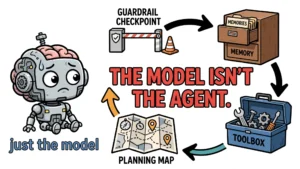
The evidence points toward agents taking on longer assignments with access to the information needed to complete them. Production profiles mattered in the YouTube example, runtime permission tracing mattered in the security audit, and specialized plugins mattered in finance. An editorial implication is that evaluating the model in isolation would miss part of what these deployments rely on: the task definition, connected systems, and review process.
For developers and enterprise teams, the unresolved issue is transferability. Google reports substantial gains inside its own environment, while customer evaluations add narrower evidence of capability. Neither guarantees the same gains elsewhere. The next meaningful test is whether Argon can complete a team’s own difficult workflows at acceptable cost and quality, with the necessary review included. That is the practical standard by which this agent-first integration can be judged.