


Output format is unaligned.
Pop star Grimes is set to star in an AI-generated film heading to US cinemas on December 4, 2026. Gods Don’t Give Gifts, a sci-fi anthology from AI studio Fable, has cast Grimes as Zayinth Alda, a disaffected aristocrat in a future where bodies are disposable and consciousness can be bought and sold. She will lend both her likeness and her real vocal performance to the production, which its makers bill as the first fully AI-generated feature to reach a US theatrical release.
The casting, announced on November 5, 2026, turns an already closely watched experiment into a genuine test case: can a film made largely with generative AI, fronted by a real pop star, actually work in theatres?
Grimes joins Gods Don’t Give Gifts
Grimes will make her feature-film debut in Gods Don’t Give Gifts, playing Zayinth Alda, a disaffected NiiroCore aristocrat and the niece of Caen Halvorith, the inventor of the Substrate Migration Protocol. The character was created specifically for her.
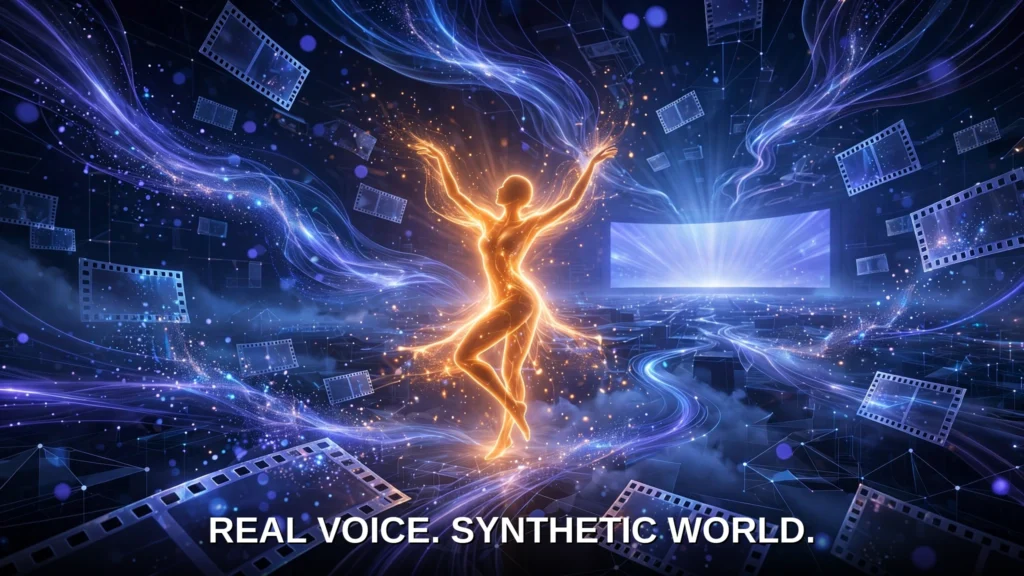
What Grimes is contributing matters as much as the fact that she signed on. She is lending her likeness and her vocal performance to the film, and according to the filmmakers, her vocal performance is not AI-generated. Her real voice will be heard in the film; generative AI produces the visuals around it.
The film opens in US cinemas on December 4, 2026, in a limited release of fewer than 1,000 screens. It is being self-distributed in the US, and its release was moved from October 30 to December 4 to sit closer to awards season. The film runs 107 minutes and carries an R rating from the MPA, which Futurism reported makes it the first fully AI-generated feature with an official MPA rating.
What the AI-generated film is
Gods Don’t Give Gifts is an anthology of four interconnected short films, created by AI studio Fable and directed by Gossip Goblin — Zack London, as GamesBeat and NME give the name. London co-wrote the film with Jacob Batchelor.
The film is set on the fictional world of Niiro Cradle, where bodies are disposable and consciousness has been commoditised. Its four stories follow what happens when they collide with the horrifying consequences of humanity’s attempt to transcend the flesh — a future in which transhumanism has accelerated to the point that humanity looks very different.
Fable, the AI storytelling company behind the production, is led by chief executive Edward Saatchi. The studio is submitting the film for Best Animated Feature at the Academy Awards, and for BAFTA and Golden Globe consideration. Influencer Mike Majlak is also joining the cast.
How the AI filmmaking works
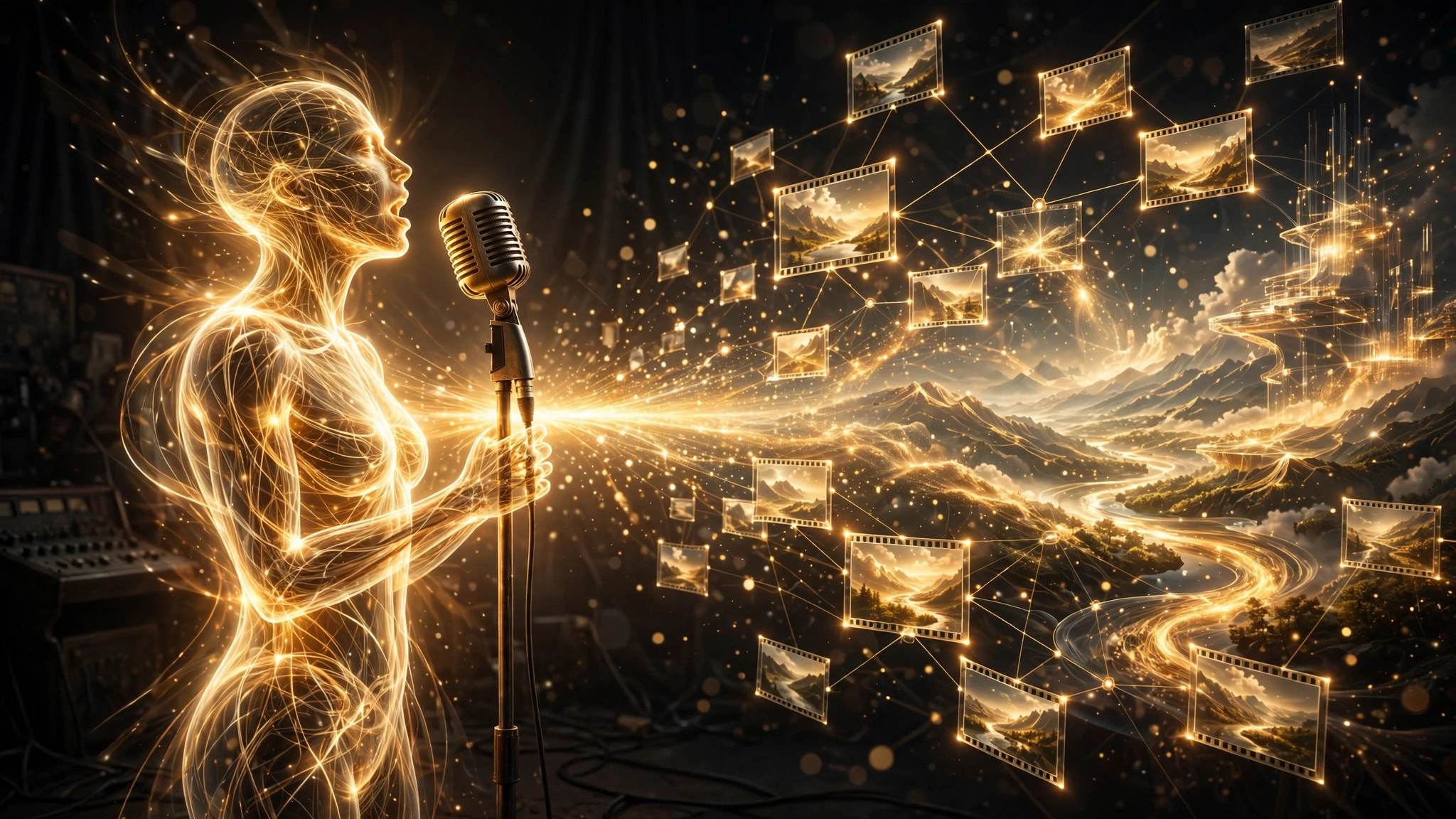
The production uses generative AI to create characters, environments and visual sequences. But the film is not machine-made from end to end: human contributors remain responsible for the screenplay, direction, performances, sound and editing.
That division of labour is the point Fable wants to make. In a press release quoted by The Verge, the studio claimed that “casting the likeness of an actor with their spoken vocal performance will become more common with animated films using AI: audiences will see actors, athletes, musicians giving vocal performances with their likeness in films.”
The model, in other words, is not replacing the actor. A real performer records a real performance, and generative AI builds the visual world — and the performer’s on-screen appearance — around it. Grimes is a high-profile test of whether audiences and the industry accept that arrangement.
Much remains undisclosed. The production has not said which generative tools were used, or what share of the finished visuals is AI-generated versus human-directed. The film’s credits, when they are published, are expected to clarify how the work was divided.
Why Grimes’s casting matters
The casting could give the project some legitimacy. An AI-generated film from a YouTuber and an AI studio arrives in cinemas carrying the name of a pop star with a genuine, long-standing relationship with the technology.
Grimes has been one of pop music’s most visible AI experimenters. In 2023 she allowed musicians to freely use an AI clone of her voice, splitting royalties with her team fifty-fifty, and she later made more than 200 AI records available for content creators to use for free. She has said she believes AI is sentient — and she has also warned, in stark terms, that it is extremely dangerous, calling it “the most dangerous thing that is ever going to happen.”
Her next album, Psy Opera, sits at the centre of that tension. Due on January 22, 2027, it is her first album in more than six years, since Miss Anthropocene in 2020, and its first single, “Accelerando,” arrived on October 9, 2026. She has said the album is AI-themed but was not made with generative AI — with one exception she has flagged herself, a track whose lyrics were written by the Chinese AI model DeepSeek. She has also described the record in different terms at different times, telling one interviewer it is about “psyops” and “the future of the human mind… not AI mostly.” The two framings sit in tension: press coverage calls the album AI-themed, while she has also said it is not mostly about AI.
That stance is exactly what the film needs. Director Gossip Goblin — Zack London, as GamesBeat gives the name — said in a statement: “So excited to have Grimes board the film — we created the character of Zayinth Alda for her and we can’t wait for audiences to see her performance.” The character was built around her, not the other way round.
A test case for AI films in theatres
The film’s makers bill it as the first fully AI-generated feature to get a US theatrical release. That claim needs its qualifier. As the makers present it, it is the first in the United States — but not the first anywhere.
Post Truth, a fully AI-generated feature documentary by Alkan Avcioglu, received a commercial theatrical release in Turkey in July 2025, opening on July 11 across 58 locations through distributor Baska Sinema. And in October 2026, China released Sanxingdui: Future Past, the first fully AI-generated feature to receive a theatrical permit there, opening on roughly 2,000 screens. It cost more than $1.5 million to make and took in about $181,000 by its third day — a sobering early datapoint for the commercial case.
That history is what makes December 4 a real test rather than a publicity moment. The trailer for Gods Don’t Give Gifts has 16 million views across platforms, and Fable’s Saatchi said it was one of Fandango’s X account’s five most viewed trailers of the year. Attention is not the question. Whether that attention converts into ticket sales, and whether critics and audiences accept a film whose visuals are largely synthetic, is.
The awards submissions raise the stakes further. Fable is submitting the film for Best Animated Feature at the Academy Awards, and the film is also being submitted for BAFTA and Golden Globe consideration. Whether voters treat generated imagery as animation — and how eligibility questions play out — remains open.
What to watch for
December 4 will answer the first questions: how the film performs at the box office, how critics receive it, and whether audiences show up for an AI-generated feature in a cinema. The exact screen count and the cities it will play in have not yet been published, so the scale of the opening is still unclear.
Beyond opening weekend, three things matter. First, whether other actors follow Grimes into likeness-plus-voice casting, which would turn this experiment into a working model for animated films. Second, what the credits reveal about how much of the film was actually generated by AI, and with which tools — that will settle how much of the “AI-generated” label is production reality and how much is marketing. And third, whether the awards bodies treat the film as animation at all, an open question that could shape how the industry categorises AI-made work.
Grimes lending her face and voice to Gods Don’t Give Gifts does not settle any of those questions. It makes them impossible to ignore.