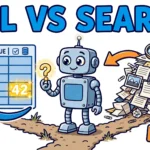



Introduction to Amazon Quick
Amazon Quick brings structured datasets and unstructured documents into a shared workspace that a conversational AI agent can query. In the architecture described by AWS, users connect business documents through an Amazon S3-backed knowledge base, prepare structured data as enriched datasets, and link both through a Space. The agent can then draw on either source type, or both, when answering a question.
The practical aim is to connect numerical analysis with the information contained in reports and memos. A sales dataset can support a regional breakdown; a strategy document can supply related business context. AWS’s walkthrough shows how those resources become available within one conversation, reducing the need to run separate queries and manually assemble their results.
AWS’s account of the architecture and setup is the evidence for these capabilities. It is a vendor walkthrough using sample business data, rather than an independent evaluation of answer accuracy or operational performance. The distinction matters: it documents a configuration and examples of its behavior, but does not establish how reliably the same approach will work across an organization’s own information.
The walkthrough requires an Amazon Quick account with an Enterprise subscription for the person creating datasets. It also requires an S3 bucket, administrator-granted access to that bucket, and permissions to create integrations, knowledge bases, datasets, spaces, and chat agents. Those prerequisites make clear that the conversational interface sits on top of a deliberate data preparation and access configuration process.
Unified querying capabilities

Amazon Quick’s unified querying experience rests on three layers. The data layer contains the documents and structured datasets. The workspace layer brings references to those resources together in a Space. The agent layer links a custom chat agent to that Space and determines which resources to query for a user’s question.
Each layer has a distinct role. Documents, PDFs, and reports stored in S3 are indexed through a knowledge base. Structured metrics, sales figures, and operational key performance indicators are loaded as enriched datasets. Their semantic descriptions help the agent translate natural language questions into SQL. The Space supplies a common context without removing the distinction between those two query paths.
That distinction is useful when evaluating what “unified” means here. AWS describes one conversational entry point over different underlying resources. Document retrieval and structured analysis retain their own preparation requirements and mechanisms. Bringing them into the same workspace makes them available to the same agent; it does not make a document index interchangeable with a dataset.
AWS illustrates the combined experience with a question about how sales changed by region in 2025. In the walkthrough, the agent combines the Product_Sales.csv dataset with documents in the S3 knowledge base. AWS describes a response containing regional sales breakdowns, trends, and citations pointing to the sources. The supplied evidence does not provide the numerical results, so the example supports the workflow rather than any particular sales finding.
The reader benefit is a shorter path between a business question and the relevant forms of evidence. The analytical caveat is that a combined response still needs scrutiny: a calculation and a passage from a report may answer different parts of the question. Citations help users inspect that relationship, but their presence alone does not demonstrate that the agent has interpreted either source correctly.
Integration of structured and unstructured data

The setup begins with an S3 integration. AWS specifies that the bucket must be in the same Region as Amazon Quick, although the configuration offers a bucket in the same AWS account or another account. An administrator grants Amazon Quick access through the service’s permissions settings; selected buckets have read-only permissions by default.
The associated knowledge base indexes the bucket’s content for AI-powered search. Users can include all content or select particular S3 prefixes for folders and files. Those prefix filters are case-sensitive. Additional settings cover document-level access control lists and a metadata files folder. AWS says the decision to use those access control lists must be made before knowledge-base creation because it cannot be changed afterward. Indexing begins in the background after creation.
These details affect the scope of the information an agent can retrieve. Content selection determines what enters the knowledge base, while the access-control choice is an implementation decision that cannot simply be deferred. The sample walkthrough uses default settings, but that example does not establish that defaults will suit every organization’s documents.
Structured data follows a separate preparation process. AWS uploads Product_Sales.csv, checks its columns and data types, and ingests it into SPICE, the in-memory calculation engine. The walkthrough then enriches the dataset with a description, custom instructions, and individual column descriptions. It also corrects auto-detected data types, including setting Sales, Discount, and Profit to Decimal and Quantity and Unit Price to Integer.
The semantic context tells the agent how to interpret the table in business terms. In the sample, instructions identify revenue as USD, direct regional comparisons to use Region, and specify Order Date for time-based trend analysis. Column descriptions explain what fields represent, including that Sales records order revenue after discount. AWS presents this enrichment as a way to improve the translation of questions into SQL; the evidence does not quantify an accuracy improvement.
Finally, the walkthrough creates a Space named Business Intelligence Hub and adds Business Knowledge Base and Product_Sales.csv. Spaces can also hold file uploads, dashboards, and actions. Here, their central function is to give the agent a single location referencing the document knowledge base and the structured dataset. The integration therefore depends on both paths being prepared, rather than on the chat interface discovering their meaning automatically.
Functionality of the chat agent
The custom chat agent is configured after the Space is assembled. Amazon Quick offers a natural language prompt builder and templates; the walkthrough instead configures the agent manually. It gives the agent the identity Business Intelligence Assistant, specifies its responsibilities, chooses an Executive communication style, and links the Business Intelligence Hub Space as a knowledge source.
The persona instructions ask the agent to analyze business data, retrieve relevant findings from reports and memos, connect information across sources, and explain its conclusions with citations. Those are instructions defining intended behavior. They should not be read as independent evidence that every answer will satisfy those requirements. Similarly, choosing a communication style controls how the assistant presents itself, without establishing the correctness of the underlying analysis.
At question time, AWS says the agent decides whether to query the knowledge base, the dataset, or both. For structured questions, it uses text-to-SQL: it translates the user’s wording into a SQL query, executes that query against the dataset, and presents the result in readable form. The dataset descriptions and instructions supply context for this translation. This is the mechanism behind asking analytical questions without writing SQL directly.
For document questions, the knowledge base supplies the relevant material. AWS’s second example asks for the strategic priorities in the product strategy memo. The walkthrough describes a summary of strategic pillars, the FY2026 roadmap, and investment requirements. These are elements of the sample document response, not evidence about an actual company’s strategy or planned investments.
Linking a Space also has an important boundary: AWS says the agent answers from large language model knowledge and the linked resources only. That means a linked Space does not imply that every statement originates in an organizational document. A useful review of an answer should distinguish sourced business information from the model’s broader knowledge or synthesis, particularly when the response makes recommendations.
Users can additionally attach reference documents directly to the agent. Supported formats listed in the walkthrough are PDF, TXT, HTML, MD, CSV, DOC, and DOCX. Amazon Quick extracts up to 100,000 characters of text from uploaded reference documents. This is a documented extraction limit for those attachments; the evidence does not establish a general capacity limit for the entire Space or its knowledge base.
AWS also describes built-in AI guardrails, including content safety screening, and says responses respect the permissions of the user asking the question. These are relevant safeguards, but they address different concerns from numerical and interpretive accuracy. Content screening, permission-aware access, and citations do not substitute for checking whether a query and its explanation answer the intended business question.
Future expansion and scalability
AWS describes the layered architecture as extensible: when a new data source is added to a Space, the agent linked to that Space can use it. The workspace is therefore the main point for expanding the agent’s available information. The vendor also says responses continue to respect the requesting user’s permissions as sources are added.
The documented breadth of a Space supports that expansion model. Alongside knowledge bases and datasets, it can include dashboards, file uploads, and action connectors. The Knowledge page also lists connector types including Amazon Q Business, Web Crawler, Amazon S3, Google Drive, OneDrive, and Microsoft SharePoint. Their appearance in the interface establishes available connector options in the walkthrough, but the supplied evidence only walks through the S3 integration and uploaded sales dataset. It does not establish equivalent setup procedures or behavior for every listed connector.
Extensibility should also be separated from measured scalability. The evidence contains no throughput benchmarks, response-time measurements, concurrency tests, or accuracy comparisons as the number of sources grows. It does not establish how indexing duration or query performance changes with document volume. Nor does it provide a cost analysis for expanding this configuration. The architectural ability to add resources is documented; operational performance at a particular organizational scale remains unmeasured here.
The setup details identify concrete questions for an implementation review. Do dataset descriptions express the business meaning of the fields? Does knowledge-base selection include the intended documents? Were document access-control choices made before creation? Can users trace a combined answer to the information supporting its numerical and narrative components? These questions follow from the documented configuration and provide a more useful basis for assessment than assuming that adding sources automatically improves answers.
Amazon Quick’s demonstrated contribution is to place document retrieval and structured analysis behind one configured agent and workspace. Its value for a particular organization will depend on whether that arrangement produces useful, checkable answers from its own data. The supplied walkthrough explains how to build the arrangement; independent evidence of accuracy, performance, and operating cost would be needed to judge the broader result.