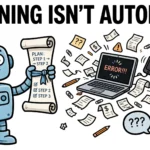



Companies have poured billions of dollars into artificial intelligence on the promise that it would transform their bottom lines. So far, for most of corporate America, the AI financial payoff has not shown up. That is the blunt conclusion of Apollo Global Management’s chief economist, Torsten Slok, in a note published on 24 October 2026 and reported by TechCrunch the following day. His test is simple: look at the 493 companies in the S&P 500 that are not the seven mega-cap technology giants, and ask whether they are making more money per worker or earning fatter margins. On both measures, the answer is no.
The finding matters because it is not a claim about AI’s potential. It is a claim about what has actually happened to revenue, margins, and productivity while the spending has been at full flood. This article explains what Slok actually found, what his numbers can and cannot prove, and what the evidence means for a company deciding how much to invest in AI now.
What Apollo’s Torsten Slok actually found
Slok’s note, titled “No Signs of AI Payoff Outside the Tech Sector” and published in Apollo’s The Daily Spark, focuses on what he calls the S&P 493: the S&P 500 minus Alphabet, Amazon, Apple, Meta, Microsoft, Nvidia, and Tesla. For those 493 companies, profit margins and revenue per worker appear flat, with no evidence that AI is improving productivity.
His characterisation was direct: “Despite massive investments and widespread hype around artificial intelligence, the technology has delivered zero financial payoff to corporate America outside of tech.” The note frames the stakes clearly. As Slok put it, the AI story “will be decided in the S&P 493, not the Mag 7” — in other words, not by the handful of companies building the technology, but by the hundreds of companies supposed to be using it.
The gap between the two groups is stark. Reporting of Slok’s note puts inflation-adjusted revenue per employee at roughly $780,000 for the Magnificent 7, against about $525,000 for the other 493 companies. The same pattern appears in profit margins: nearly 30% for the Magnificent 7, around 10% for the S&P 493.
Slok’s productivity evidence points the same way. His productivity data, based on a Federal Reserve Bank of San Francisco series adjusted for how intensively businesses use their resources, shows no clear acceleration in total factor productivity growth despite the rapid adoption of and investment in AI. Apollo credits Bloomberg and Macrobond for the company-performance charts, and Federal Reserve and Bureau of Labor Statistics sources for the productivity evidence.
What ‘zero AI financial payoff’ means — and what it doesn’t
The headline is easy to over-read, so it is worth being precise about what the S&P 493 is. It is an aggregate. A flat average across 493 companies can hide sectors or individual firms where AI is already paying off. Averages conceal as much as they reveal, and Slok’s finding is about the aggregate, not about every company in it.
The split itself is not a clean test of AI users versus AI sellers. The seven excluded companies are the ones selling AI as much as using it. Their rising revenue per employee and expanding margins may reflect selling chips, cloud capacity, and models to everyone else — not necessarily using AI better inside their own operations.
Margins and revenue per worker are also proxies for payoff, not the whole picture. AI’s value in cost avoidance, quality improvements, or risk reduction may not show up in those two metrics yet. Slok’s measures are the right place to look for a payoff, but they are not the only place value could appear.
Why the payoff hasn’t shown up: Slok’s judgment argument

Slok does not only report flat numbers. He offers an explanation, and it is the most interesting part of the note. “AI may be a great calculator, but in business, intelligence is mostly judgment,” he wrote. His argument is that AI does not understand “accountability, trust, culture, unwritten rules, ethical trade-offs or fairness, all of which shape reputational risk and ultimately drive revenue growth and profit margins.”
Slok sounded skeptical that this gap will close quickly. He argued it will be tough for corporate America to “turn increasingly cheap intelligence into higher revenue growth and higher profit margins.” Cheap intelligence, in his framing, is not the same as valuable intelligence.
It is important to be clear about the status of this argument. The material shows Slok asserting the judgment mechanism, not demonstrating that it caused the flat metrics. The flat S&P 493 numbers are evidence; the judgment explanation is a hypothesis about why they are flat.
Or is it just too early? The lag argument

The strongest counterargument to Slok is not that his numbers are wrong. It is that they are early. Enterprise AI adoption lags consumer technology by years, and general-purpose technologies have historically shown a long lag between investment and measured productivity gains. Flat metrics today do not prove the payoff will never arrive.
The classic statement of this pattern comes from economists Erik Brynjolfsson, Daniel Rock, and Chad Syverson in their 2020 paper “The Productivity J-Curve: How Intangibles Complement General Purpose Technologies.” Their argument is that transformative technologies such as electrification and, now, AI require companies to invest heavily in things that do not show up in the statistics: reorganising processes, retraining workers, and developing new business models. During that investment phase, measured productivity stagnates or even dips. Only after this period, often lasting several years, do the gains materialise and productivity accelerate — the upward stroke of the J.
The historical parallel is instructive. Factories adopted electric motors in the 1890s, but the full productivity payoff did not arrive until the 1920s, when managers finally redesigned factory floors to exploit the new architecture. Computers followed a nearly identical 20-to-30-year arc. Whether AI will follow the same long arc or a shorter one is an open question the evidence does not yet settle.
The evidence supports “no payoff yet,” not “no payoff ever.” The distinction is the whole debate.
What the productivity studies actually say
Slok is not alone in finding thin evidence of AI productivity gains. Recent studies cited by TechCrunch have also found that AI has yet to deliver significant productivity gains, and the details are worth knowing.
A National Bureau of Economic Research study tracking AI adoption across thousands of workplaces found that productivity gains amounted to just 3% in time savings, with no significant impact on earnings or hours worked in any occupation.
A trial by METR found that experienced developers using AI tools took 19% longer on tasks while believing they were 20% faster. The gap between felt productivity and measured productivity is the point: the tools feel fast, and the work takes longer.
A study by UC Berkeley researchers, published in Harvard Business Review, spent eight months inside a 200-person tech company and conducted more than 40 in-depth interviews with workers who genuinely embraced AI. What they found was that people who embraced AI ended up doing more work, and reported fatigue and burnout. As one engineer told them: “You had thought that maybe, oh, because you could be more productive with AI, then you save some time, you can work less. But then really, you don’t work less. You just work the same amount or even more.” The researchers’ conclusion was that companies risk becoming burnout machines.
These studies measure different things. The NBER study measures time savings across workplaces. The METR trial measures task duration and perceived speed for experienced developers. The Berkeley study reports work intensification and burnout in one company. They are context for Slok’s aggregate finding, not explanations proven for the S&P 493.
What has to change for the payoff to arrive
If Slok’s judgment argument is right, cheaper or faster AI alone may not be enough. One proposed condition to test is whether companies deploy AI in ways that respect where its limits actually bind — and the distinction between judgment-heavy work and computation-heavy work is the practical version of that idea.
One hypothesis to test is a split between computation-heavy work — summarising documents, drafting routine code, searching large datasets — and judgment-heavy work — deciding what a customer is really asking for, weighing a reputational risk, or choosing between two plausible strategies. A candidate pilot design would use AI for the calculable work and keep humans in the loop for the judgment work, then measure whether margins move. The evidence cuts both ways: the one measured coding result in the research, the METR trial, found experienced developers slower with AI tools, not faster.
The J-curve account suggests complementary investment may be needed alongside the technology purchase: redesigning processes, retraining people, and changing what gets measured. It does not say which firms will end up with flat metrics.
There is a testable version of Slok’s hypothesis here. If the judgment argument is right, companies deploying AI in judgment-heavy work should show different margin trajectories than those deploying it in computation-heavy work. If the lag argument is right, the flat metrics should start to move as the reorganisation work catches up with the investment.
What this means if you’re investing in AI now
Flat aggregate metrics are a reason to scrutinise the business case for AI spending, not a verdict on every AI project. The question to ask is where the return is supposed to show up, and over what horizon. If the answer is “margins, next quarter,” Slok’s numbers suggest scepticism is warranted. If the answer is “time saved on routine work, redeployed to work that needs judgment,” treat the horizon as an illustrative planning question: the supplied evidence cannot establish a project-specific payoff timetable or that this deployment returns more.
Finally, watch what the saved time actually gets spent on. The Berkeley study reports work intensification and burnout when freed-up time fills with more of the same work. Measure output, financial results, and workload effects separately rather than treating saved time alone as proof of return.
Limits and open questions
This article is built on what the available evidence actually shows, and its limits should be stated plainly. The measurement period and the underlying Apollo data are not in the supplied research package, so the flat S&P 493 finding cannot be independently checked from the material this article is based on. Which sectors inside the S&P 493, if any, show AI paying off already is not known from Slok’s note as reported.
There is also a genuine tension in the evidence that this article has not resolved. Brynjolfsson’s February 2026 essay argues that US productivity growth of 2.7% in 2025 — nearly double the 1.4% annual average of the prior decade — suggests the economy is transitioning from the J-curve investment phase into a harvest phase. Slok’s productivity data, from a San Francisco Federal Reserve series, shows no clear acceleration in total factor productivity growth. These may be different series measuring different things, or genuinely conflicting readings of the same economy. Brynjolfsson himself cautions that several more quarters of sustained growth would be needed to confirm a trend.
The honest summary is this: the AI financial payoff has not shown up in the aggregate numbers for most of corporate America. Slok’s judgment limits and the J-curve lag are possible explanations with unresolved relative roles; neither is presented here as a prediction of permanent failure or a guarantee of eventual payoff.