


AT&T and OpenAI have announced a partnership to rebuild how AT&T’s in-house legal department works, and the AT&T OpenAI legal work deal is interesting less for its scale than for its framing. This is not a story about replacing lawyers. It is a story about a very large legal department trying to make it easier to get the right information to the right lawyer at the right moment — and about two companies jointly developing and testing legal workflows together.
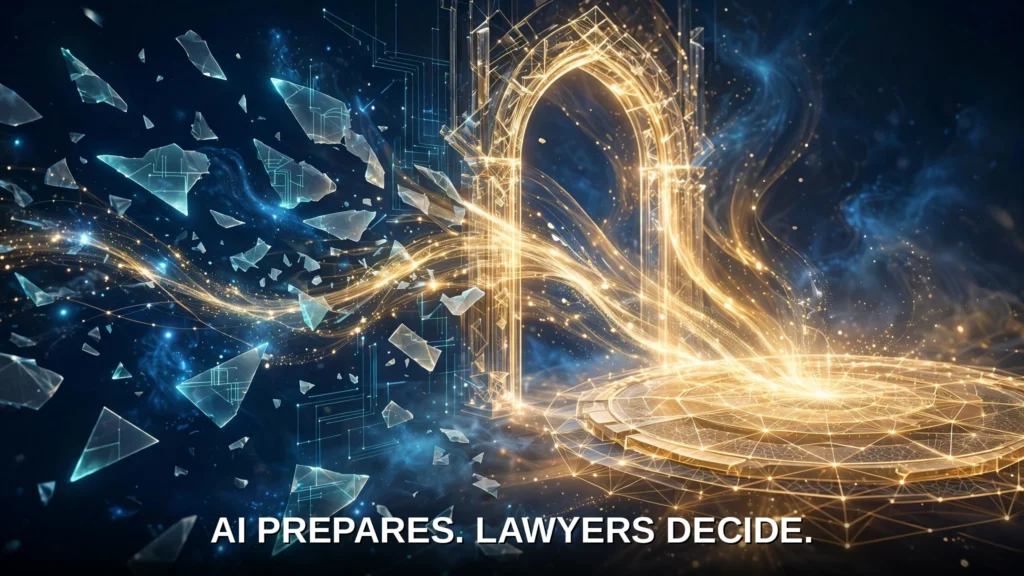
The collaboration, announced on 8 October 2026 with OpenAI’s own account of it following on 21 October, makes AT&T a flagship in-house legal design partner for OpenAI. The two companies will design, build and evaluate practical legal workflows together, grounded in real-world experience and attorney oversight. For readers watching AI move into professional work, the announcement is a useful case study precisely because both sides keep stressing the same guardrail: the machines prepare, the lawyers decide.
What AT&T and OpenAI announced
AT&T’s in-house legal department has hundreds of lawyers and legal professionals around the world. The partnership builds on LegalEdge, AT&T’s AI-first centre of expertise, which launched in January 2026 and handled nearly 100 matters in its first six months, according to AT&T. LegalEdge is a lean, cross-functional team of attorneys, legal professionals, technologists and project managers focused on applying AI to major legal matters — and, in Artificial Lawyer’s description, it also includes remote attorneys, paralegals, legal operations and e-discovery experts.
AT&T describes the collaboration as combining its legal and governance expertise with OpenAI’s AI capabilities to design what it calls the responsible, human-led in-house legal department of the future. The stated focus is on making institutional knowledge easier to access, supporting routine legal work more efficiently, and giving legal professionals more capacity for ideation, strategy and advocacy. The announcement also follows OpenAI’s Astra for Law launch, which Artificial Lawyer notes came with a collection of plugins from across the legal technology market — a sign that OpenAI is building a broader legal offering, not a one-off integration.
The problem: how legal work arrives today
One problem the partnership targets is intake. Requests arrive from across AT&T’s business, and legal teams need to respond quickly without overlooking risks. Before they can advise the business, lawyers have to understand the issue, gather the relevant context and decide what needs attention first — assembling facts, documents and relevant past work, often drawing on expertise held across different teams.
For David McAtee, AT&T’s Senior Executive Vice President and General Counsel, that scattered expertise is the core issue. Making it easier to access, he says, is central to how the department’s work can improve. The department’s lawyers already know the law; one thing that costs them time is finding what the organisation already knows — which precedent applies, who handled something similar, and what the business has already decided in comparable situations.
The knowledge layer: plumbing for legal expertise

McAtee’s framing of the solution is deliberately unglamorous. “Our partnership with OpenAI is going to allow us to build that plumbing that powers the knowledge layer throughout the company and that all of us will draw into,” he says. The next step, in OpenAI’s account, is to connect more of AT&T’s accumulated expertise to the work arriving on a lawyer’s desk.
The aim, as both companies describe it, is to connect more of the company’s accumulated expertise to the work arriving on a lawyer’s desk — relevant precedent, research and past work, in the announcement’s own terms. The promise is a more informed starting point — less time spent gathering the material needed to assess a matter, and more time applying legal expertise to it. AT&T puts the same idea in operational terms: make institutional knowledge more accessible so that routine legal work is supported more efficiently and legal professionals gain capacity for the work that actually requires their judgment.
Natural-language intake: the planned front door

The one concrete system the announcement describes is an intake system — and it is described as a planned initiative, not a deployed product. Bill Ryan, AT&T’s Chief Compliance Officer, describes it as “a front door where we have natural language intake.” In other words, someone in the business describes their problem in ordinary language, and the system does the first pass: it would classify and prioritise the request, connect it with relevant precedent, research and past work, and give the responsible legal professional historical context and recommended first steps.
Coverage of the announcement fills in the kinds of tasks involved. Possible uses for the OpenAI tools include answering frequently asked questions and gathering and summarising information for attorneys, according to Wirefly, while Mobile Europe reports that AI agents could answer common legal questions or gather information to help lawyers prepare advice. The work AT&T wants to bring in-house includes document review, legal research, drafting, investigations, and support for litigation and regulatory matters. These are the kinds of tasks AI is intended to assist with, while lawyers retain decision-making and legal judgment.
What stays human: judgment at greater scale
Both companies return, repeatedly, to the same line. “The decision making will always remain with the lawyers,” McAtee says in OpenAI’s post. AT&T’s announcement says human oversight, governance, confidentiality and legal judgment remain central to every workflow, and McAtee adds the sentence that sums up the whole arrangement: “AI can expand what we do and how quickly we do it. Legal judgment remains human.”
Ryan frames the upside the same way, from the other side: “What most excites me about the future is expanding our ability to provide legal judgment at greater scale.” The aim is to expand lawyers’ capacity through better access to information and more efficient preparation, so their judgment can reach more of the business’s needs. Jason Boehmig, OpenAI’s general manager for the legal industry, puts it similarly: the two companies are exploring how AI can put AT&T’s institutional knowledge to work across the business, “with lawyers’ judgment at the centre.”
What AT&T OpenAI legal work signals — and what is still open
The partnership is an enterprise-scale example of AI aimed at professional judgment work rather than at drafting alone. AT&T’s project is about the workflow around the advice — intake, triage, and the institutional memory that makes advice good. Whether the same intake-plus-knowledge-layer shape could help other in-house teams with similar intake and knowledge-access problems remains an open question.
There is also a commercial angle that is easy to overstate and worth stating carefully. Wirefly reports that the goal includes bringing more legal work in-house that AT&T would otherwise send to outside law firms, and that one report suggested AT&T’s roughly 30 national law firms could shrink to around 18 to 20 over the next two years — though no firm target was set. That figure comes second-hand, not from AT&T’s own announcement, so it should be read as a reported possibility rather than a plan.
What the announcement does not say matters just as much. There is no deployment timeline for the intake system, no named OpenAI models or APIs behind LegalEdge, and no detail on what data sources feed the knowledge layer. Those are the questions to watch: whether the intake system ships, what it is built on, and whether the “nearly 100 matters” LegalEdge handled in six months become a repeatable way of working rather than a pilot’s tally. The partnership’s own test is the one McAtee states — whether lawyers end up spending more of their time applying expertise, with the decisions still theirs.