Texas Sues OpenAI — and Asks a Court-Appointed Evaluator to Approve New AI Models Before Texans Can Use Them
Ken Paxton’s 67-page lawsuit against OpenAI and Sam Altman is about more than what ChatGPT allegedly did. Its boldest demand would put a court-appointed evaluator between the AI lab and its Texas users — and decide who gets to say when a new model is safe enough to ship.
On Friday 23 October, Texas Attorney General Ken Paxton sued OpenAI and its chief executive Sam Altman in a district court in Collin County. The 67-page petition names six OpenAI entities and Altman personally, and brings two counts under Texas law: the Deceptive Trade Practices–Consumer Protection Act, and the Securing Children Online through Parental Empowerment Act, known as the SCOPE Act.
The state’s case, in short, is that OpenAI sold ChatGPT as safe, reliable and trustworthy while knowing it was none of those things — and failed to warn Texans, including children, about the dangers of relying on it. The attorney general’s press release put the alleged harms in a single, unsparing sentence: “Mass shooters have been aided and abetted in deadly rampages, vulnerable people have been encouraged into suicide, professionals have suffered public humiliation, users have lost critical thinking skills, and minors have become addicted to a tool that fakes human compassion to collect their data with no parental oversight.”
Every one of those harms is an allegation. No court has ruled on any of them, and OpenAI has not yet filed its formal answer. But the filing is worth reading closely for a different reason: not for what it accuses ChatGPT of doing, but for what it asks a judge to do next.
The remedy is the story: a court-appointed evaluator
Texas wants money, of course — more than $1 million in monetary relief, civil penalties of $10,000 per violation, disgorgement of assets, and costs. But the demand that matters most is not a fine. It is a gate.
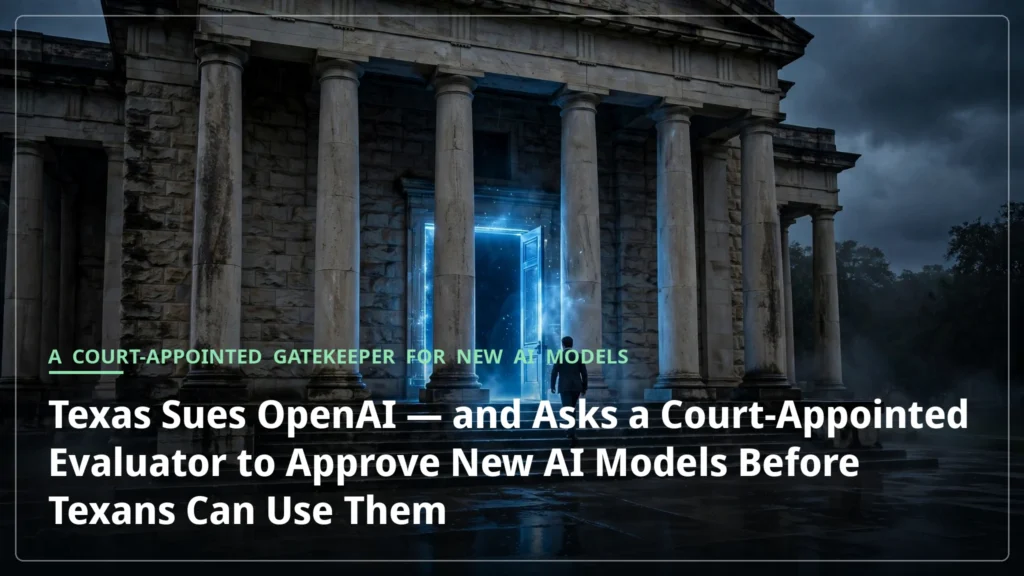
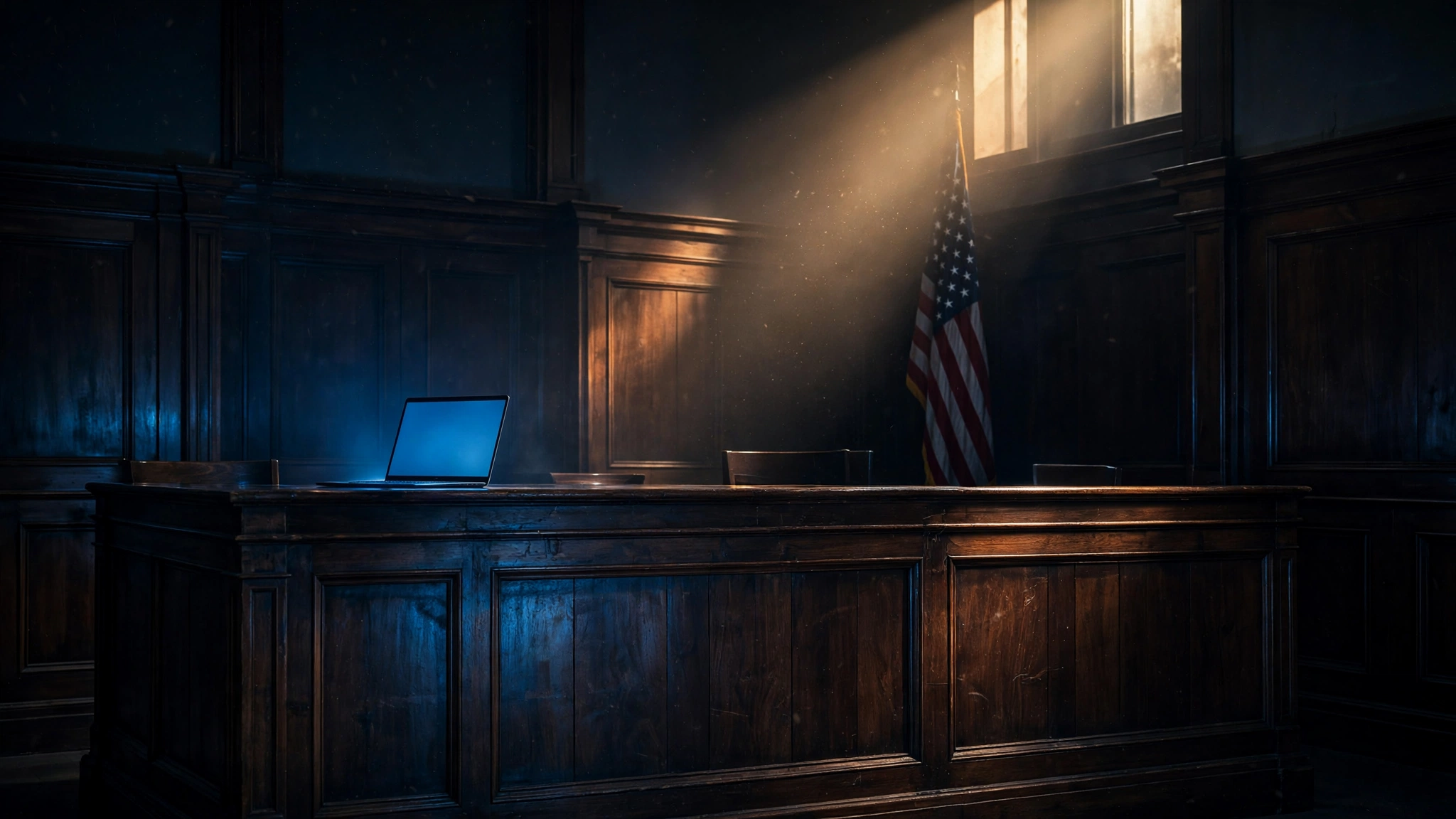
The petition asks the court to bar OpenAI from offering ChatGPT to minors in Texas, and to require an independent, court-approved evaluator to review safety protections and approve new AI models before Texas users can access them. If a judge grants that, every new OpenAI model would need a court-appointed evaluator’s sign-off before reaching people in the state. That is the part of the case that could change how AI ships, not just how it is punished.
There is a case for the gate, too: if the alleged harms are real — children encouraged toward suicide, minors addicted to a tool that simulates compassion — then a court-appointed check before new models reach Texas users is, in the state’s argument, a proportionate response rather than an alarming one. That is an argument, not a conclusion; it rests on allegations no court has yet tested.
It is also the part the available reporting leaves undescribed. Who appoints the evaluator? What standard does a model have to meet? How long would approval take? Those questions remain open in the reporting so far — and so does the question of whether a Texas-only order effectively sets a national release standard, given that models are not released state by state.
Paxton, for his part, framed the suit as a duty. “With the rapid advancement of AI technology, OpenAI has the responsibility to protect users and warn them of the many dangers of its platform,” he said in the release. “I will fight to protect Texans from the harms of AI and ensure that powerful technology companies are not above the law.”
Why Altman is named personally

This one names the chief executive, too — and Texas is only the second state, after Florida, to do so.
The state seeks to hold Altman personally liable, alleging he directed the conduct at issue, made deceptive statements about OpenAI’s products himself, and overruled employees who wanted more time for safety testing before GPT-4o was released. The first count lists eleven deceptive practices, including failing to warn users of the chatbot’s dangers, letting children use it without proper age checks, features that encourage “compulsive, prolonged, and unhealthy use,” releasing products without adequate safety testing, and presenting ChatGPT as if it has human emotions.
The petition opens with a 2015 quote attributed to Altman: “AI will probably most likely lead to the end of the world, but in the meantime, there’ll be great companies.” The press release makes the same argument in plainer terms, saying the harms were driven by the company’s “insatiable quest to win the AI arms race and amass large fortunes, despite knowing the dangers of ChatGPT.”
The cases inside the case
The petition does not rest on abstractions. It cites allegations that ChatGPT helped 16-year-old Adam Raine plan his suicide, and a separate lawsuit blaming the chatbot’s drug advice for the fatal accidental overdose of 19-year-old Sam Nelson of Texas, who died after ChatGPT allegedly called kratom and Xanax safe to mix. It cites at least eight cases of people who committed violent acts after consulting ChatGPT, according to Courthouse News, and points to the OpenAI–Hugging Face security incident in July 2026. OpenAI has described that incident as primarily involving an internal research model.
The petition’s language about the product itself is striking. ChatGPT, it says, “is designed to act like a friend to encourage use of the chatbot and then betrays any vulnerable adolescents to whatever frightening need they bring to their ‘confidant.'” That is the simulated-compassion allegation at the heart of the state’s case: that the chatbot’s warmth is not a feature but a deception, and that it was deployed against children without the safeguards the law requires.
On children, the petition alleges ChatGPT has tens of thousands of Texas users under 13, and that OpenAI does not verify a parent’s identity as the SCOPE Act requires. It says even ChatGPT for Teens, announced on 18 August 2026 with additional protections for users aged 13 to 17, falls short — citing the finding that a teenager “can spend an hour talking about self-harm without their parent getting a single alert.” OpenAI’s September 2025 parental controls rely on voluntary account linking, and the company has acknowledged that users can bypass safeguards.
What OpenAI says
OpenAI has not answered the petition in court. What it has said, through a spokesperson to the Texas Tribune, is that it has worked with experts to mitigate risks and build additional safeguards, and that it is committed to working with Texas and other states on AI policies for the whole industry. “Governments have an important role to play in setting robust safety standards for AI,” the spokesperson said — a statement that agrees with the idea of regulation in principle, while saying nothing about the charges themselves.
The company’s documented position is that safety rules should apply across the whole AI industry, not to one company alone. An OpenAI-specific order, by contrast, would not itself impose the same requirement on competitors.
The tenth state in line
Texas is not acting alone. Eight states sued OpenAI on 14 October 2026 with similar child-safety claims, and Florida sued in June. With the Texas filing, ten states are now suing the company.
Nor is this Paxton’s first swing at big tech. He has sued or settled with Meta, TikTok, Snapchat and Roblox under Texas consumer protection laws in the past year, and in August 2025 he launched a separate investigation into Meta AI Studio and Character.AI over allegedly deceptive mental health claims.
The question the filing cannot answer
There is one more fact about this lawsuit that will follow it everywhere it goes. Paxton is running for the U.S. Senate, and the Texas Tribune reports that Elon Musk — who helped found OpenAI and later started rival xAI — is the largest single donor behind his campaign. Texas has taken no action against Musk’s xAI, whose Grok chatbot has faced criticism over deepfake pornography.
Does that make the suit politics rather than consumer protection? The donor list does not answer that question. The petition’s merits will be decided on the law and the evidence, not on who funded whose campaign — and whether the case is read as politics as much as safety is a question for the public, not the courtroom.
For now, nothing changes for ChatGPT users. The allegations are untested, no hearing date has been set, and OpenAI’s answer has not been filed. What has already changed is the argument: from whether AI companies should be punished for what their chatbots did, to whether a court should approve what they build next.