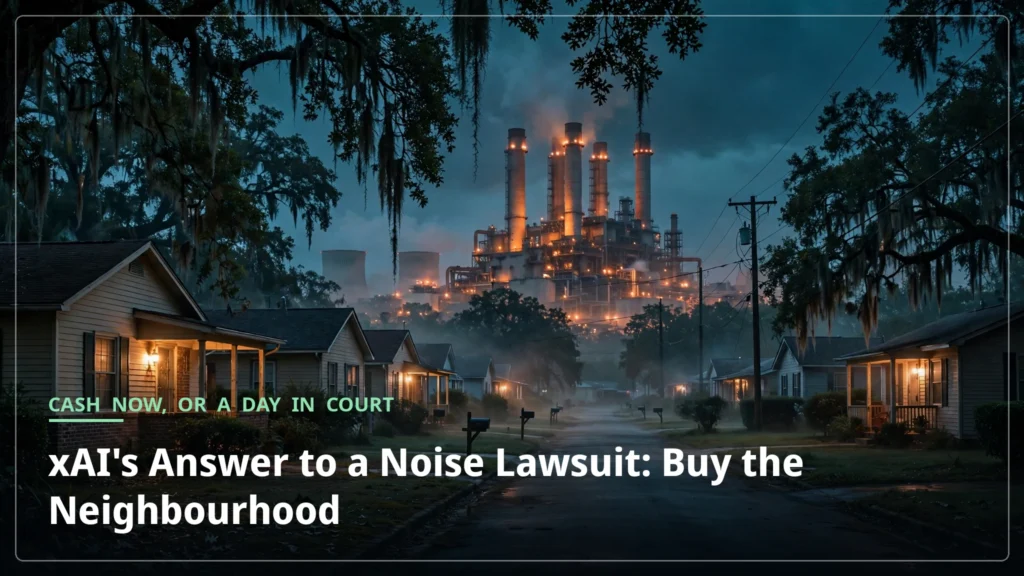



The knock on the door
In Colonial Hills, Southaven, Mississippi, the knock on the door is not a salesperson. It is a realtor working for MZX Tech, the subsidiary behind the xAI home buyouts, which operates xAI’s power plant nearby — and the offer comes with paperwork. The letter, titled “Notice of Noise Nuisance Litigation Related To Southaven Purchase Offers”, begins with a denial — “MZX denies all of the allegations against it” — and then makes its pitch: because MZX “requires property for its proposed business”, it is offering to buy nearby houses “in exchange for, among other things, a release of all claims related to the lawsuit”.
The lawsuit is Haley et al v. X.AI Corp., a class action filed in June by three Colonial Hills residents — Jason Haley, Preston Herrington and Taylor Logsdon — over the noise from the gas turbines powering xAI’s Colossus data centers. Anyone who accepts signs a real estate contract agreeing to execute a separate release at closing. Once signed, the seller cannot recover damages from the Haley suit, and cannot bring claims of their own over the Southaven plant.
The numbers — and what they don’t say
DeSoto County records show MZX has bought five homes in the neighbourhood since 9 October, according to The Guardian. But the ambition may be far larger: in a recorded conversation heard by The Guardian, a realtor going door to door told one resident the target is 418 homes, and that 18 homeowners had already agreed to sell — the realtor’s account; xAI did not answer The Guardian’s questions about the figures, or about its plans for the neighbourhood.
Some renters report being given 60 days’ notice after their landlords agreed to sell — tenants who received no offer of their own and were told to leave because their landlord took the deal.
Why the neighbours are suing
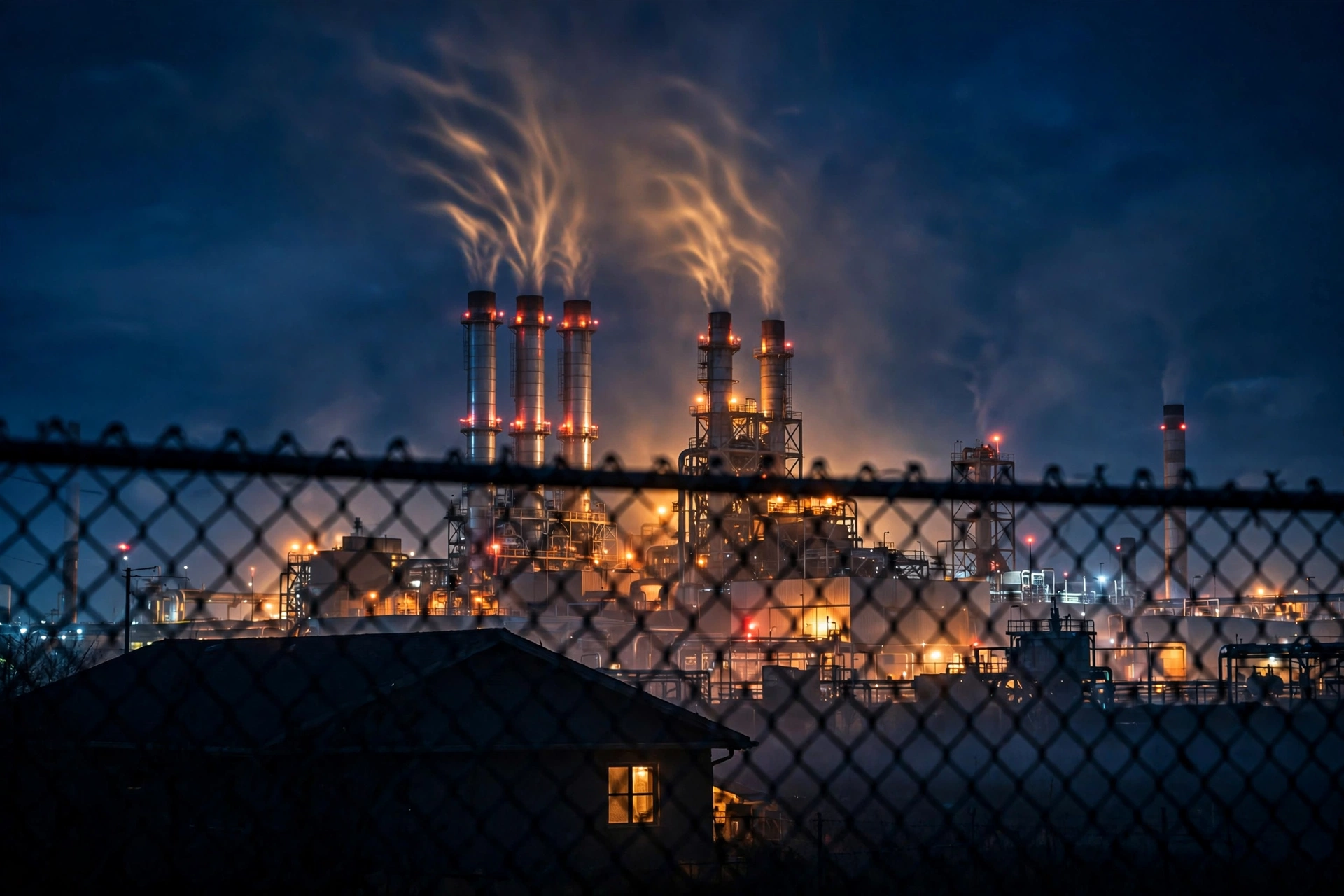
The plant sits at 2875 Stanton Road, on a former Duke Energy site, and the residents’ complaint describes a soundscape that never stops: “a combination of high-pitched squealing, continuous engine roaring, low-frequency rumbling, and tonal humming or whining”. Haley says the noise repeatedly woke him at night. Taylor Logsdon says it has contributed to migraines, anxiety and persistent ringing in her ears — and that her children suffer the same ringing and broken sleep.
The plant’s scale is itself contested. The Guardian reports 69 temporary gas turbines. The residents’ complaint says the fleet began with three units in August 2025 and grew to 57 in under a year. Mississippi regulators permitted 27 gas-powered turbines in March; MZX holds a permit for 41 permanent ones. The NAACP’s filing puts 27 turbines’ combined capacity at at least 495 megawatts — enough to power 400,000 homes.
Elizabeth Rose, a piano teacher in the neighbourhood, described the sound to The Guardian as “an airplane engine but it’s continuous, it’s incredibly loud” — and gave the feared result a nickname: Elonville. Gavin Foust, a paramedic who grew up in the area, put it more bluntly: “My hearing was damaged when I was in the army but I can still hear this thing, it’s like a jet engine. Why would you put it in a city? Why push people out? It’s reckless and shameful.” Foust says he will not accept the buyout himself, because of its requirement not to sue.
The city’s version
Southaven’s mayor, Darren Musselwhite, said on 1 October that the purchases had been part of a broader plan for months, that the buyout is a parallel effort rather than a replacement for reducing noise, and that the homes could house workers moving to Southaven for specialised jobs. He called noise a legitimate concern but said city monitors had not recorded a breach of Southaven’s 70-decibel limit — while the residents’ complaint says their own readings at their property lines exceed 70 dBA.
The company says it is investing millions in sound walls and silencers using what it calls advanced noise-reduction technology, and has previously said “we care deeply about being good neighbors”. Residents say the wall has provided little relief. When Mississippi Today asked xAI about the complaints in 2025, reporters received what appeared to be an automated reply: “Legacy Media Lies.”
In November 2025 the mayor told Mississippi Today the noise was “mostly temporary construction noise that will go away within days”. The complaint says that turned out not to be true; in December the turbine count rose from 18 to 27.
A lawsuit that keeps growing
The buyout is arriving in the middle of a widening legal fight. The NAACP sued xAI and MZX Tech in April under the Clean Air Act, alleging the methane gas turbines ran without the required permits. The Trump administration tried to have the case dismissed; Judge Debra M. Brown refused. Days later, the Justice Department filed a crossclaim arguing it has the right to end the suit — and that the government uses Grok, xAI’s chatbot, for national security and military work. “The court made clear today that the law applies to everyone, including the federal government,” said Abre’ Conner, the NAACP’s director of environmental and climate justice.
The permitting picture is still unsettled. The EPA found dozens of temporary turbines operating without federally required permits, with enforcement left to the state; in July, xAI agreed with state regulators to convert the site to a permanent gas-fired facility, a conversion not due until summer 2027. Meanwhile, Memphis City Council voted down a one-year moratorium on AI data center development and instead adopted a 135-day construction pause, while Mississippi’s governor has touted the company’s plan to invest more than $20 billion in the area. The Verge reports xAI is facing up to $6.1 million in potential civil penalties for environmental law violations, along with more than $220 million in claims of unpaid bills for work at the Memphis and Southaven sites.
The xAI home buyouts, in plain terms

The three named plaintiffs — Haley, Herrington and Logsdon — are already suing. The release MZX offers covers the sellers’ own claims: every homeowner who signs gives up the right to join the Haley action and to bring claims of their own, in exchange for a sale. What the release covers beyond the Haley action — including claims about future noise — is not established by the letter. Each purchase is two things at once — a house changing hands, and one fewer household in the pool of people who could still sue over the plant.
The two sides describe the same paperwork in opposite terms. The city presents the buyout as part of a community plan, with worker housing and a turbine conversion as the real noise fix; the letter makes the legal waiver a condition of sale. A release of claims is, as the city’s account implies, a routine clause in property deals near industrial sites. But routine or not, its effect here is directional: it only ever removes potential plaintiffs. It never adds one.
Haley lodged the lawsuit after what he describes as fruitless exchanges with the mayor, and started posting videos of himself monitoring the noise. “I thought I’d make some noise of my own,” he told The Guardian.
Cash now, or a day in court
For each homeowner who sells, the choice the letter offers is stark: cash now, or a day in court later — with no guarantee on either count. The mayor’s conversion plan promises quieter turbines by the summer of 2027; the buyout promises a cheque now. Which of those a family believes may depend on how many nights they have already lost sleep.
The renters who reported receiving notice got no offer of their own — just 60 days to leave when their landlord took the deal. If the buyout reaches anything like the scale the realtor described, Colonial Hills will not be a neighbourhood with a power plant next to it — it will be a neighbourhood increasingly owned by the company behind the plant, house by house, and the pool of households that could still sue will have shrunk one signature at a time.