


The ribbon-cutters are running
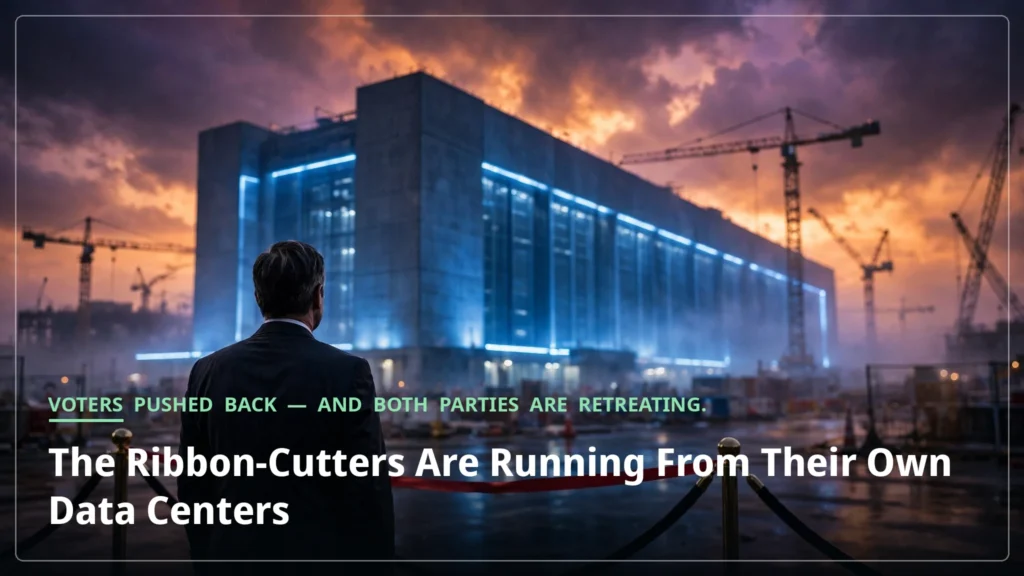
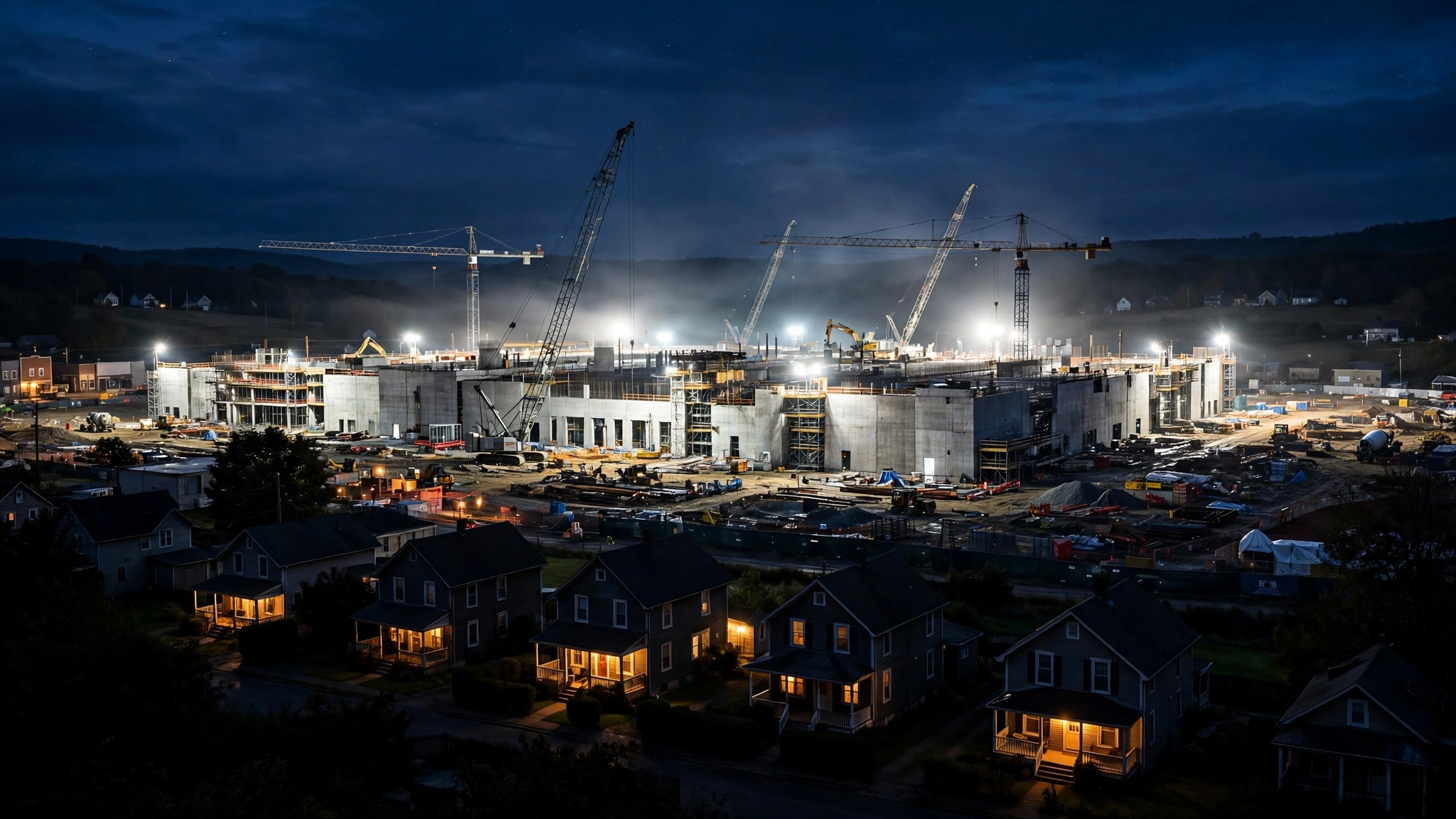
There is a particular kind of photograph that defined American politics for the last few years: a governor or a senator, hard hat on, grinning beside a tech executive in front of a freshly announced data center, a many-billion-dollar investment figure on the banner behind them. The picture said jobs, growth, the future. It did not say data center backlash.
In the 2026 midterms, the same politicians are running from the same picture. Candidates in both parties who once celebrated data-center investments are now competing to distance themselves from the buildout, as the facilities have become a campaign issue in state after state.
The data center backlash, in numbers
The polling shows the scale of the opposition. A Quinnipiac University survey of 1,159 likely voters in Pennsylvania, conducted October 1–5, found that 64 percent think AI data centers in the state will do more harm than good, against 24 percent who think they will do more good. Democrats (80 percent) and independents (72 percent) say more harm; Republicans split, 40 percent more harm to 44 percent more good.
Nationally the picture is similar. A Quinnipiac survey of 1,202 U.S. adults in late September found 72 percent would oppose the building of an AI data center in their community. A New York Times/Siena poll conducted September 8–13 found roughly two-thirds of people oppose data-center construction — 75 percent of Democrats, 60 percent of independents, and 47 percent of Republicans.
Whether the polls are driving the retreat is an open question. What they do establish is that opposition is broad, bipartisan, and close to home. As Christopher Borick, a professor of political science at Lehigh University, put it: “It’s the confluence of hyper-localized concerns with broader worries about AI, and who controls it and who benefits from it.”
Texas: the governor who celebrated, then audited
Nowhere is the reversal sharper than in Texas. Governor Greg Abbott’s office celebrated a $40 billion Google investment last year that included three new data-center campuses. Then Abbott announced an audit that could slow new facilities connecting to the state energy grid.
The Senate race tells the same story from both sides. In July, James Talarico unveiled his Hold Data Centers Accountable Plan, to end state sales-tax incentives for data centers and give communities more say in development. In August, Ken Paxton unveiled his Texas First Data Center Plan, including repealing the sales-tax treatment for data centers.
Pennsylvania: from celebration to restriction
In Pennsylvania, the reversal runs in both directions. Governor Josh Shapiro announced a $20 billion Amazon investment last year for new Pennsylvania data centers; in August he signed an executive order prohibiting nondisclosure agreements for data-center developers. Republican challenger Stacy Garrity praised the Amazon investment last year — and now targets it in attack ads.
Florida: the ratepayer turn
Republican Congressman Byron Donalds previously supported development and said Florida was wide open to build. He has changed his tune: he introduced the Protecting Ratepayers Act, requiring developers to fund the energy and water their operations need. An October NBC6/Telemundo Station Group poll found 45 percent of likely Florida voters opposed data centers.
The Senate races: where the memo leaked
The clearest sign of how seriously the parties take this came from Ohio, where a leaked National Republican Senatorial Committee memo called data centers the new ingredient and the new problem in the race between Republican incumbent Jon Husted and Democrat Sherrod Brown. Husted introduced the Ratepayer Protection Act, requiring large-load customers like data centers to cover their own energy costs. It narrowly failed in the Senate even with a handful of Democrats voting for it.
Ohio state records showed more than $2 billion in sales-tax revenue was forgone through data-center incentives in 2024 and 2025, while an August poll found 71 percent of Ohioans supported a temporary halt to new construction. And the Ohio governor’s race is running the same script: Democrat Amy Acton and Republican Vivek Ramaswamy are both presenting their own versions of a moratorium.
In Michigan, both open-Senate candidates support a moratorium. Republican former Representative Mike Rogers said “no more data centers until we can do it safely and with federal protections.” Democrat Abdul El-Sayed has pushed for strict new standards, including requiring developers to fund energy costs.
The money war
Leading the Future, a super PAC backed by Marc Andreessen and OpenAI President Greg Brockman, had spent $45 million in a year. Public First Action, an Anthropic-backed group, said it raised $80 million. Tomorrow Together launched $4 million in ads for battleground House races. AdImpact reports that $45 million has been spent on campaign advertisements mentioning data centers this year, the vast majority of it focused on opposition.
More than 1,000 local moratoriums or restrictions on data centers have been filed across the country, and 16 states have proposed laws to ban or temporarily pause new facilities.
What the retreat really means
The documented responses cluster around a few moves: audits that can slow grid connections, orders barring nondisclosure agreements, and bills making developers fund their own energy and water costs. Abbott announced an audit; Shapiro signed the nondisclosure order; Donalds and Husted each introduced ratepayer-protection bills.
One documented response, repeated across states, is making developers carry more of the cost: ratepayer-protection bills and proposals to repeal data-center sales-tax incentives. But it is one response among several — moratoriums, nondisclosure bans, and proposed pauses all appear in the record too. And the polls suggest the discontent runs wider than any single grievance: nationally, 53 percent say AI will do more harm than good in daily life, and Borick’s point stands — local worries about power, water and land sit alongside broader questions about who controls AI and who benefits from it. Whether the cost question is the one that decides these races is still an open question.
The question the election will not answer
Whether any of this survives the election is an open question. The pledges are easy to make in October and hard to keep in January, when the same officials will be back in rooms with the same companies offering the same billions. The polls measure attitudes toward data centers, not votes cast on the issue — and the underlying demand for AI computing has not changed.
But the photograph has changed. The ribbon-cutting is over. In its place is a new image for 2026: the candidate, hard hat off, explaining that the data center of a few years ago is not the data center of today. The election will show whether the retreat was a genuine reckoning with voter anger, or just the latest campaign-season costume change.