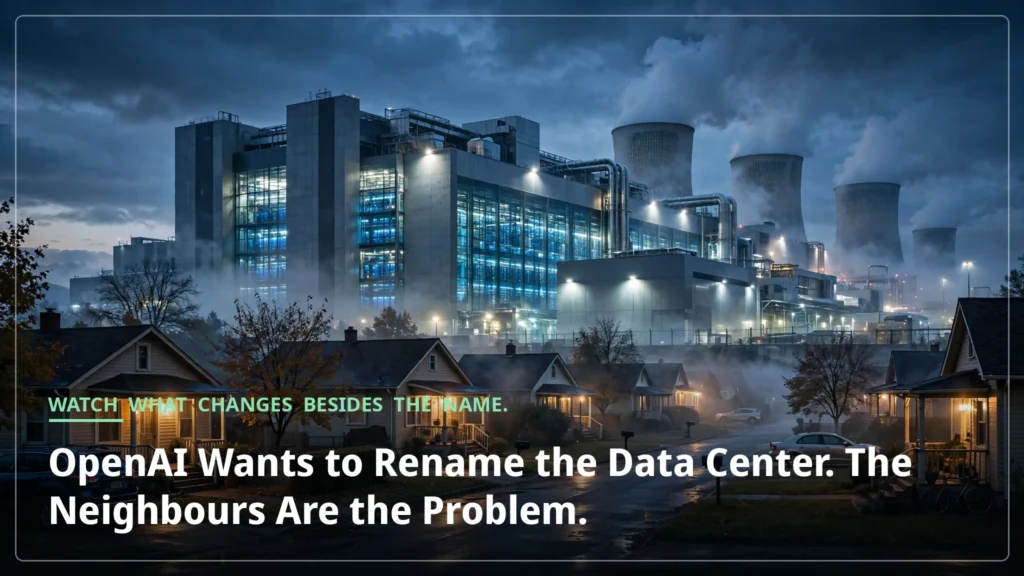



Data centers are deeply unpopular. So OpenAI, according to Axios, is preparing a proposal for after Tuesday’s midterm elections: that its data centers be called “AI compute campuses” instead.
It is a small change, a noun swapped for a phrase, and it may be the most revealing item in a much larger campaign. OpenAI’s chief global affairs officer, Chris Lehane, has been stockpiling policy proposals since August, Axios reports, and the company plans to roll them out in the lame-duck session of Congress that opens on November 9. The rebrand is one plank among several. But it may be the plank that sticks in the memory, which, on the reading this article offers, is rather the point — and rather the problem.
A trailer for 2028
Lehane told Axios that the midterms will be “a bit of a movie trailer for what you’re going to see in 2028,” when he expects AI to be “the” issue in the presidential election. The campaign is timed accordingly: not a reaction to a single bad headline, but a bid to shape the debate in the new Washington after Tuesday’s vote.
That framing matters because it suggests what OpenAI may think the fight is about. If AI is going to be the issue of 2028, then, on this reading, the company may feel it needs not just better arguments but better scenery — a vocabulary in which its buildings would sound like places of learning and skilled work rather than warehouses full of humming servers. “Compute campuses,” an OpenAI spokesperson said, “better describes the scale and role of the infrastructure we’re building for AI.” The reported rationale is that these sites represent long-term investment in computing capacity, energy infrastructure and skilled jobs, not just server racks.
There is something to that. A modern AI facility is not a shed with a few machines in it. But there is also something slippery in it, and the slipperiness is the story. A renamed building draws the same power, uses the same water and makes the same noise. What neighbours will make of a new name is an open question the evidence does not answer. That is why the rebrand lands in the middle of a backlash rather than ahead of it.
What else is in the package
To be fair to OpenAI, the rebrand is not the whole package. Lehane’s team has, by Axios’s account, four kinds of proposals ready. There are proposed mandatory safeguards for the most powerful AI systems, which the company calls “speed limits.” There are proposed community compacts and model state legislation that would give residents a meaningful say in how data-center projects are built and what benefits they receive. There is an empowerment message, framed around helping people see AI as empowering them in daily life. And there is a push for the United States to take a leading role in developing global AI standards.
That is a substantive agenda, and it deserves to be judged as one. The speed-limits idea, in particular, would have OpenAI accepting rules that would constrain its own most powerful systems — a move that cuts against the caricature of a company that only wants deregulation. The community compacts, if they carry real commitments, would speak to complaints from host towns about what they gain from hosting these projects.
But notice what the package does. It pairs proposed substantive measures with a soft one. Speed limits and compacts, if adopted, are things you could measure. A new name is something you can only feel. And feelings, in this fight, are doing a lot of work.
The neighbours have already won something
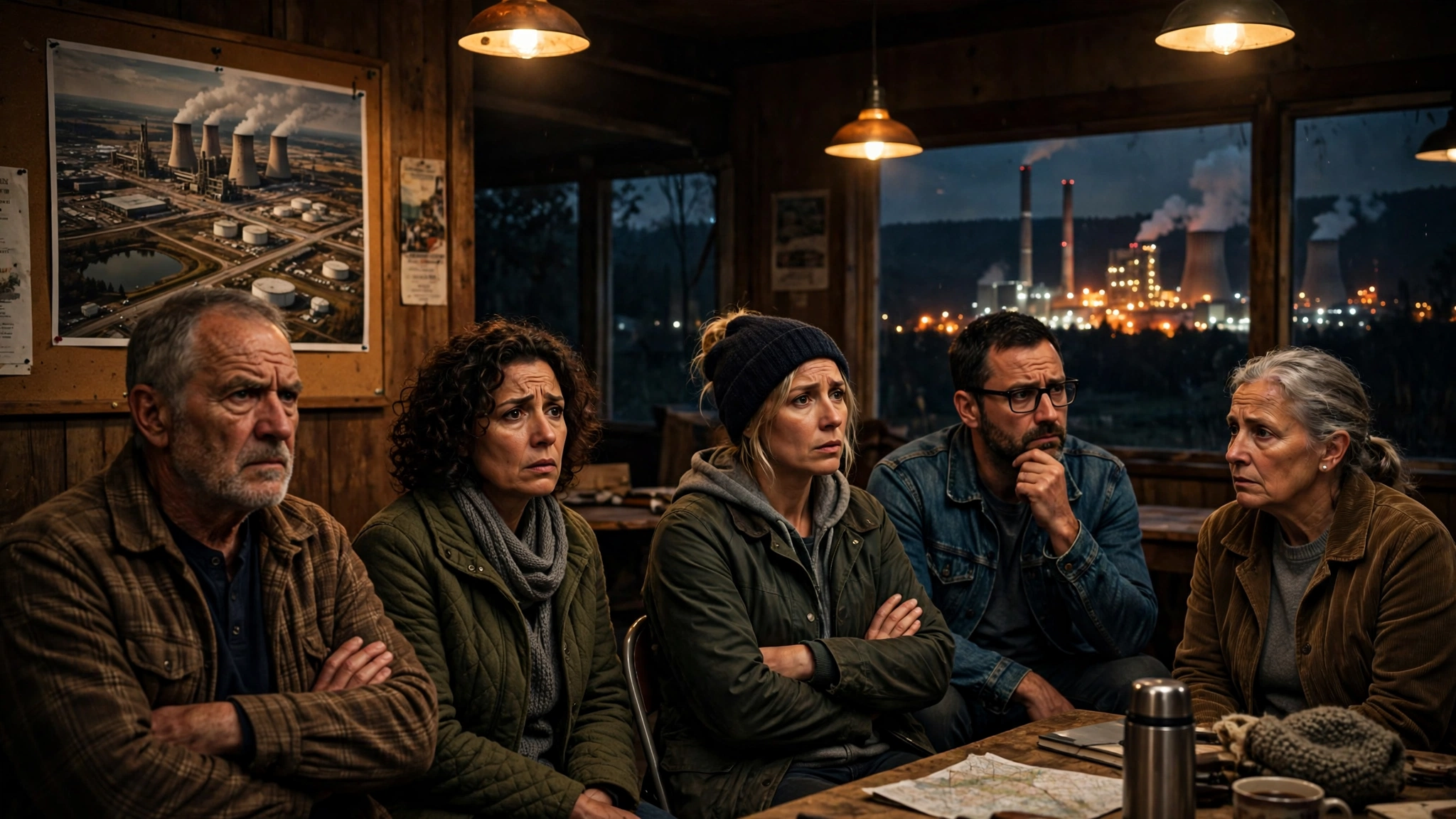
Consider what the debate has already produced without any renaming at all. Amazon and Microsoft have both said they will no longer use nondisclosure agreements in negotiations with local governments over data centers. Microsoft ended the practice in March 2026; Amazon Web Services followed on October 2, 2026, alongside a pledge of at least $1 billion over five years for the communities that host its facilities.
That shift did not come from a thesaurus. It came amid scrutiny of how these projects are negotiated and what they demand of host communities. The campaigns are widespread: candidates pledging to halt data-center construction are standing in 21 of the 36 states holding gubernatorial races, and analysts cited by Seoul Economic Daily suggest moratorium backers could win in as many as 15 of them. During the 2026 general elections, $173 million was spent on advertising against data centers, according to CryptoBriefing.
Lehane himself seems to understand this. He described the conversation around data centers as “good and healthy” and said, “Communities should hold companies responsible and accountable so they really and truly get a transformative benefit from these projects.” That is a striking sentence from a man whose company has discussed renaming the thing communities are objecting to. It is also a standard worth holding him to: if the benefit is transformative, it should be visible in the compact, the tax arrangement and the water agreement — not just in the press release.
The Pike County test for AI compute campuses
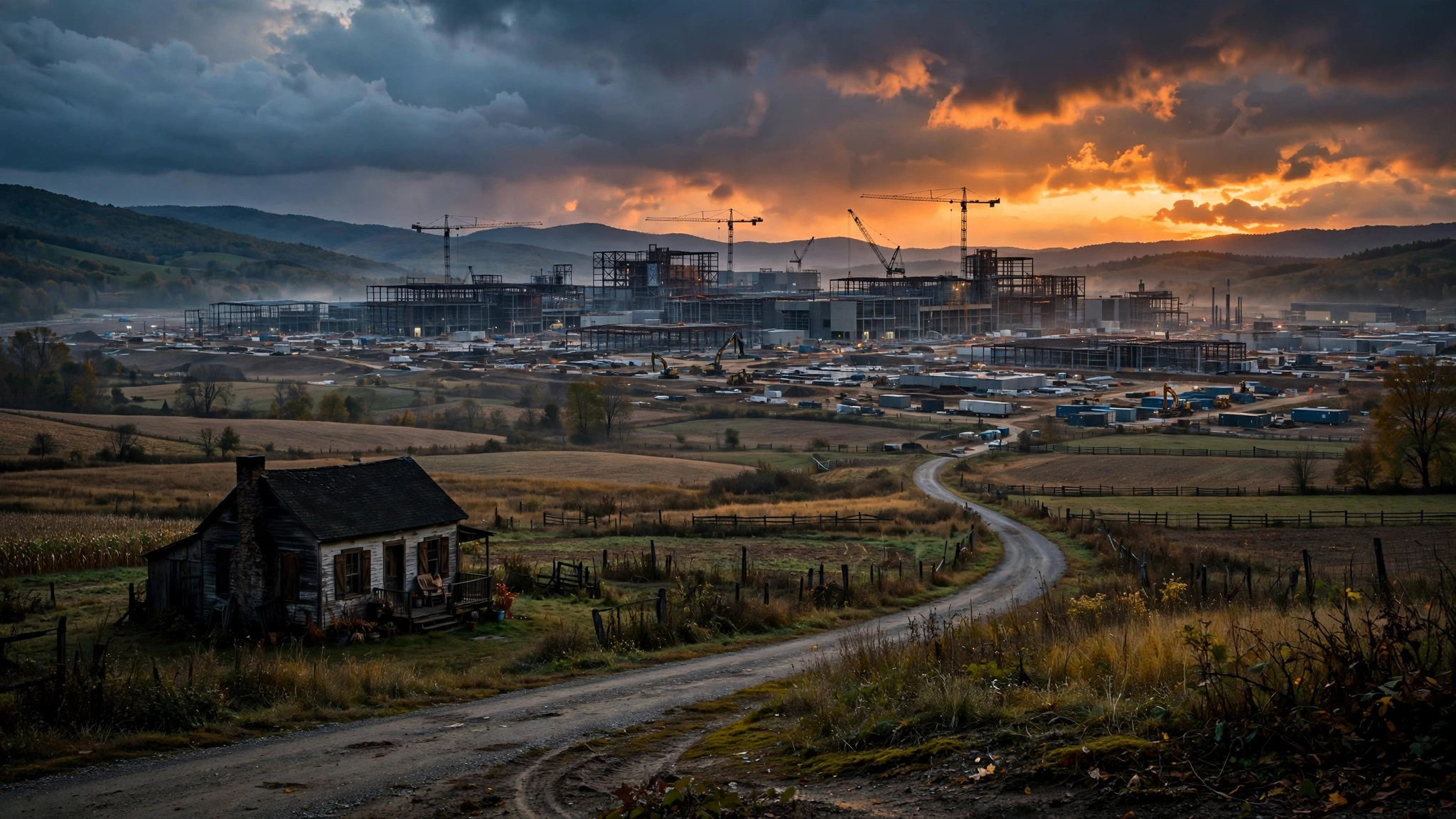
OpenAI points to one place as proof that the campus idea is more than marketing: the PORTS-Pike project in Pike County, Ohio, in Appalachia, where a large data-center project is reported to promise thousands of jobs. Axios reports OpenAI will lease the site for 20 years from SoftBank’s SB Energy.
Pike County is the right kind of test, because it makes the question concrete. If a campus means thousands of jobs, a 20-year commitment and a community that can point to what it gained, then the word is doing honest work — it describes a relationship, not just a building. If it means the same facility with a nicer sign, then the word is doing the other kind of work: the kind that asks residents to feel better without being given a reason to.
That distinction is the whole affair. The rebrand’s defenders can fairly say that language shapes perception, and perception shapes politics, and politics decides whether these projects get built. The critics can fairly reply that perception is not the thing being negotiated. Power, water, noise, tax revenue and jobs are. A campus that delivers on those does not need a euphemism. A data center that does not will not be saved by one.
What a name can’t do
There is a final honesty check worth applying, and it cuts in OpenAI’s favour as much as against it. “Campus” may be a legitimate description: a large site with offices, facilities and multiple buildings arguably is a campus, and the label alone does not prove bad faith. Lehane’s welcome for scrutiny is on the record, and scrutiny has already forced real concessions from Amazon and Microsoft.
But the check cuts the other way too. The rebrand differs from the rest of the list in one respect: unlike speed limits or compacts, whose guarantees remain unresolved, a new name costs its proposer nothing to announce and is easy to repeat. Such items have a way of becoming the whole story. If “AI compute campus” enters the language while the compacts stall in state legislatures, then the campaign will have succeeded as public relations and failed as policy, and the difference will be measurable in exactly the things a name cannot change.
So watch the lame-duck session, and watch Pike County, and watch what the next town is offered when a company comes calling. The question was never really what to call these buildings. The question is what changes besides the name.