


For years, the AI copyright wars have been fought against the chatbots. On Monday, the NYT Brave lawsuit moved the fight to a different room — and pointed at the furniture: the browser itself.
The Times and a group of other newspapers sued Brave Software in Manhattan federal court, accusing the maker of the privacy-focused Brave browser of scraping their journalism, letting its users slip past their paywalls, and selling what it gathered onward to artificial intelligence companies. Hours later, the publishers of the New York Daily News, the Chicago Tribune and the Orlando Sentinel filed a second, separate lawsuit making similar allegations. None of this has been tested in court yet.
The burglar and the fence
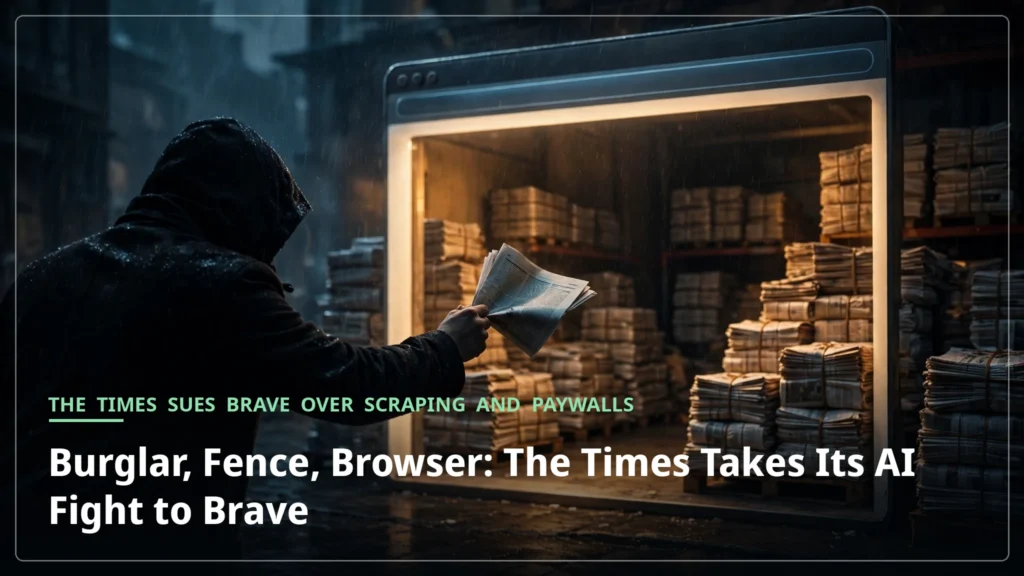
The complaint’s language is vivid. Brave, it says, “acts both like a burglar that misappropriates the content of publishers, and an AI ‘fence’ that sells stolen content to third parties.” The third parties, it adds, are “the knowing receivers of that stolen content, which they have used to build their trillion dollar businesses.”
Strip away the metaphor and the allegation has three parts. First, that Brave scraped publishers’ articles to train AI and to feed its own products. Second, that it monetised its index of scraped websites by giving AI companies paid access to “real-time online content from the Brave Index,” which those companies then use to train their models, to answer specific user queries, or both. Third, that it did all of this without permission and without payment. “Brave has never asked for the Publishers’ permission to access their websites,” the complaint says, “much less to copy the material and provide it to users or other AI companies.”
The named recipients, according to reporting on the complaint, include Anthropic, Perplexity, Mistral, xAI and Cohere. That list matters because it reframes the dispute. Publishers have sued the companies whose chatbots answer questions. This suit says the supply chain behind the answers is itself a defendant — that the index is not infrastructure, it is a business built on other people’s work.
The paywall prong

The second prong may be the sharper one. The claims reported include copyright infringement and claims under the Digital Millennium Copyright Act, the law against circumventing technological measures that control access to copyrighted work. The complaint says Brave promotes “hundreds of top publishers” as accessible through its “Paywall blocker” feature, and that Brave “allows its users to bypass the Publishers’ paywalls without their consent, and has taken other steps that prevent the Publishers from blocking Brave’s access to the Publishers’ websites.”
If that sounds like a different kind of case from the training-data fights, it is. Training arguments are about how models were built in the past. A paywall argument is about revenue: subscriptions are what keep newsrooms alive, and a browser feature that routes readers around the paywall strikes at the mechanism itself rather than at a model’s memory. Whether the feature actually defeats a technological measure in the DMCA’s sense, or simply displays content a reader could already reach, is exactly the question a court will have to answer — and how the feature actually behaves is an open question in the reporting so far.
The Times, for its part, is not presenting this as a close call. “While we believe in the ethical and responsible use and development of AI, Brave has flouted established copyright law and ignored repeated requests by The Times to stop its infringing conduct,” spokesperson Graham James said in a statement. “We filed this lawsuit to hold Brave accountable for stealing our content to power its own products and to provide it to some of the most prominent and well resourced generative AI companies in the world.” Brave had not immediately replied to requests for comment at the time of reporting.
This fight started earlier than Monday
One reason the case reads as confident rather than speculative is that it is not the first round. News Corp wrote to Brave on 27 February 2025 demanding that it stop scraping and pay for past use. Its letter alleged that Brave scraped News Corp sites without identifying its crawler, folded the content into a search index it licenses and sells through its Search API, and in many instances returned verbatim sentences and paragraphs totalling hundreds of words as “extra alternate snippets”.
In March 2025 Brave sued News Corp first, seeking a declaration that it was not infringing, arguing that search-engine functions such as snippets are core to the modern search engine and that News Corp’s demands threatened to “bully Brave out of the search market.” News Corp then filed its own case against Brave in May 2026. Monday’s lawsuits by the Times and the other publishers therefore land on ground that is already litigated, with both sides’ theories already written down and already opposed.
That history also supplies the steelman for Brave’s defence, even before Brave has stated one in this case. A browser fetching a page at a user’s request is what browsers do. An index that crawls the web and returns snippets is what search engines have done for decades. Brave may argue that indexing public web content and offering search and API access is transformative fair use, and that the paywall claim must prove an actual defeat of a technological measure. It may also argue that the publishers’ real grievance is competition from AI answers — and that copyright law does not guarantee publishers their old traffic.
Why the index is the point in the NYT Brave lawsuit
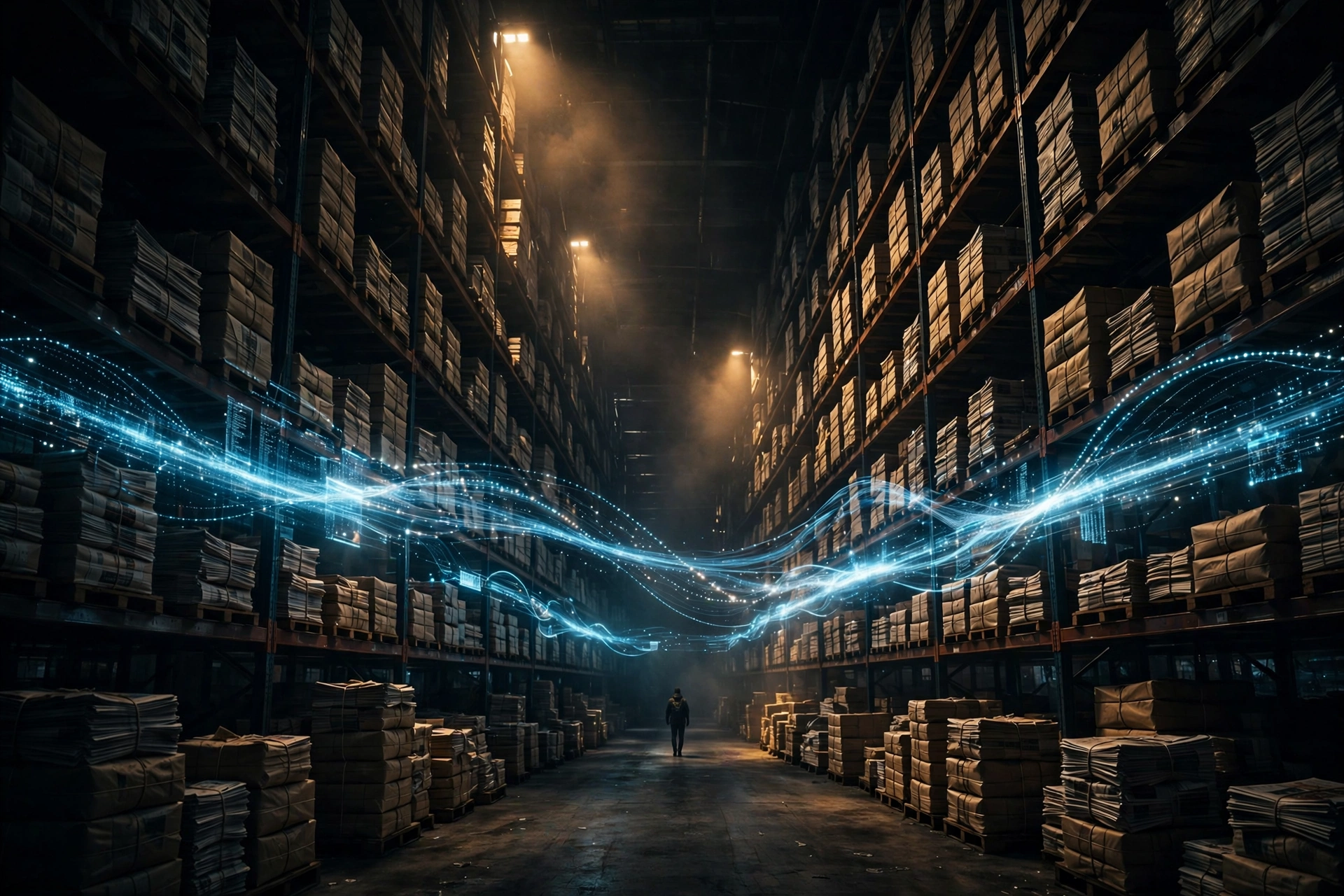
There is a reason the index sits at the centre of this case. Brave Search runs on an independent index — it cut its last dependence on Bing’s results in 2023. Brave reported 122.55 million monthly active users and 51 million daily active users for July 2026, with 2.46 billion monthly search queries, and its index covers more than 40 billion pages. In 2026 it added an LLM Context endpoint designed to deliver ranked content chunks as context to AI systems. In other words, Brave spent years building the asset the publishers now say was built from their work: a machine-readable copy of the web, sold as a service to the AI industry.
That is also why the case will be watched far beyond newsrooms. Would a publisher win against an index provider create a new tollbooth for every company that crawls, indexes and resells web content? Or would a Brave win leave crawling and indexing as the web’s open infrastructure, with publishers’ remedy lying in licensing deals or in Congress? The answer could turn on the particular conduct and claims at issue, and could distinguish indexing from verbatim reproduction and from circumvention — it is not settled by either side winning.
What to watch next
The immediate questions are factual and will be answered in filings, not in press statements. How does the Paywall blocker feature actually work? Does the Brave Index hand over full article text, or snippets and grounding? What did the Times’ repeated requests say, and when were they made? And what does Brave say for itself — its silence so far is a gap in the record, not evidence of anything.
One early signal came not from Brave but from a named recipient. Perplexity’s chief communications officer, Jesse Dwyer, told The Verge: “The New York Times is overpaying its attorneys and underpaying its journalists. (Who could’ve easily identified the disinformation in this suit.)” That is Perplexity’s dismissal, not Brave’s argument. Whether the other named recipients will adopt a similar position is unknown; the reporting read so far does not provide their positions.
The drama of the burglar-and-fence metaphor should not obscure what is at stake. Publishers are no longer only asking who gets to train on their work. They are asking who gets to sit between the reader and the article, copy what passes through, and sell it on. The browser was supposed to be a window. This lawsuit asks the court to decide whether it became a warehouse.