

The AI DRAM shortage has a new flashpoint: OpenAI chief executive Sam Altman has said it is, in his words, quite terrible for the world’s limited supply of DRAM to sit inside personal computers instead of in data centers. The remark, made on the Cheeky Pint podcast, lands at a moment when memory prices have soared, a major manufacturer has walked away from the consumer market, and buyers are paying far more for PCs, phones and consoles. Altman’s argument is about allocation: with one scarce input and many competing uses, he believes data centers use it better than desktops do. But the reaction shows why the argument cuts both ways — for many people, that same DRAM is what makes their own machine useful, private and independent.
What Altman actually said
Altman was responding to an idea that has become common as open models have improved: that if people can run capable models on their own machines, the giant data center build-out may no longer be necessary. He rejected that logic. A lot of people want local inference, he said, and somehow assume the problem is solved because open-source models can run on personal computers. From a global allocation perspective, he argued, it is quite terrible to have everybody hold a bunch of the world’s limited supply of DRAM in their own computer, where it is used only about 5% of the time.
The framing matters. The supplied passage supports an allocation and utilisation argument: memory that sits idle most of the day in millions of individual machines could, in his view, do more work pooled in a data center that runs around the clock. The podcast appearance was hosted by Stripe co-founder John Collison, and the passage came at roughly the 29-minute mark, in a discussion of supply chain shortages including the ongoing RAM shortage.
His point was comparative — that under scarcity, centralised use wins on utilisation, since PC memory is used only about 5% of the time. Whether that comparison is the right one is exactly what the rest of this debate is about.
The memory crisis behind the remark: the AI DRAM shortage
The shortage Altman referred to is real and severe. Retail memory prices have climbed dramatically over the past year. Reporting in late October 2026 put the cheapest 32GB DDR5-6000 kit at $449, while a Corsair 32GB kit that once sold for around $80 had reached $399. A 64GB DDR5 kit was reported to have risen from about $191 to $1,118 year over year, a surge of roughly 485%.
Forecasters expect worse before better. Gartner projected that DRAM and SSD prices would rise about 130% by the end of 2026 compared with 2025, pushing average PC prices up about 17% and smartphone prices about 13%. TrendForce forecast conventional DRAM contract prices rising a further 10% to 15% in the fourth quarter of 2026. Industry outlooks cited in reporting expect tight supply stretching into 2027 and 2028, with relief not expected soon.
The most striking corporate response came from Micron. On 3 December 2025 the company announced it would exit its Crucial consumer business, ending consumer shipments in February 2026, in order to improve supply and support for its larger, strategic customers in faster-growing segments. Micron’s chief business officer, Sumit Sadana, put it plainly: the AI-driven growth in the data center had led to a surge in demand for memory and storage. The move ended Micron’s Crucial consumer business.
Why AI data centers want so much memory
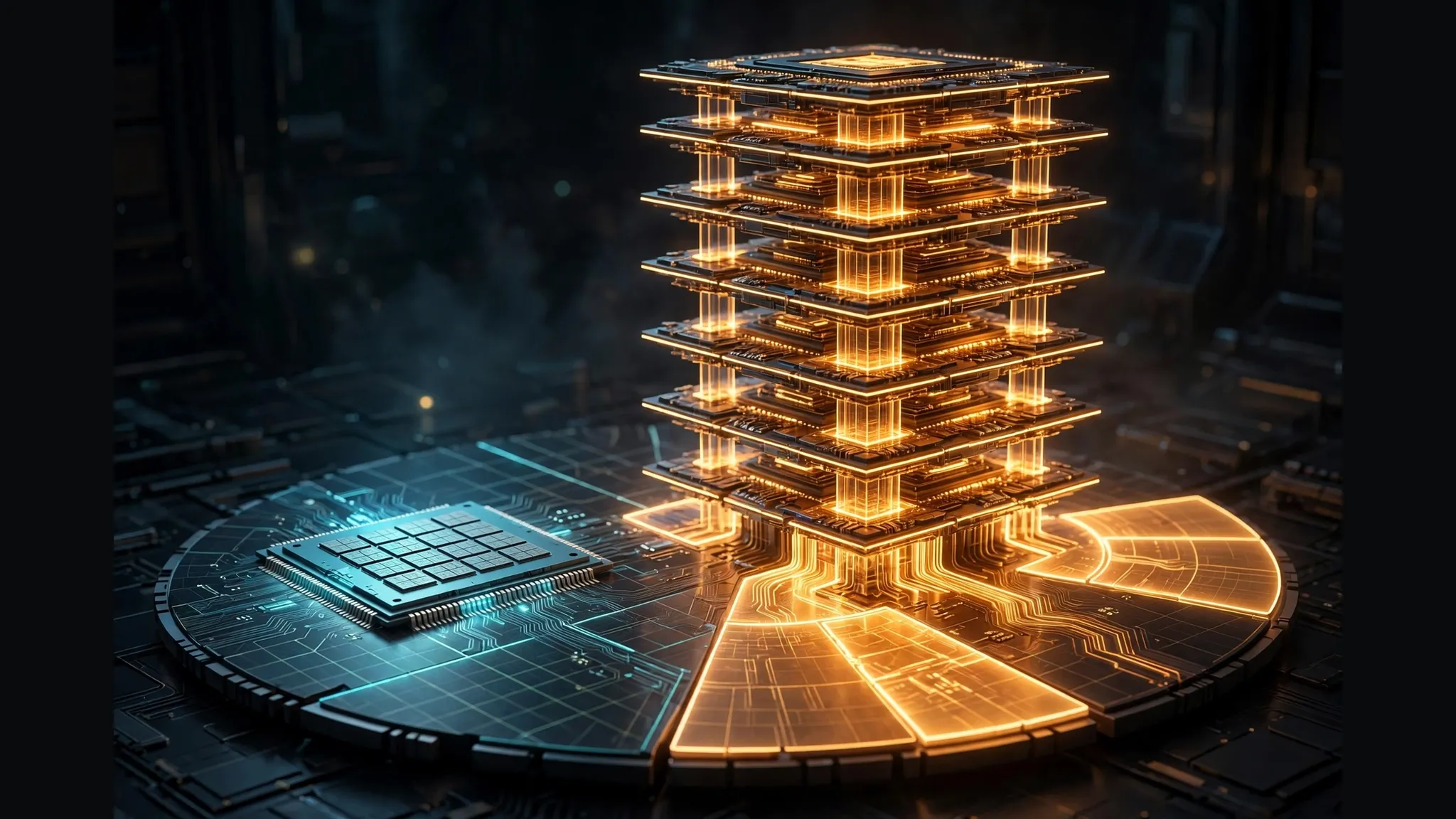
Data centers do not just want more of the same memory that goes into a laptop. AI accelerators use high-bandwidth memory, or HBM, which is built by stacking layers of DRAM chips. But it is expensive in wafer terms. Producing one gigabyte of HBM consumes roughly three times the wafer area of a gigabyte of standard DDR5. Every wafer redirected to HBM is a wafer that cannot produce the DDR memory used in consumer devices.
Demand is also contracted far ahead. Micron said more than 75% of its planned fiscal 2027 output was already committed to customers, and that a large part of its 2027 HBM volume was sold out at prices much higher than 2026 prices. SK Hynix told investors in October 2026 that its DRAM, NAND and HBM capacity was essentially sold out for all of 2026. And the scale of individual commitments is vast: OpenAI, Samsung and SK Hynix signed a letter of intent in October 2025 for roughly 900,000 DRAM wafers per month for the Stargate project.
This is the mechanism behind Altman’s allocation argument. With much of 2027 output already committed in advance and HBM selling at premium prices, manufacturers have strong reason to prioritise data center customers — and consumer supply feels the squeeze. From the consumer’s perspective, it looks like being priced out of a market they did nothing to distort.
The case for local inference

The counterargument starts from a different definition of efficiency. A PC’s memory may be used only a fraction of the time, but when it is used, it serves its owner directly: no network round trip and no per-token fee. Running a model locally offers privacy and offline-access benefits. For many users, those are not luxuries — they are the reason to run a model at all.
And local inference is genuinely feasible for a large class of models. Small-to-medium open models in the 7B to 13B parameter range run on modern laptops when quantized: a 7B model needs roughly 14GB of memory for its weights, and a 13B model roughly 26GB.
The limits are real too. Very large models, in the 30B-plus range, generally need a high-memory graphics card or a multi-GPU setup, and even mid-size models slow down sharply without enough memory bandwidth. That gap between what runs locally and what needs a data center is at the heart of Altman’s argument. The counterargument turns on the trade-offs: local operation offers privacy and offline access with no per-token fee, while data centers offer the scale that large models need — and how that balance should be struck remains an open question.
What this means for consumers
For buyers, the consequences are already visible. PC makers including Acer have warned of price rises of around 20%, and Gartner projected worldwide PC shipments falling about 10.4% in 2026 as buyers defer purchases. Reports also suggested Apple cut component orders for the iPhone 18 Pro line as memory costs bit.
The practical advice follows from the forecasts. If a purchase can wait, waiting may help, but no forecaster cited here expects a return to year-ago prices soon — most see tight supply into late 2027 or 2028. If a purchase cannot wait, memory configuration matters more than it used to. For anyone considering local AI, the memory decision and the model decision are now the same decision: a machine bought for local inference needs enough RAM to hold the model — roughly 14GB for a 7B model and 26GB for a 13B model — not just to run the operating system.
There is also a structural point. Micron’s exit does not mean Micron stopped making memory; it means one fewer retail brand competing for consumer wallets, as the company redirects supply toward larger strategic customers in faster-growing segments.
What happens next
Three questions will decide how this plays out. First, whether memory makers expand capacity or keep prioritising data center contracts: with supply expected to stay tight into 2027 and 2028, that is a long wait for buyers paying today’s prices. Second, whether Altman’s allocation view shapes industry behaviour — whether other executives and policymakers start treating consumer memory as a lower priority by design, rather than by market accident. And third, whether local inference keeps improving fast enough to make the consumer case stronger: each generation of smaller, better-quantized models weakens the claim that personal machines cannot do useful AI work.
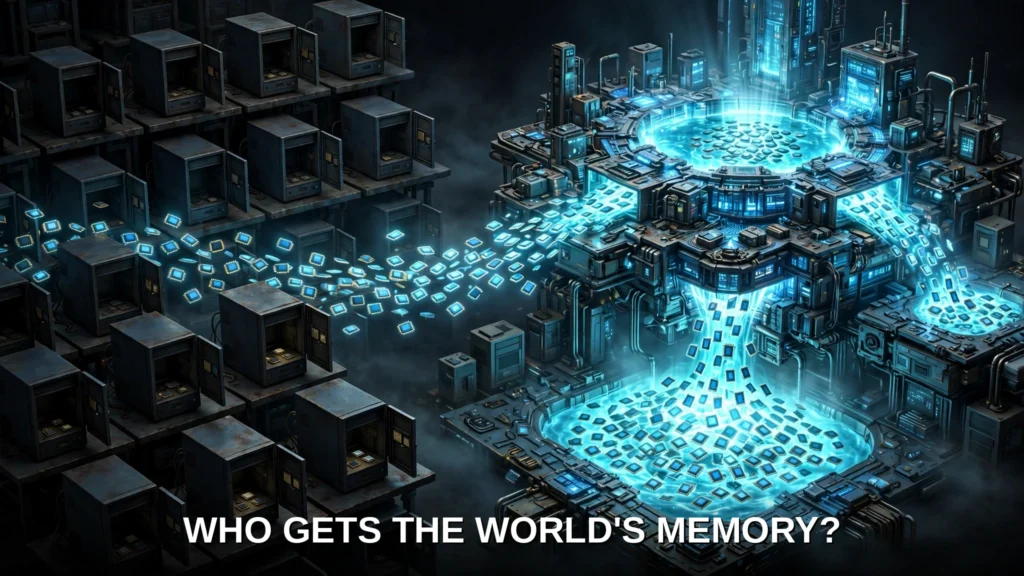
Altman’s remark will probably be remembered less for its economics than for its bluntness. Telling people that the memory in their own computer is a terrible use of a scarce resource is a strange message from a company whose products many of those people use every day. But the bluntness is also clarifying: it states openly a trade-off the market has been making quietly. The AI DRAM shortage is not just a price spike. It is a contest over who gets to use the world’s memory — and for now, the data centers are winning.