



What the leak actually says
Start with what is known, and what is not. The claim comes from a single source: a Weibo post by the leaker Digital Chat Station, reported by 9to5Mac and The Verge. According to those reports, the base iPhone 18 will arrive with a larger battery and a new A20 chip built on a 2-nanometer process, and its price will likely go up. No amount has been given. No market has been named. And it is not even clear which price the increase would be measured against.
That last uncertainty matters more than it sounds. The iPhone 17 launched in the United States at $799, and Apple raised it to $899 in September 2026. A comparison with the $799 launch price would not by itself establish an increase above the current $899 price. Only a price above $899 would be a further increase beyond what iPhone 17 buyers pay today. The reporting so far does not settle which comparison, if either, applies, and any article that pretends otherwise is guessing.
The rest of the rumored specification list is, by the standards of early leaks, fairly settled across the reports. MacRumors, describing the same leak, lists a 6.3-inch OLED display with a refresh rate of up to 120Hz, Face ID, and a 48-megapixel dual rear camera system, alongside the larger battery and the 2-nanometer A20 chip. The base model is expected in the first half of 2027, alongside the iPhone 18e and a second-generation iPhone Air, after being left out of Apple’s fall launch event. One detail should be handled with care: reporting differs on the Dynamic Island, with some accounts describing it as continuing on the base model and others noting that the smaller version on the Pro models is not expected here. Until Apple says something, the safe statement is that the display cutout arrangement for the base model is not firmly established.
Why an iPhone 18 base-model increase would be different
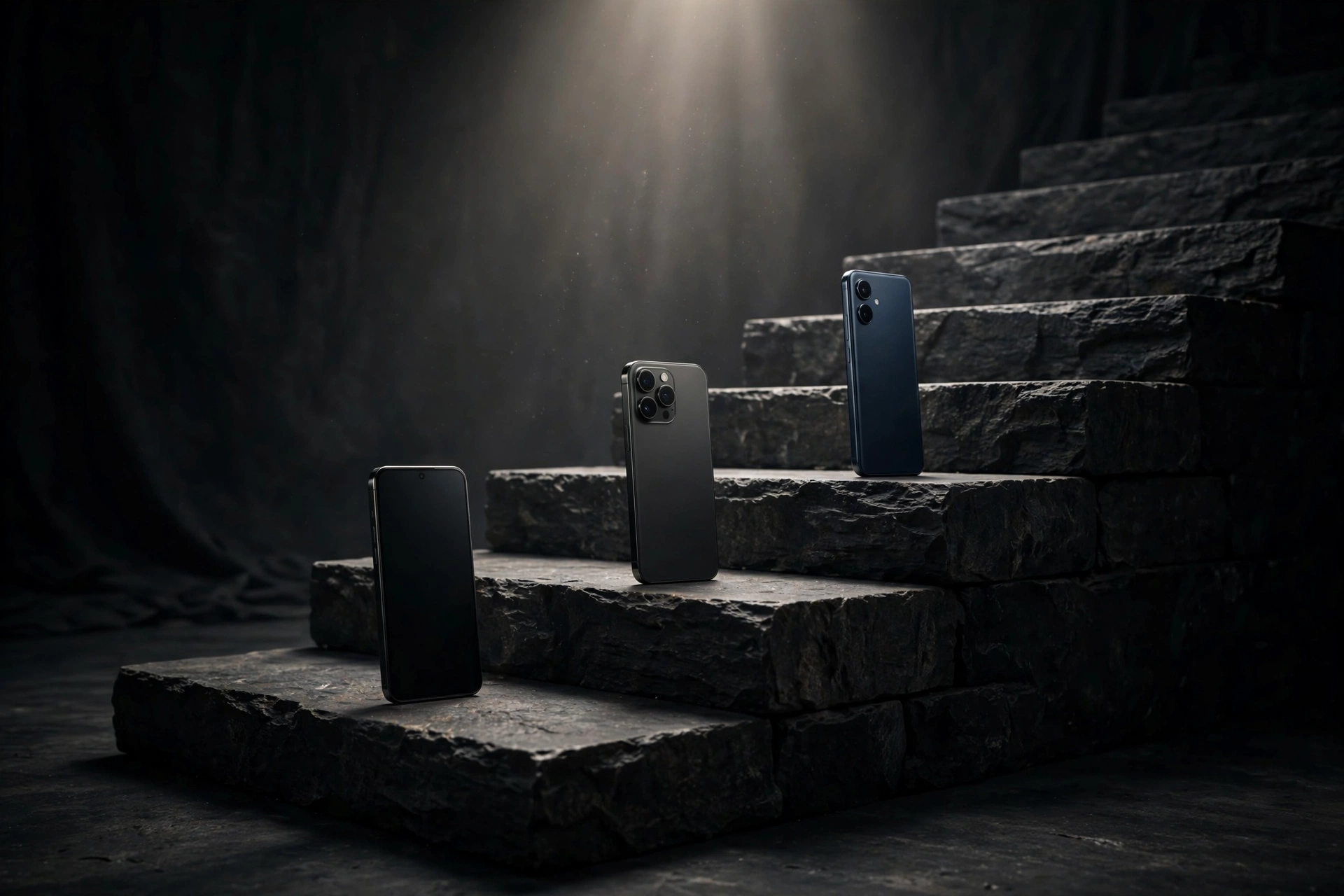
Price increases on premium phones are easy to explain away. The buyer of a Pro phone has already chosen the expensive option, and a $100 step looks like the cost of staying at the front of the line. The base iPhone is a different proposition. It is the phone for the buyer who wants an iPhone without paying for everything Apple can put into one.
That floor has already moved. In September 2026, Apple raised prices by $100 on its older models, including the iPhone 17. The iPhone 18 Pro and Pro Max, launched in the same period, started at $1,199 and $1,299 in the United States, each $100 above the iPhone 17 Pro models they replaced. The context given in the reporting for those increases is industry-wide pressure on memory and other components. Google and Samsung, The Verge noted, had also raised phone prices by $100 over the past year on the back of shortages of RAM and other components. In other words, this is not a story about one company deciding to charge more. It is a story about an entire industry discovering that the cost floor under a phone has risen.
If the base iPhone 18 follows, one possible reading, not an established motive, is that the larger battery and the new chip would be visible changes alongside any increase. Component costs are a documented context for other models, but the specific driver for this model is unresolved, so no motive should be inferred from that context alone. A spring launch, separated from the autumn Pro launch, would mean a higher base price, if it occurred, arrived as its own news event rather than as a footnote to a bigger announcement. None of that makes the rumor true. But it does explain why the rumor is worth noting, and what would matter if it proved correct, as open questions rather than conclusions.
The record that complicates the story

There is a tempting, simple version of this story: Apple raises prices, buyers keep buying, so Apple raises prices again. The earnings reported in early November 2026 seem, at first glance, to support it. Apple reported total revenue of $114.5 billion for its fiscal fourth quarter, up 12 percent year over year, with iPhone revenue of $57.58 billion, up 17 percent year over year and a record for a September quarter. That record was achieved without a standard iPhone 18 in the September lineup, and without counting preorders for the iPhone Duo.
Look closer, and the simple version frays. A revenue record driven by higher-priced Pro models is not the same as proof that base-model buyers will happily pay more. Revenue can rise because each phone costs more, even if fewer people buy, or because buyers are steered toward the expensive end of the range. The record tells us that Apple’s premium lineup performed strongly in the September quarter. It does not tell us how a buyer shopping at the bottom of the range will react to another increase.
There is also a counterweight in the reporting that deserves equal billing. In October, Nikkei Asia reporting relayed by MacRumors said Apple had cut iPhone 18 Pro component orders by at least 15 percent against its initial October requests, amid memory costs and weaker-than-expected demand. That report does not cancel out the earnings record, and a single month’s order adjustment is not a verdict on a product line. But it does puncture the idea that higher prices have met no resistance at all. Between the record quarter and the reported order cut, the documented picture is mixed: record iPhone revenue alongside a reported reduction in Pro component orders. What a further base-model increase would do to demand is not established by either figure.
What we still do not know
The honest list of unknowns is long, and it is the most important part of this story. We do not know the price. We do not know the baseline it would be compared with, or the markets it would apply to. We do not know the battery capacity, only that it is described as larger than the iPhone 17’s reported 3,692 mAh. We do not know whether component costs are the driver for this specific model, or whether the memory-shortage context from the Pro models and older phones is being read into a leak that does not itself make that connection. And we do not know the launch date beyond the first half of 2027.
That uncertainty is not a reason to ignore the rumor. The details here appear across multiple reports of the same single source, which is not the same as independent corroboration. But uncertainty is a reason to keep the language honest. This is a rumor about a price, not a price. It is a claim about a battery, not a battery. The distinction sounds pedantic until the day a rumor turns out to be wrong, and then it is the only distinction that matters.
The shelter is closing
So what should a reader take from a rumor with no price attached? Perhaps this: September 2026 moved the older models up by $100, including the iPhone 17. The autumn Pro launch moved the top up by $100. If the spring 2027 base model were priced above the current $899 US starting price for the iPhone 17, that would be a further increase beyond what iPhone 17 buyers pay today. The rumor does not establish that price, the market it would apply to, or the baseline it would be measured against. Nothing here establishes anything about every tier, including the 18e and Air, whose pricing is not documented here.
That would not be a scandal, and it would not be a surprise. The larger battery and the new chip would be changes alongside any increase, not proof of motive. Record revenue and reported order cuts point in different directions, and whether buyers would absorb a further base-model increase is still unknown. The rumor suggests a price question may be coming for the next base model, not that the answer is known.