


Introduction to Box’s new feature
Box is integrating Nvidia’s Nemotron embedding technology into a new feature called Box Content Retrieval, designed to help agents find relevant information in enterprise documents. The aim is to return useful passages for a task instead of requiring an agent to work through each document. Box presented the feature at its developer conference on November 5, 2026, according to TechCrunch’s report.
The announcement addresses a concrete question for enterprise users: how can an agent get the information it needs without spending unnecessary effort processing material that does not answer the query? Box’s approach combines Nemotron-generated metadata with the company’s existing metadata and permission controls. The resulting retrieval system is intended to improve the information supplied to agents before they formulate a response.
Box says users should see faster, more accurate and less expensive queries. Those benefits remain vendor claims in the available reporting. Nvidia executive Kari Briski described substantial expected improvements in speed, error rates and token consumption, but the supplied evidence does not include a test methodology or independently verified results. The distinction matters: the announcement explains a proposed mechanism and expected outcomes, rather than establishing performance across enterprise workloads.
Availability is also prospective. TechCrunch reports that the system will roll out to all Box Enterprise Advance customers early next year, meaning early 2027 relative to the November 2026 announcement. The report supplies no more specific release date.
The central development is therefore the integration itself: Box is bringing an embedding system into its content retrieval product and combining it with controls already present in the platform. Whether that produces the advertised improvements for a particular organization remains an evaluation question.
Details on Nvidia’s Nemotron integration

Box Content Retrieval implements Nvidia’s Nemotron Embed project, which the report describes as offering open-weight embedding models for automated retrieval. In the reported design, Nemotron creates embedded metadata that agents can use to locate relevant content. The intended advantage is conceptual matching: finding related information even when the query and the document use different wording.
The legal example supplied by Box makes that distinction tangible. A lawyer using an agent could seek relevant clauses or precedents. Nemotron’s embeddings are intended to help surface related legal themes despite differences in wording or language. The example illustrates what the system is supposed to retrieve; it is not evidence of a completed customer deployment or a measured improvement in legal work.
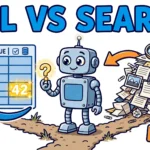
Box CEO Aaron Levie’s explanation, as reported by TechCrunch, centers on returning the portions of documents most relevant to a query or task. This connects conceptual matching to the agent’s next step. Locating a related document is useful, but supplying the relevant passage gives the agent a more focused body of material to process. That is the architectural rationale behind the announcement’s efficiency claims.
The model is only part of the implementation. TechCrunch reports that Box Content Retrieval also depends heavily on Box’s existing metadata and permission controls. Although the Nemotron models are freely available, the report says recreating the complete system from scratch would be challenging. Access to the model therefore does not establish that another implementation would reproduce Box’s retrieval behavior or operating characteristics.
This is an important distinction for teams assessing the announcement. The product combines a retrieval model with a particular content platform and its controls. Its practical value must be assessed at that combined system level. Model availability alone says little about how the surrounding components have been assembled or how they affect the agent’s results.
The evidence does not provide an API specification, configuration examples, a named model checkpoint or details of how Box prepares individual documents. It also does not explain how the underlying components interact at each stage of a query. Those gaps limit implementation-level conclusions: the reported mechanism supports an explanation of the approach, but not a reproducible technical recipe.
Expected benefits for users

The headline performance expectations come from Nvidia, rather than an independent evaluation. Briski, identified in the report as Nvidia’s vice president of generative AI software, told TechCrunch that she expected answers four times faster, with 20% fewer errors and 90% fewer tokens used.
| Measure | Nvidia’s reported expectation | Qualification |
|---|---|---|
| Answer speed | Four times faster | The comparison baseline and workload are not supplied. |
| Errors | 20% fewer | The evidence does not define an error or give the starting error rate. |
| Token use | 90% fewer tokens used | The report does not specify which processing stages are counted. |
These are three distinct claims. Faster answers concern elapsed response time; fewer errors concern answer quality; lower token consumption concerns the amount of model processing measured in tokens. The reporting presents them together, but does not establish how each was measured or whether all three improvements apply under the same conditions.
The retrieval design offers a plausible explanation for the direction of the expected gains. If an agent receives relevant passages instead of having to work through each document, it has a narrower set of material to process. That could reduce the processing needed for a query. This is an interpretation of the design described by Box, not a separate measurement of its performance.
The accuracy claim needs its own scrutiny. Conceptual matching is intended to uncover information that a search based on matching words could miss. However, the supplied report does not show representative queries, retrieved passages or resulting answers. It therefore cannot establish how reliably the system identifies the right material for different tasks, or how retrieval improvements translate into fewer mistakes in an agent’s final response.
Cost requires similar care. Box says queries should be less expensive, and Nvidia expects substantially lower token use. The evidence includes no product pricing, billing details or measured customer savings. A 90% reduction in tokens should consequently not be presented as a 90% reduction in a customer’s bill. Token consumption and total customer cost are different measures, and the report supplies no calculation connecting them.
For an enterprise evaluating the feature, the useful response to these claims is to define what success would mean for its own tasks. Relevant questions include which existing process provides the baseline, how an incorrect answer is identified, and whether the same queries are used to compare response time and token consumption. These are evaluation questions arising from the missing methodology, not requirements documented by Box.
The potential benefit is a more focused exchange between content retrieval and the agent answering the question. The scale of that benefit, particularly the numerical improvements Nvidia expects, remains unverified in the supplied evidence.
Target audience for the new system
The announced customer scope is clear: Box Content Retrieval is scheduled for all Enterprise Advance customers. The reporting does not establish availability for other Box plans, provide a separate purchase price or describe a broader release schedule. Organizations outside that named group cannot infer access from the announcement alone.
Within that audience, Box says the system will be most useful when paired with active agents. The feature is presented as a way to improve how those agents obtain relevant content while answering queries or carrying out tasks. Its intended value is therefore closely tied to the work the agent is doing and the information that work requires.
Lawyers are the specific user example in the report. Their relevance to the announcement comes from the need to identify related clauses, precedents and legal themes across differences in expression. This illustrates why conceptual matching could matter: the wording of a request need not be identical to the wording of the useful passage. The evidence does not establish legal accuracy, professional suitability or results from a law firm’s deployment.
For prospective users, eligibility and usefulness are separate questions. Enterprise Advance defines the announced access group. The presence of agent tasks that depend on retrieving related passages defines the use case Box emphasizes. Neither point, by itself, proves the expected gains will appear in an organization’s work.
Box’s existing permission controls are another material part of the audience discussion because they are part of the reported implementation. The evidence does not describe their detailed behavior in this feature or establish new security guarantees. An assessment should therefore distinguish the documented reliance on those controls from assumptions about how every retrieval request will be handled.
Implications for the future of content retrieval
The announcement suggests that retrieval quality is a meaningful part of agent performance. Box’s proposed improvement begins with the material supplied to an agent: identify conceptually related content, select useful passages and return those passages for the task. Its significance lies in treating that information-selection step as a place to improve speed and accuracy.
That interpretation is narrower than declaring a proven advance across enterprise AI. The evidence supports the existence and intended design of Box Content Retrieval, along with vendor expectations about its effects. It does not establish comparative performance against named competing systems or show that the approach will deliver the same gains across different document collections and queries.
The integration also illustrates why an available embedding model and a finished enterprise feature are different things. Nemotron supplies a component that other developers can access, while Box’s implementation also draws on existing metadata and permission controls. The reported difficulty of recreating the system comes from that combination. Assessing the product therefore requires attention to the surrounding platform as well as the model.
Several questions will determine how much weight to give the announcement’s performance promises: what workload supports the speed estimate, what counts as an error, which tokens are included, and what the resulting customer cost looks like. The reported rollout window also leaves the precise availability date unresolved. None of those questions can be answered from the supplied reporting.
For now, Box has outlined a specific route to improving agent access to enterprise content: combine Nemotron’s conceptual retrieval capabilities with Box’s content metadata and controls, then supply relevant document passages to agents. The practical test is whether that combination delivers better answers with less processing on the tasks its customers actually need to perform.