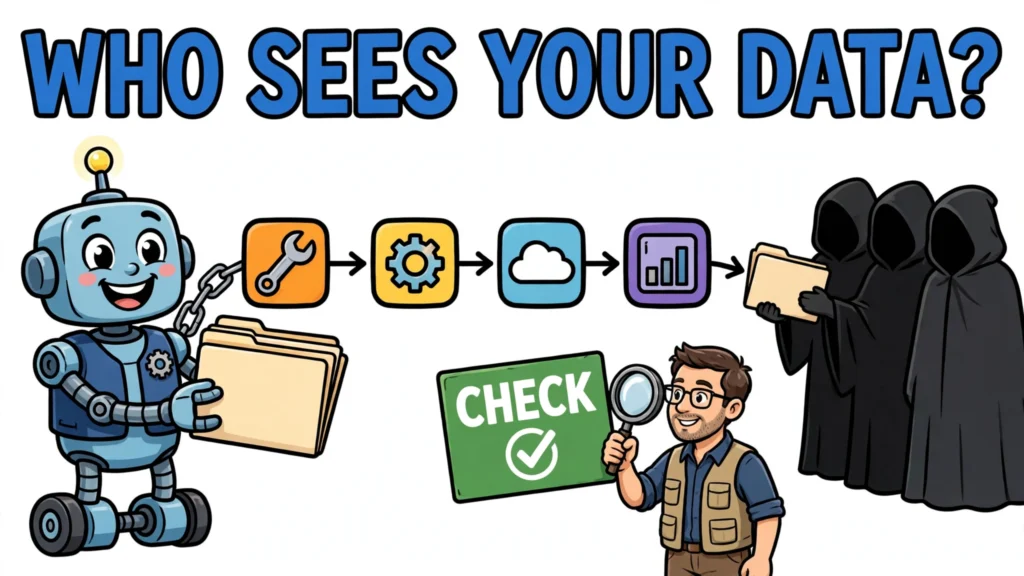


When people ask how AI agents handle data privacy and compliance, they are really asking a practical question: an agent does not just answer a question, it acts. It reads your messages, remembers things about you, calls tools, searches documents, and changes records in other systems. That is why ai agent privacy compliance is a design problem, not a policy paragraph. This guide explains how agents handle personal data step by step, which rules apply, which controls actually work, and where an agent should stop and ask a human instead.
How an AI agent handles data, step by step
An agent moves personal data through several distinct stages. First comes input: what you type, upload, or say. Then comes context: the agent may pull in retrieved documents, past conversation, and stored memory to understand the task. Then comes reasoning and action: the agent calls a tool, queries a database, sends a message, or updates a record. Each stage carries a different risk. Input can contain more personal data than the task needs. Memory can keep data long after the conversation ends. A tool call can send data to a system you never intended to involve.
The memory problem is the sharpest difference between an agent and a plain chatbot. Deleting a record from a source database does not necessarily remove what the agent learned from it. Personal data can persist as stored conversation, as entries in a retrieval system, or as inferences and derived attributes the agent formed along the way. A compliance plan that only covers the source database therefore misses the places where agent data actually lives. Any honest inventory has to follow the data from input, through memory and retrieval stores, to every tool and action that touched it.
What privacy means when the software acts for you
Privacy principles that sound abstract become concrete once software acts on your behalf. Data minimisation means the agent should receive only the data that is adequate, relevant, and limited to what is necessary for its purpose. Purpose limitation means data collected for one purpose cannot simply be reused for an incompatible one. Storage limitation means personal data should not be kept longer than necessary. These are the principles in Article 5 of the GDPR, and they bite hardest exactly where agents are most tempted to over-collect: it is always easier to give an agent everything and let it sort things out.
Consider a customer-support agent handling a billing question. It does not need full payment-card details when masked tokens achieve the same outcome. Giving it the full card number anyway increases the damage if any downstream system is breached, and it creates a retention problem for every store the number passes through. Minimisation is not about making the agent weaker; it is about scoping its access to what the task genuinely requires, and the same logic applies to names, addresses, health details, and any other personal data the agent might encounter.
Consent and expectations matter too. When an agent acts across systems, the person whose data is involved should understand what the agent will do, which systems it will touch, and what it will remember. Transparency is not a single privacy notice; it is the ongoing ability to see, correct, and delete what an agent holds. If a person cannot find out what an agent stored about them, or cannot get it deleted, the deployment has a rights problem even if its intentions were good.
The compliance map: which rules actually touch AI agents
No single law governs AI agents, but several overlapping regimes do. In Europe, the GDPR supplies the core privacy duties: a lawful basis for processing under Article 6, the Article 5 principles, the right to erasure under Article 17, and the Article 22 protection against being subject to a decision based solely on automated processing that produces legal or similarly significant effects. In California, the CCPA as amended by the CPRA applies whenever an AI system processes personal information of California residents, and it brings rights of access, deletion, correction, portability, and opting out of profiling and automated decision-making.
Within that map, one determination shapes everything else: who is the controller and who is the processor. In GDPR terms, the controller determines the purposes and means of processing, while the processor acts on the controller’s instructions. A company deploying an agent for its own purposes will typically be acting as controller for that deployment, while the vendor hosting the model or the agent platform will typically be acting as processor for the processing it carries out on the deployer’s behalf — but the roles are determined by the actual arrangement, not by product labels, and a single organisation can be controller for some processing and processor for other processing. The research supplied for this article does not establish the role determination for any particular deployment, so deployers must map each data flow to the party that decides its purpose, the party that carries it out, and the contracts that bind them, before they can say who owes which duty.
The deletion right shows why agents need special attention. For an AI system, deletion must reach prompt logs, conversation histories, retrieval repositories, agent memory, and vector databases, not just the primary customer record. Inferences and profiles the system generated, such as purchase likelihood or behavioural patterns, can themselves be personal information. A deletion workflow that stops at the CRM has not finished the job.
The EU AI Act adds a second layer for high-risk systems. Article 14 requires high-risk AI systems to be designed so that natural persons can effectively oversee them while they are in use, including detecting anomalies and unexpected performance, and remaining aware of the tendency to over-rely on automated output. Article 26 requires deployers to assign that oversight to people with the necessary competence, training, and authority, to use the system in accordance with its instructions, to monitor its operation, and to suspend use and inform providers and authorities where there is a risk or a serious incident. Sector rules, for example in health or finance, can add further duties on top. This guide is not legal advice; it is a map of where to look, and a deployment in a regulated sector should be reviewed against that sector’s rules specifically.
How compliant agents are built: controls for ai agent privacy compliance
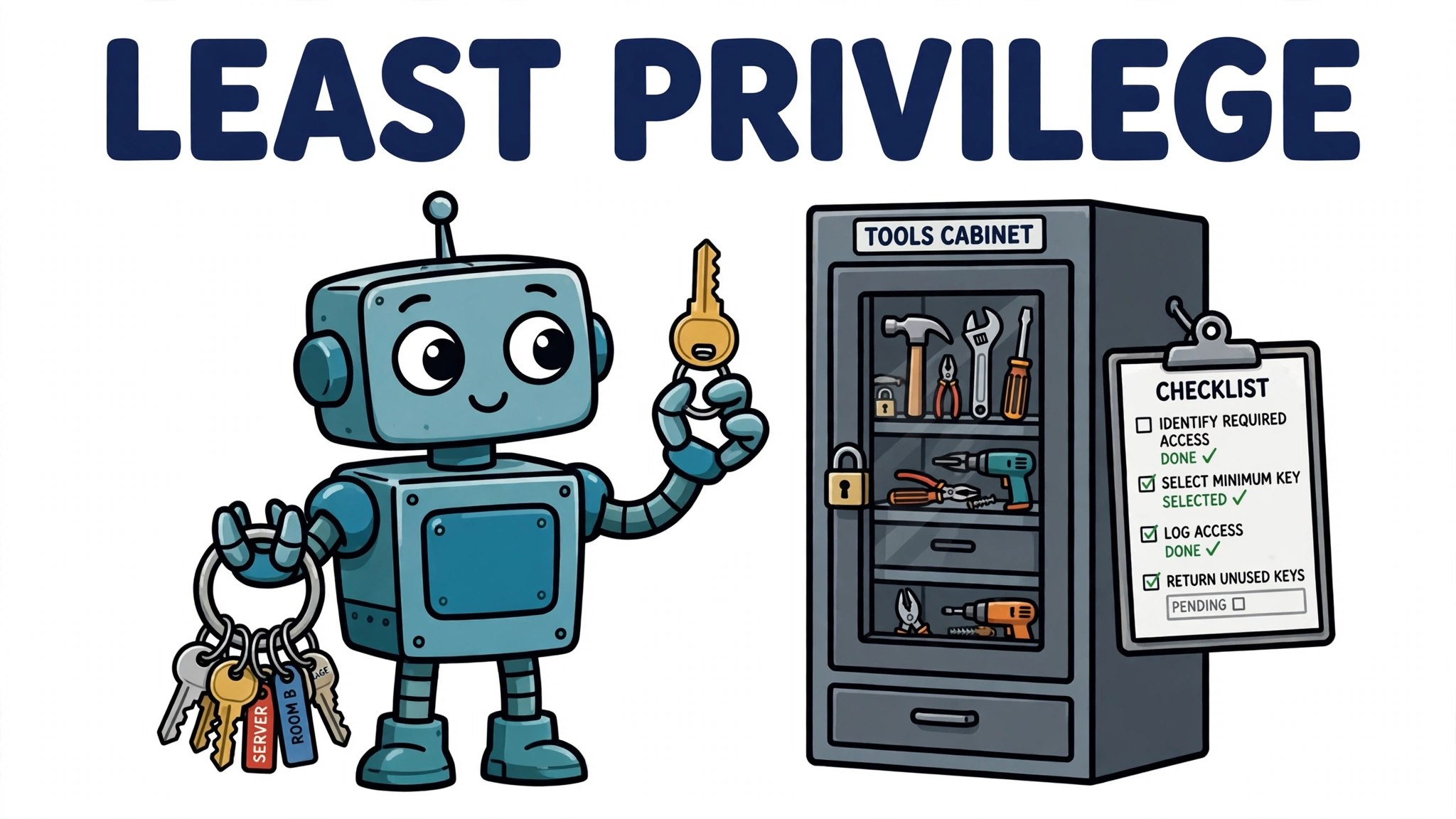
Compliant agents are built from controls, not intentions. The first control is scoping: least-privilege tool access. An agent should only be able to call the tools and read the fields its current task requires, and permissions should narrow as tasks change rather than accumulating by default. The second is filtering before data reaches a model or a tool: redaction and masking of identifiers, and pseudonymised or redacted versions of documents where the full version is not needed. The third is retention by default: short retention periods, restricted access, and strong encryption as baseline settings, not premium add-ons.
The fourth control is observability: audit logs that record what the agent accessed, what it changed, and which human reviewed it. Logs are what turn a privacy promise into something auditable. They support data-subject requests, incident response, and the AI Act’s oversight duties, because a human reviewer needs to be able to understand what the agent did before its actions take effect. The fifth control is user-facing data control, modelled on what major providers already offer: the ability to choose whether content is used to improve models, whether details are remembered between chats, to export history and data, to delete chats or an account, and to use a temporary mode in which conversations do not appear in history or get used for model improvement.
A useful pattern comes from privacy-preserving analysis: extract only the themes or facts a task needs while omitting private details, apply minimum thresholds so that rare, identifying cases are not exposed, and verify outputs for identifying information before they are shown to anyone. The same discipline applies to agent outputs: an agent’s summary, report, or message should be checked for personal data it did not need to include before it is sent onward.
The following fragment shows the fields a scoped tool-permission record would carry. It is an illustrative fragment, not a complete program, and the field names are generic rather than tied to any vendor’s API:
{
  "agent_role": "customer_support",
  "allowed_tools": ["lookup_order_status"],
  "blocked_fields": ["full_card_number", "full_address"],
  "retention_days": 30,
  "human_approval_required_for": ["refund", "account_closure"]
}
Data across tools and third parties
Each tool an agent calls is a potential sharing point. When an agent queries an API, a database, or another agent, personal data may flow to a sub-processor whose handling you are responsible for assessing. That assessment should cover what data the tool receives, how long it keeps it, whether it uses it for its own purposes such as model training, and how deletion requests propagate to it. If a vendor cannot answer those questions, that is itself a finding.
Retrieval deserves special attention. A retrieval system may return documents containing personal information that the current task never needed, and an agent that passes whole documents into its context has now exposed that data to the model; it reaches a downstream tool only when a tool call actually sends it there. Scoping retrieval to the fields and documents a task requires, and redacting before retrieval results enter the agent’s context, are two of the highest-value controls available. The same applies to multi-agent setups: one agent’s output becomes another agent’s input, so data that was minimised in the first step can be re-expanded in the second unless each handoff is scoped.
When an agent should stop, ask or escalate
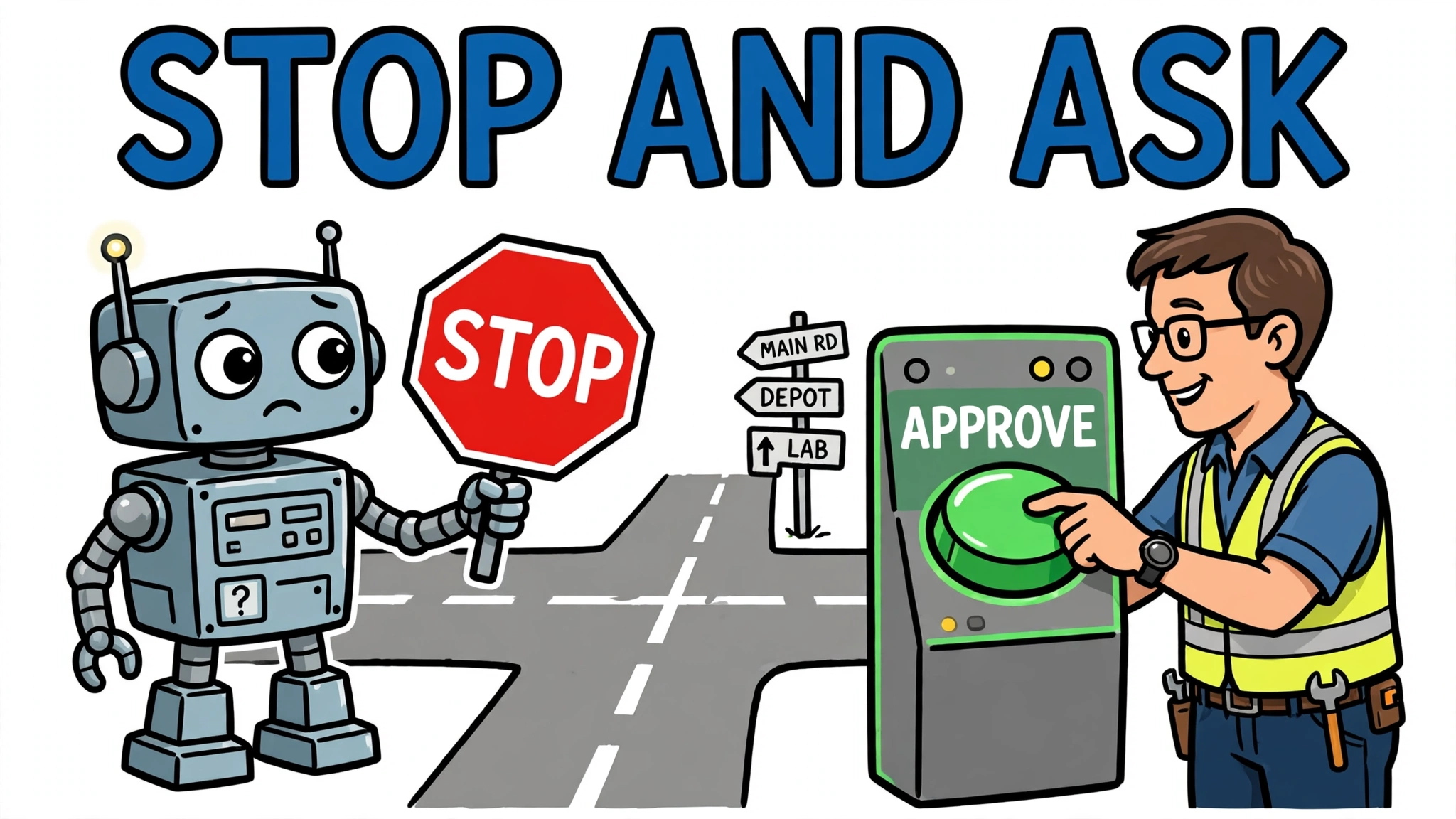
Some decisions should never be left to an agent alone. Sensitive personal data, high-stakes outcomes such as hiring, credit, or medical decisions, action classes a deployment may treat as approval-gated, such as refunds, closures, or external communications, and any case where the agent’s confidence is low or its instructions conflict, are escalation triggers, judged by the sensitivity of the data, the consequences of the action, and whether it can actually be undone. In those cases the agent should stop, present what it found and what it proposes, and wait for a human decision. Oversight that only reviews actions after they have taken effect is not oversight; the human must be able to intervene before the action happens.
Watch for two failure modes. The first is over-collection: an agent that helpfully gathers extra background data it was never asked for, then stores it. The second is silent persistence: an agent that remembers a preference, a health detail, or a financial fact across sessions without the person realising it. Narrowing the agent’s inputs, shortening its memory, logging what it kept, and giving the person a visible way to see and delete it mitigate both problems, but they do not by themselves complete the remedy for either. For over-collection, the deployment must also check what was already collected and handle the existing copies across stores. For silent persistence, it must also make the agent’s memory expectations visible to the person and give them controls that actually reach the stored memory. The end-to-end deletion checks in the checklist below remain the test of whether either problem has been dealt with. Automation bias is the human side of the same risk: reviewers who stop checking because the agent is usually right. Requiring explicit approval for defined action classes keeps a human decision in the loop; reviewer rotation and sampling of approved actions are practices a deployment can evaluate, not remedies the evidence presented here establishes.
A pre-launch privacy and compliance checklist
Before an agent goes live, work through this checklist. First, inventory the data: what personal data can the agent see, where does it flow, what does it remember, and which third parties receive it? Second, check the lawful basis and purpose for each data flow, and confirm that data collected for one purpose is not being reused for another without a valid basis. Third, test the rights workflow end to end: submit an access request and a deletion request, and verify that deletion reaches conversation logs, memory, retrieval stores, and vector databases, not just the primary record.
Fourth, verify the controls: least-privilege tool permissions, redaction and masking in place, retention defaults set short, audit logs recording access and actions, and human approval required for the high-stakes action classes you identified. Fifth, confirm oversight staffing: named people with the competence, training, and authority to oversee the agent, a process for suspending it when something goes wrong, and a route for reporting serious incidents to providers and authorities where required. Finally, avoid the common mistakes: launching with full-database access because it was easier, leaving memory on by default for a deployment that never needed it, treating a vendor’s privacy page as a substitute for your own assessment, and assuming that because a model provider does not train on your data, your agent’s own memory and tool logs are therefore compliant. They are separate stores, and each one needs its own answer.
Agents that handle privacy and compliance well share one trait: they are boring about data. They ask for little, keep it briefly, show their work, and hand the consequential decisions to a human. Build that discipline in before launch, and the agent becomes something users and regulators can both trust.