

What Bank of America Told Its Customers
Bank of America has a blunt message about the AI assistant banking password question: don’t share it. In an email to customers titled “Protecting your finances in the AI World,” the bank urged customers never to share their username and password with another person or an outside service — “including an AI-enabled tool or agent that offers to act on your behalf.” And if you do share them anyway, the bank added, you are responsible for what follows.
The warning was reported by TechCrunch on 27 October 2026. The email itself is short and plainly worded. Its key line reads: “If you do share your credentials, keep in mind that you’re responsible for activity resulting from that access.”
A Bank of America spokesperson confirmed the email’s authenticity after it was posted to social media. The email’s warning echoes what the banks’ own account terms already say: the credentials that open your bank account belong to you, and handing them to an AI assistant does not change that.
Why the Warning Landed Now
The warning arrives because the behaviour it warns against is already happening. Customers are increasingly handing their log-ins to personal AI assistants as the assistants grow more popular, letting the software check balances, pay bills, or move money on their behalf.
It also arrives as agentic payments emerge. Banks, payment providers, and processors are still trying to figure out how to allow customers access to their bank accounts using AI tools, including agentic payments — arrangements that let people set agents to autonomously buy things at the best price or the right time.
Bank of America is not the only bank pushing back. JPMorgan Chase, Morgan Stanley, Citigroup, and Wells Fargo are also moving against customers sharing log-ins with AI agents, according to an Axios report published on 22 October 2026. The issue has reached the top of the industry: on JPMorgan’s third-quarter earnings call on 13 October, CEO Jamie Dimon flagged concerns about unauthorised AI agents operating in the banking system, said there could be “thousands” of rogue agents, and said the bank was “not going to allow just any outside agent in, because that’s just too risky for clients and for JPMorgan.”
What the safe alternative looks like in practice is still taking shape. Whether any bank already offers a way for an AI agent to act on an account without the customer’s password has not been established by the available reporting — the programmes found so far are pilots and controlled environments, not open consumer access.
What Can Go Wrong If You Share Your Credentials

Sharing your banking username and password with an AI assistant carries three risks that TechCrunch named in its report. First, the assistant could do something with your finances without your knowledge — acting on instructions you never gave, or interpreting them more broadly than you intended. Second, the bank could conclude someone is raiding your account and lock you out of it. Third, a security flaw in the AI assistant could leak your banking credentials elsewhere, giving financially motivated hackers a way into your bank account.
At least one of these risks has already shown up in practice. According to the Axios reporting, unauthorised activity has turned up in customer accounts, including AI agents doing more than their users asked and agents contacting bank call centers directly. The other two — account lockouts and credential leaks — remain reported risks, not documented incidents.
Some balance is in order. No widespread thefts or confirmed losses tied to these AI agents have been reported so far. The banks’ concern, for now, centres on policy violations and on who pays when something goes wrong — not on a wave of thefts that has already happened.
Who Pays When Something Goes Wrong
This is the question the Bank of America email answers most directly, and its answer is the part customers should read twice: if you share your credentials, activity resulting from that access is your responsibility.
That line restates standard account terms rather than inventing a new rule. Account agreements at most banks hold customers responsible for anyone they give their log-in to. U.S. Bank’s Digital Services Agreement, for example, states: “If you elect to provide your Login Credentials or other information about your accounts to a third party, you are responsible for the use of your account or the disclosure of any personal information by the third party.” It goes further: “Any activity performed using your Login Credentials or your device will be presumed to be authorized by you unless you tell us otherwise.”
The legal picture is not entirely settled. Under US Regulation E, a transfer is not unauthorised if it was made by someone the consumer gave access to, until the consumer tells the bank that person is no longer allowed — but the rule does not say whether handing a payment credential to an AI agent counts the same way. In other words, the email’s responsibility line is the bank’s stated position, not a court ruling on every possible case.
Other banks take a similar line with different wording. Absa, in South Africa, has warned that where a customer voluntarily shares banking credentials and a financial loss follows, the customer may be held liable, with each case assessed under its digital fraud warranty. Its chief information officer for engineering, Jochem Melis, put it plainly: “The primary concern is not technology itself, but the sharing of credentials. From a security perspective, providing banking credentials to an AI agent is no different from sharing them with any other third party.”
How AI Assistants Are Supposed to Reach Your Bank

The intended route is delegated access: the assistant acts with your permission, never with your password. U.S. Bank’s terms describe the shape of it — in most cases, a customer can share information without sharing Login Credentials, by logging in directly with the bank and providing sharing instructions. The bank also states it will never ask a customer to share Login Credentials, and that a customer does not need to share them to send or receive money.
For payments specifically, the card networks have built token-based systems so the agent never sees the underlying card or account. Mastercard Agent Pay, announced on 29 April 2025, issues agentic tokens: stand-ins for a card that belong to one agent and are bound to a spending policy. Visa launched its equivalent, Visa Intelligent Commerce, the same month. Visa’s Trusted Agent Protocol, released with Cloudflare on 14 October 2025, lets approved agents sign their requests so a merchant’s checkout can tell a verified agent from a bot. Google’s Agent Payments Protocol (AP2), from September 2025, records the user’s authority in signed mandates, and the Agentic Commerce Protocol from OpenAI and Stripe, released on 29 September 2025, lets agents initiate purchases without the chat ever seeing the card.
But these systems are still rolling out, and most live consumer services still ask a person to approve each purchase. Meanwhile, banks are controlling the gap: Morgan Stanley has started blocking third-party AI agents from accessing accounts outright, and Bank of America is limiting agent access to read-only permissions, so software can look at an account but not act on it. The direction across the group is the same — restrict AI agents to read-only access or steer them through approved open banking channels instead of raw usernames and passwords.
Some banks are building the approved route themselves. FNB in South Africa is building a secure framework for approved AI assistants to connect in future, with explicit consent for every action, and identity checks and authentication always happening on the bank’s own platforms. Its principle, in the words of AI executive Dané Liebenberg, is simple: “no autonomy without control.” Whether such frameworks become generally available, and when, must still be verified — they are announced plans and controlled programmes, not a finished system customers can use today.
AI Assistant Banking Password: What to Do Instead
The practical guidance follows directly from what the banks have said. Do not type your bank username or password into an AI chat window or an agent setup screen, and do not paste them into any outside service that offers to manage your money for you.
Use the bank’s own app and official channels for banking tasks. If you already use an AI assistant, take a few minutes to check what it can reach: review which accounts and apps it is connected to, and remove any banking access.
You can still use an assistant for money tasks that do not need your log-in — explaining a statement, sketching a budget, comparing options. And watch for delegated-access options as banks announce them: a consent-based connection, a read-only link, or an approved assistant framework. Never work around a missing option by sharing credentials — that is exactly the gap the warning is about.
What Remains Unanswered
Three questions from the reporting remain open, and the available evidence does not answer them. First, whether Bank of America or any major bank has published a timeline for delegated or agent-safe account access — the available reporting does not establish one either way, and the programmes found are pilots and controlled environments rather than dated public rollouts.
Second, how many customers have had accounts locked or funds moved after sharing credentials with an AI assistant — no incident count is established by the available reporting, and no widespread thefts or confirmed losses tied to these agents have been reported so far.
Third, whether other major banks use the same “you are responsible” wording specifically for AI-agent access. The wording varies: U.S. Bank’s terms state the responsibility explicitly, Bank of America’s email states it for AI-agent access, and the South African banks assess losses case by case rather than stating a blanket rule.
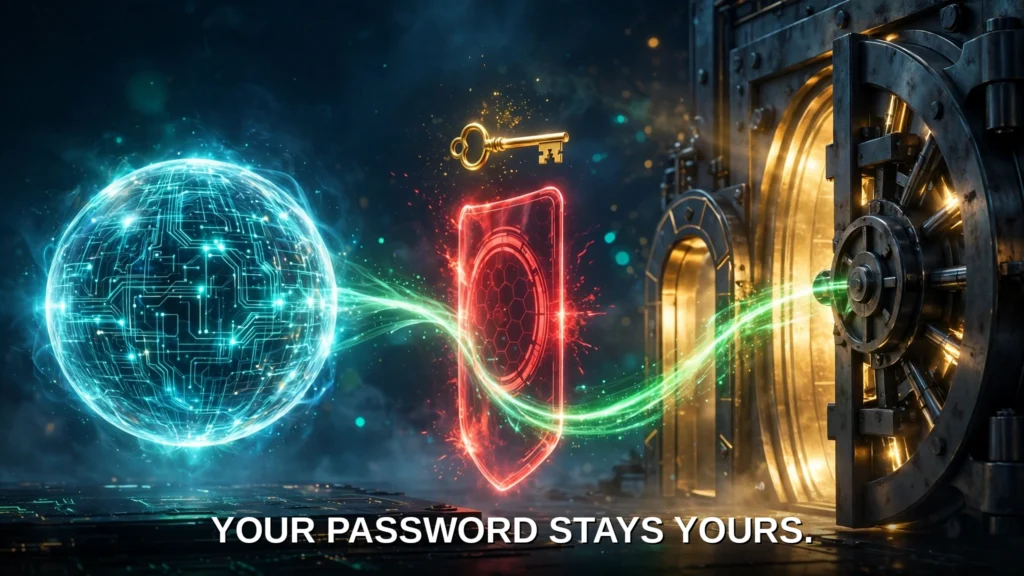
Regulators are watching the same questions. On 15 October 2026, the Financial Stability Board finalised its guidance on AI in financial institutions, including “appropriate and effective human oversight” as a sound practice. The direction of bank plans and regulatory guidance points toward AI assistants reaching accounts only through access that is safe, governed, and controlled by the customer — but whether and when such access becomes generally available remains unresolved. Until your bank offers it, your password stays yours.