


Introduction to generative AI cost management
Generative AI cost management starts with deciding whether a workflow step needs a model. Input validation, request formatting and some routing decisions can run as deterministic code, leaving model capacity for tasks that require interpretation or generation. Choosing a cheaper model matters, but eliminating an unnecessary call changes the cost structure before model selection begins.
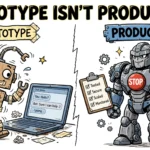
That is the central argument in AWS’s guidance on code, rules and model judgment. AWS describes a familiar progression: a model works for one prototype step, becomes the default for others, and eventually handles routine operations whose costs become visible at production volume. The proposed response is to examine each step separately and assign it to code, a constrained decision call or an appropriately sized generative model.
The distinction matters for AI agents because a workflow can contain several kinds of work. Checking an order number against a format is different from interpreting a customer’s message. Selecting a support queue is different again from drafting a reply. Treating all of them as open-ended generation overlooks the requirements of each operation.
The practical objective is to meet a defined quality floor at the lowest acceptable cost and latency. Deterministic rules help where requirements can be expressed precisely; models remain useful where meaning, ambiguity or generation makes those rules insufficient. This is an architectural decision about where judgment belongs, followed by an evaluation decision about which model can provide it.
The role of model calls in cost structure

AWS identifies three costs of unnecessary model calls: spending that grows with request volume, latency that accumulates across a chain, and variable output that complicates testing and audits. Its guidance describes model calls as adding hundreds of milliseconds, compared with single-digit milliseconds or less for deterministic code. These are the source’s general comparisons, rather than measurements of a particular deployment.
A small charge for one request can therefore obscure the effect of repeatedly asking a model to perform a low-value operation. In the support workflow AWS describes, checking an order number’s format is rule-checkable. Sending that check through a model introduces inference into a step whose success can already be defined without it.
Call volume and model selection address different parts of the problem. Right-sizing reduces the resources spent on calls that remain necessary. Moving a suitable operation into code removes its runtime model call. Both belong in cost management strategies, but the workflow decision comes first: a less expensive model still performs inference on every request routed to it.
AWS illustrates the distinction with a deterministic fast path. If rules resolve 95 percent of requests, only one in 20 reaches a model. That is illustrative arithmetic, explicitly not a benchmark or a promised result. Its usefulness is in showing the relationship between rule coverage and model traffic. The share of requests that rules can safely resolve must be established for the actual workload.
The relevant accounting unit also extends beyond the price of an individual call. AWS recommends tracking cost per successful outcome. Paired with a quality floor, that measure helps prevent a cheaper model from being treated as an improvement when its outputs fail the task’s requirements. Cost comparisons need a definition of success before they can support a deployment decision.
This evidence does not establish a universal savings percentage or a deployment-specific return on investment. It supports an order of operations: inspect why each call exists, remove calls where a rule meets the requirement, and evaluate the remaining model work against quality, cost and latency constraints.
Benefits of deterministic rules

Deterministic rules offer their clearest advantage when success has a checkable definition. The AWS examples include formats, schemas, exact keywords and numeric ranges. A rule can check an order number’s format; a schema can validate a request; a keyword match can resolve an unambiguous routing case. None inherently requires generated prose.
According to AWS, code typically has much lower invocation cost than a model and avoids the model’s output variability. A rule also sits in source control and remains stable until changed. These properties make its behavior easier to inspect than a model response whose behavior can change with a model version.
The qualification is essential: deterministic code is exact for the rule as written. That does not establish that the rule accurately captures the intended policy or every relevant input. A format check answers whether an input matches the specified format. Its value depends on that being the question the workflow actually needs answered. The source’s acceptance-test heuristic is useful here: when success can be expressed as a rule, the operation can usually be implemented as one.
Rules need not cover an entire task to help. AWS’s fast-path pattern runs the deterministic check first and sends unresolved cases onward. Its support example routes messages with recognizable refund or password-reset signals through code, while other messages reach a constrained decision call. This preserves model handling for the residual instead of requiring a rule to settle every possible message.
On AWS, the documented building blocks include Step Functions Choice states for branching, Lambda for more involved validation and schema checks, and API Gateway REST API request validation for rejecting malformed input before compute runs. Their role is to place the check before model invocation, so the workflow avoids spending model capacity on already resolved work.
A model can also help author a rule without executing that rule on every request. In AWS’s tracking-number example, a model drafts a regular expression, which a developer reviews and commits. Runtime extraction then uses the committed pattern. The distinction is between using a model during implementation and making it a recurring dependency of the operation.
Review remains necessary. AWS recommends testing generated regular expressions against known good and bad inputs and avoiding nested quantifiers that can cause very slow matching on some inputs. It also advises limiting configuration-based rules to known primitives, such as schema checks, keyword lists, regular expressions and range checks, rather than executing arbitrary configuration-supplied code.
Determinism therefore offers a more explicit basis for testing and inspection, provided the rule itself is correct. Authorization decisions, including refund limits, should remain in rules under AWS’s guidance. A routing shortcut and permission to carry out an action serve different purposes and need to be evaluated accordingly.
Strategic decision-making in AI workflows
AWS organizes workflow assessment around three questions, applied in sequence. Can a rule check success? Can a model write a reusable rule once? Does the step select an answer from a fixed list? Open-ended work that does not fit those paths goes to a right-sized model.
The customer support example makes these boundaries concrete:
| Workflow step | Suggested execution path |
|---|---|
| Check an order number’s format | Deterministic validation |
| Route a message by intent | Keyword fast path, with unresolved cases sent to a constrained decision call |
| Extract a tracking number from a carrier email | Reviewed, committed regular expression drafted by a model |
| Choose among four support queues | Constrained decision call, with uncertain answers escalated |
| Draft a customer reply | Right-sized generative model |
The middle tier deserves attention. Routing and classification may require interpretation without requiring free-form text. AWS recommends limiting those outputs to predefined options and providing an escalation signal. A decision component can then handle a bounded choice, with uncertain cases passed to a more capable model.
The source describes several implementations, each with different prerequisites and limits. A small Amazon Bedrock model can use structured outputs to select an allowed option, including an uncertainty option. But its self-reported uncertainty is not a calibrated score; AWS says to check it against labeled data before using it for escalation.
Embedding similarity offers another path: embed the input, select the nearest labeled example and use similarity as the escalation signal. Its threshold also needs to be set using labeled data. A trained classifier on Amazon SageMaker AI can return class probabilities, but requires labeled training data. These alternatives change how the decision is made; they do not remove the need to validate it on the task.
AWS also discusses Strands Decider, an experimental open source decision model that returns calibrated confidence. The source relays a README claim that answers with confidence of at least 0.9 are correct about 95 percent of the time on short classification tasks. This is a reported project result, not independent verification or evidence for a particular organization’s workload. AWS explicitly recommends validating it on the organization’s own data before production use and notes that the model is self-hosted.
Output constraints have a separate limitation. Amazon Bedrock structured outputs constrain responses to a defined JSON schema, supporting parsing without custom parsing logic. Schema compliance does not establish content correctness. AWS says to check the content and retain range checks, including numeric bounds and length limits, in code. An allowed label can still be the wrong decision.
For work that remains generative, define the requirements before comparing models. AWS specifies a quality floor measured on a golden evaluation set of labeled examples, a cost ceiling per request or successful outcome, a p95 or p99 latency target, and compliance constraints such as data residency. A larger model’s broad benchmark performance does not establish that it improves the particular task enough to justify its cost and latency.
The source identifies Bedrock Intelligent Prompt Routing for routing within a supported model family, and Bedrock Model Distillation for transferring knowledge to a smaller model for a use case. These are options for the remaining model workload. Their suitability still depends on the same task-specific requirements.
Model selection should then become tested configuration. AWS recommends maintaining evaluation data per task, running it in continuous integration and gating changes on requirements. A cheaper model that falls below the quality floor is a regression. A configuration flag provides a way to reverse a model swap.
Evaluation must also match the operation. Rules should be checked against ground truth, while model-as-judge evaluation should be reserved for open-ended outputs. AWS additionally recommends sampling rule-resolved requests through a model in shadow mode to watch for disagreement and reassess how a step is classified. Such disagreement warrants investigation; it does not, by itself, establish which answer is correct.
Conclusion and recommendations
A useful starting point is one high-volume workflow with identifiable steps and measurable outcomes. Following AWS’s proposed sequence, instrument the workflow, move rule-checkable work into code, add constrained decisions for fixed-choice tasks and test model changes before making them the default.
Instrumentation should distinguish deterministic execution, constrained decision calls and generative model calls, while tracking cost per successful outcome. That provides the basis for judging whether a change preserves the required result. The illustrative fast-path savings become meaningful only when measured against the workflow’s actual inputs and quality requirements.
Next, establish which rules fully settle a task and which resolve only a subset of cases. Review model-generated rules, test their boundaries and keep unresolved requests on an appropriate escalation path. For constrained decisions, validate uncertainty signals and thresholds against labeled examples rather than assuming that confidence or schema compliance guarantees correctness.
Finally, compare the models that remain necessary on the organization’s own evaluation set, cost ceiling and latency target. Recheck those requirements when changing model versions, and retain a way to reverse the change. Efficient generative AI spending depends on preserving acceptable outcomes while assigning each operation the amount of model judgment it actually needs.