

Introduction to LoanPro’s AI loan servicing assistant
LoanPro has put a multi-agent AI loan servicing assistant into production to help staff understand borrower accounts and choose their next steps. An AWS account of the deployment reports customer call times falling by up to 15 percent, citing an AllCloud case study. LoanPro’s internal benchmarks also put account summary generation at under 15 seconds. Those results describe a practical application of agents: gathering information and supporting decisions during a live borrower conversation.
The evidence comes from an AWS implementation article co-written with LoanPro. Its performance figures are attributed to AllCloud and LoanPro, rather than an independent assessment. That distinction matters when interpreting both the reported gains and their potential relevance to other lenders.
LoanPro provides an API-first lending and credit platform that acts as a system of record for lenders. Its servicing users handle borrower accounts, inbound calls, payments, and issues. Before the assistant, they assembled context by navigating screens containing payment histories, loan terms, balances, previous interactions, and available workflow actions. The challenge was to turn that scattered information into a useful account picture while a borrower waited.
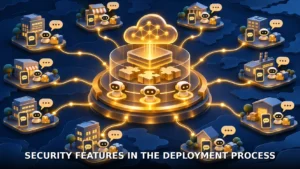
Working with AWS Partner AllCloud and the AWS Generative AI Innovation Center, LoanPro built an assistant using Amazon Bedrock, Amazon Bedrock AgentCore, and the Strands Agents SDK. The architecture divides responsibilities among specialized agents. One retrieves data and summarizes accounts; another selects actions and recommends workflows. A composer routes requests to the appropriate specialist and assembles the response.
This division gives the system a clearer operational structure. Retrieval, summarization, and action selection can be evaluated and improved separately, according to the implementation account. The relevant distinction is between producing a narrative about a loan and choosing what to do about it: the architecture assigns those responsibilities to focused agents while coordinating their output.
The assistant sits inside LoanPro’s existing web portal. Opening a borrower account generates a narrative summary, while a conversational interface lets staff ask follow-up questions. Its immediate audience is the servicing professional handling the account. The documented deployment therefore supports a human-led servicing workflow, with AI gathering context and recommending actions within that interface.
Impact on customer call times

The headline result is a reported reduction in customer call times of up to 15 percent. The AWS article attributes this figure to AllCloud’s published case study. It should be read as an early reported outcome, rather than a promise that every lender or every call will achieve the same reduction. The supplied evidence does not specify a measurement period, a distribution of results, or a controlled comparison.
The operational explanation is more concrete. Across over 800 servicing professionals at early launch lender partners, the account says staff previously spent 18–20 percent of each call orienting themselves to an account. It describes that work as taking 1–2.5 minutes and requiring 5–7 clicks. The assistant consolidates the context into a single click, with reported savings of 1 to nearly 2 minutes per call.
That identifies where the claimed improvement comes from: reducing the time spent finding and connecting information before addressing the borrower’s issue. Reviewing a missed payment, current balance, and prior contact can otherwise require navigation across different parts of the account. By bringing those details together, the assistant is designed to let staff begin the substantive conversation sooner.
The source also translates the savings into reclaimed capacity, reporting up to 9 minutes per operating hour per agent and roughly 120 hours of aggregate agent capacity every operating hour across those professionals. These are capacity claims, not documented reductions in staffing or costs. Their practical meaning depends on how recovered time is used; the supplied account does not report those downstream outcomes.
There is also a material difference between the source’s descriptions of the manual baseline. Its call-time discussion gives 1–2.5 minutes for orientation, while its summary-generation discussion says manual navigation previously took 3–5 minutes. The article does not explain whether those figures cover different activities, populations, or measurement conditions. They should remain separate reported baselines, rather than being combined into a single estimate of time saved.
Faster preparation is a credible explanation for the reported call-time gains, but the evidence does not isolate its contribution from other changes in the workflow. The strongest supported conclusion is narrower: the deployment account reports shorter calls alongside substantially faster access to synthesized account context.
Consistency in service quality

LoanPro’s assistant is also intended to reduce differences in service associated with staff experience. The source describes less experienced agents taking longer to assemble account context and outcomes varying depending on who answered the phone. Giving staff the same level of account context and action recommendations addresses that uneven starting point.
Consistency here has a specific meaning: more standardized access to information and suggested actions. It does not establish that every interaction has the same outcome or that every recommendation is correct. The supplied evidence contains no separate customer satisfaction measure or quantified comparison of service quality across experience levels. The reported consistency benefit therefore means reduced variability, rather than guaranteed service quality.
The evaluation process provides some support for the system’s accuracy. LoanPro’s subject-matter experts labeled a benchmark of 150 accounts. The team evaluated the assistant’s ability to retrieve information, summarize findings, and select appropriate actions against a 99 percent accuracy target, which the source says it met. The framework continues into production as a repeatable evaluation process.
That result needs its scope preserved. The account does not provide task-level scores, details of the scoring method, or a breakdown of errors. A target met on the described benchmark does not establish identical performance for every production interaction. It is evidence of a structured assessment, with important details of that assessment still unspecified.
The deployment also includes several layers of control. Amazon Bedrock Guardrails provide content filtering and grounding validation, alongside LoanPro’s compliance guardrails and role-based access controls. Requests are checked against user permissions, and AI actions are recorded in an audit trail and attributed to a named, responsible person. Interactions through the chat interface are logged as well.
These controls make the architecture more than a summary generator attached to account data. They connect what the assistant can retrieve or do to the permissions of the user, and preserve records of its use. They are documented safeguards, not proof of error-free responses or a comprehensive compliance determination. Their significance is that the system applies access checks and records actions as part of the servicing workflow.
Efficiency in account summary generation
LoanPro’s internal benchmarks report account summaries in under 15 seconds. The account summary appears when a servicing professional opens a borrower account and describes its health, recent activity, and outstanding issues. The intended output is a coherent explanation of the borrower’s situation, rather than a collection of disconnected fields.
The underlying retrieval task is substantial: the Data Retrieval Tool spans eight API endpoints and synthesizes around 1,400 fields per account. Those fields include account details, payment histories, loan terms, and borrower metadata. The assistant uses LoanPro’s existing APIs to work with live production data, without requiring a separate data pipeline or data warehouse, according to the implementation account.
That integration helps explain the product’s usefulness. A summary can connect a payment history to current terms and outstanding issues in the same view. Staff can then ask follow-up questions through the conversational interface when they need more detail. The summary supplies an initial orientation; chat supports further examination of the account.
The request path also shows how this capability is connected to the existing system. A request enters through LoanPro API v2 on Amazon API Gateway. A Lambda handler places it on an Amazon SQS queue, and an Agent Interceptor Lambda function invokes the Loan Summary Agent running on Amazon Bedrock AgentCore runtime.
The agent reaches tools through an MCP server on AgentCore Gateway. MCP, the Model Context Protocol, provides the interface through which those tools are exposed to the agents. A Loan Summary Tool Lambda function validates the caller’s signature against LoanPro’s single sign-on service before retrieving account data. LoanPro’s role-based access controls validate the same signature, with additional permission and compliance checks applied to the request.
The architecture therefore connects a generated narrative to retrieval and authorization steps. Its under-15-second result, however, remains an internal benchmark. The evidence does not provide latency percentiles, load conditions, or a breakdown of time spent in the queue, model, and retrieval stages. It also does not establish the response time for every follow-up question or workflow action. Readers evaluating the result should keep the summary benchmark distinct from overall system performance.
Transformation of servicing agent workflows
The workflow change extends beyond faster reading. The assistant’s second primary tool, the Invoke API Tool, can trigger workflow actions inside LoanPro. The source gives examples of presenting informational panels and initiating a predefined automation sequence. Combined with the specialist responsible for action selection, this connects account interpretation to possible next steps.
The documented capabilities should not be stretched further. The evidence describes specific tool functions and workflow recommendations; it does not establish unrestricted authority to make every servicing decision. The relevant change is that staff can obtain context, ask questions, and receive recommendations within the portal they already use, with tool access subject to the platform’s controls.
LoanPro also reports a decrease in internal ticket volumes of nearly 8 percent. The AWS article says lenders on the platform report fewer support escalations as staff resolve more cases during the initial call. This suggests a benefit beyond call preparation, although the supplied account does not give a ticket measurement period, comparison methodology, or a breakdown by lender. It remains a company-reported operational result.
The implementation work helps explain what was required to reach production. The teams selected and mapped the application data, loan histories, and borrower records the assistant needed. They developed retrieval and action-selection functionality, iterated on prompts for retrieval accuracy and output quality, and documented LoanPro’s security model and integration patterns. The deployment depended on those data and operational decisions as well as the agent framework.
A separate workstream concerned an existing proof of concept that converted natural language into rule automation code for LoanPro’s Clojure rules engine. That project had frequent timeouts, no monitoring, and no deployment strategy. AllCloud provided architectural reviews, a production architecture, and a risk assessment. It should be distinguished from the servicing assistant already running in production: the source describes advisory work on that proof of concept, not equivalent production maturity.
LoanPro and AllCloud are also developing additional agents for areas including collections and origination support. The modular architecture is intended to let those agents use the same AgentCore infrastructure without redesigning the core system. Those are expansion efforts, rather than evidence of measured results in those workflows.
The supported lesson from the servicing deployment is specific. LoanPro has combined account retrieval, narrative summaries, recommendations, and controlled tool access inside an existing operational interface. Its reported results point to less time spent assembling context and fewer internal tickets. How consistently those gains hold across lenders, account types, and operating conditions remains an open question in the supplied evidence.