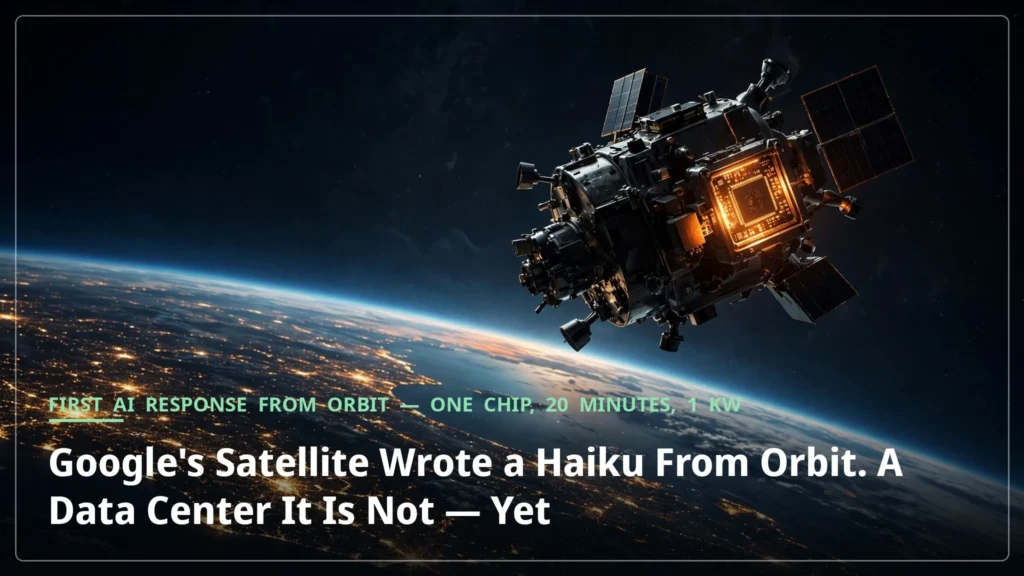


Google’s Project Suncatcher prototype has returned the first AI response from a data-center-class TPU in orbit: a haiku, written over Svalbard. The stunt proves the plumbing works. The prototype’s own limits — one chip at a time, about twenty minutes, on up to a kilowatt — show how far orbital AI computing still has to travel.
A seventeen-syllable milestone
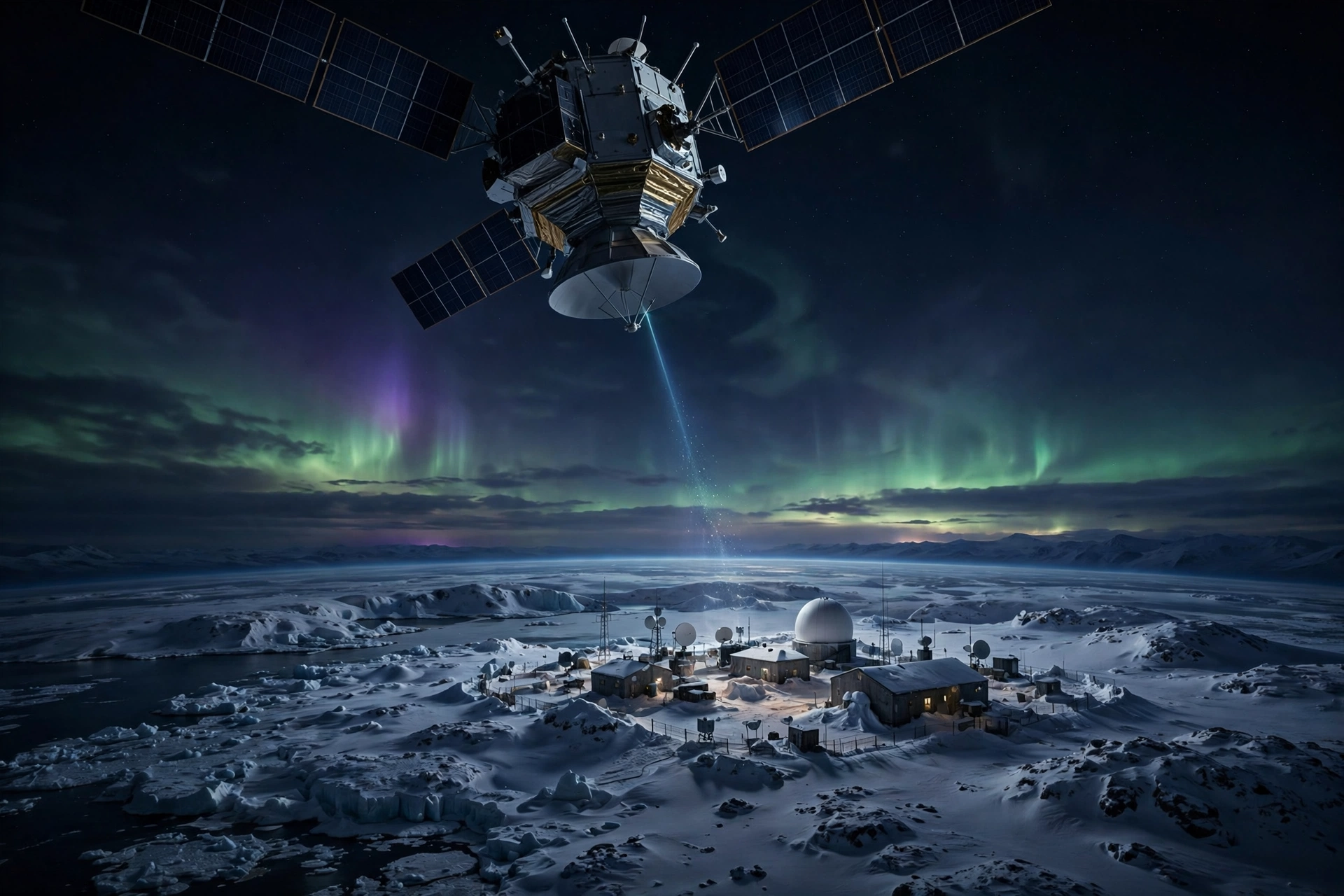
The first AI response Google’s orbital computer sent back to Earth was a poem. During a ground-station pass this week, engineers uplinked a prompt to the Gemma 4 open model running aboard the Project Suncatcher prototype satellite, asking it to write a haiku about being in space. As the satellite passed over Svalbard, Norway, the answer came back down:
Blue marble below / Data streams in silent grace / Starlight feeds my core.
Google calls the moment its “Hello World” milestone: the first-ever AI response from a data-center-class TPU in orbit. The phrasing is Google’s Hello World label, and it is exactly right. A Hello World does not prove a system is useful. It proves the system runs at all — that a command can travel up, a chip can boot, a model can execute, and an answer can travel back down. In its October 30 announcement, Google said it had proved all four, in orbit, on hardware of the kind that fills its terrestrial data centers.
Three weeks of commissioning, one small satellite
The prototype launched on October 1, 2026, aboard a SpaceX Transporter-18 rideshare mission, built in partnership with Planet, as the first step in what Google describes as a long-term research moonshot to explore powering AI compute in space. Project Suncatcher itself was announced in November 2025, and researchers have since published a peer-reviewed paper on the work in the journal Joule.
The weeks since launch were spent on commissioning. About three weeks after launch, the team sent the first prompt. After the haiku, Google says, it tested space-themed limericks and prompts asking the satellite to report the technical status of its own payload systems. The poetry was the demonstration; the telemetry prompts showed the same loop carrying a status report. A chip that can answer a question about itself has demonstrated the command, boot, execution and return loop — no more than that, for now.
Google chief executive Sundar Pichai summed up the sequence in a post announcing the result: the team sent a command to the satellite, booted up its TPU, ran the prompt, and received the first complete response back on Earth. Travis Beals, a senior director at Google, described the result as the mission’s Hello World milestone. A spokesperson told TechCrunch the satellite was operating nominally.
The limits are the story too
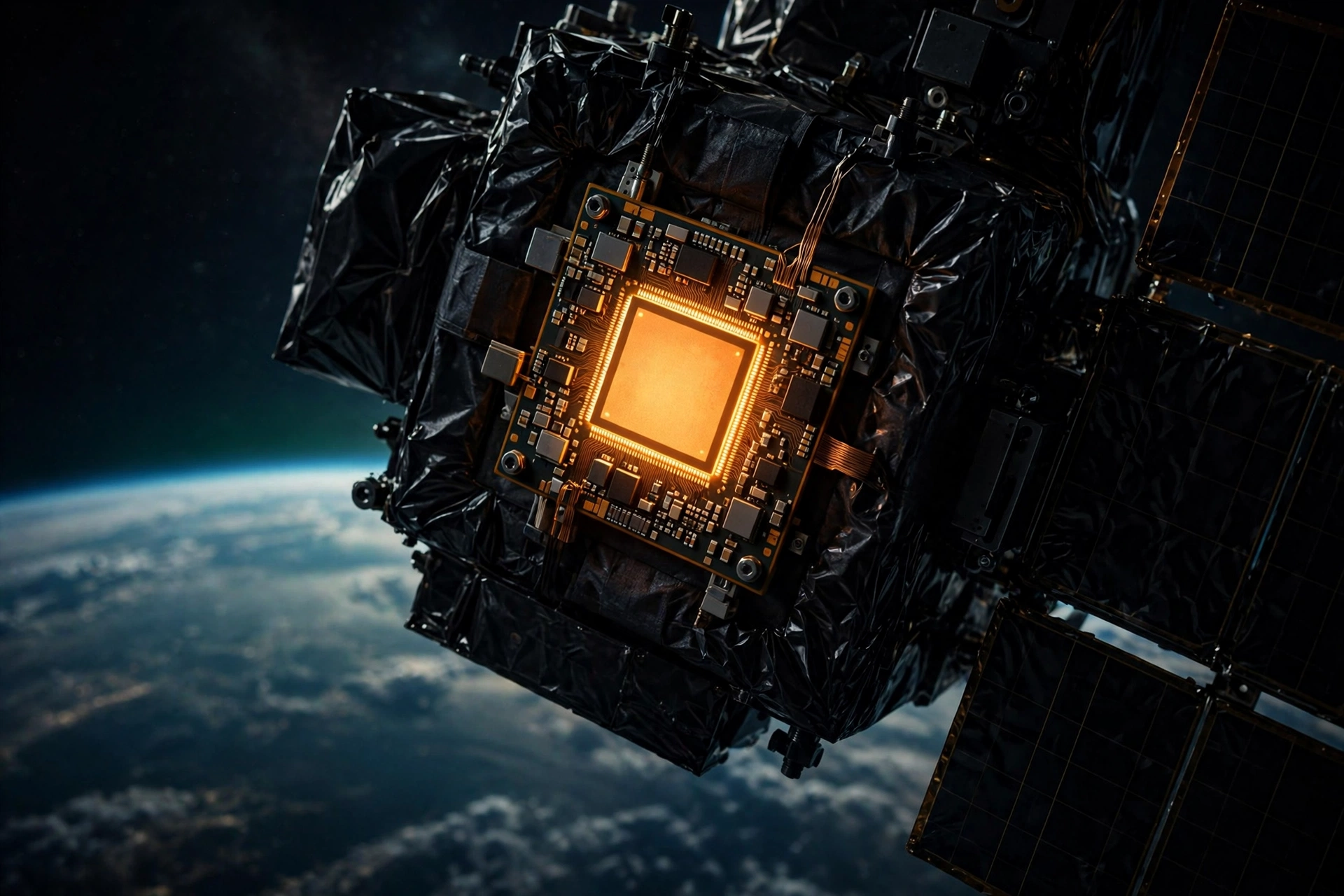
Here is where the wonder needs tempering. The prototype carries four of Google’s Tensor Processing Units, but according to TechCrunch it generates up to only 1 kilowatt of electricity, and the power demands of a TPU mean it can operate just one chip at a time, for about twenty minutes at a time. The constraints are reported by TechCrunch, which itself had to correct its initial account to clarify that four chips are aboard but only one runs at a time.
Those limits frame everything the milestone does not prove. A single chip running in twenty-minute bursts, demonstrated via a ground-station pass, is not a data center in any sense a customer would recognise. It cannot yet show that orbital AI computing can scale, what it would cost, or how it would handle workloads larger than poems and status reports. Google is careful on this point: Suncatcher explores whether space could power AI compute, and orbital data centers are something the project could eventually explore — not an existing service.
What Project Suncatcher must prove next
The next tests, Google says, will evaluate how its TPUs perform under thermal stress and radiation exposure in orbit. That is the real examination, and it is still ahead. Radiation in space can cause bit flips — a stored value in memory silently changing — which can corrupt data without triggering the monitoring tools that would catch an ordinary fault. Ground testing suggested radiation’s impact would be minimal for inference workloads and more of a problem for training a model. But ground testing is not orbit, and the team will now learn how the chips behave in reality.
If the TPUs prove capable, Google plans its next milestone for 2027: two interconnected satellites with higher power generation, demonstrating inter-satellite optical links. The Hindu Business Line’s account adds the longer ambition — that satellites could eventually be linked into constellations to handle larger AI workloads. That is a conditional stacked on a conditional: if the chips survive, and if the links work, then a network becomes conceivable. Neither condition has been met yet.
A fair objection
It would be unfair to judge this prototype against a full data center, and Google’s critics on that point would have a case. A Hello World is supposed to be small; judging it for its smallness misreads what milestones are for. The twenty-minute windows and the single running chip are design parameters of a test article, not failures of a product. And the pending thermal and radiation results may yet clear the way to those twin satellites in 2027.
That objection is correct as far as it goes — and it is precisely why the milestone deserves both reactions at once. The plumbing works: a chip booted in orbit, ran a model, and answered. Nothing in this week’s announcement shows that the same chip can keep working through heat and radiation, run longer or heavier workloads, or join with others into anything resembling a data center. Wonder at the first, clear eyes about the second: that is the honest response to a haiku from orbit.
What to watch
Three questions now decide whether Suncatcher becomes more than a memorable stunt. First, what do the thermal and radiation tests actually show, and when will Google publish them? Second, what workloads beyond short poems and telemetry prompts will the prototype run, and for how long can it sustain them? Third, what would the twin satellites planned for 2027 need to demonstrate before anyone can fairly call the result a data center rather than an experiment?
Until those answers arrive, the fairest description of Project Suncatcher is the one Google itself invites: a chip that has earned its space wings, on a long road that is still mostly ahead of it. The haiku was real, the limits are real, and the distance between them is the story.