

The memo nobody at Nvidia wanted to read
On Sunday, Jensen Huang sent his company an email that began with an apology and ended with a national security investigation. “I was unfaithful to my wife,” the Nvidia founder and chief executive wrote. “My actions hurt her and our children. There is no excuse for what I did. I am deeply sorry.”
It was an unusually personal confession from the chief executive of Nvidia. But the memo was not only about a marriage. In the same message, Huang told employees that Nvidia’s board had opened an independent investigation into the national security concerns raised by news reports about the woman at the center of the story — and that he supported it and would cooperate fully.
That is the sentence that turns a private betrayal into a public problem. Because the woman, Alice Huang, is not only the other party in an affair the chief executive has now admitted. According to U.S. intelligence officials, she was recruited by Chinese intelligence to gather information about him and to influence his company’s campaign to loosen American chip export restrictions. The Financial Times reported the relationship on Friday.
The salesman and the market he cannot lose
To understand why an affair became a Washington story, start with what Huang has spent years doing in the capital. He has lobbied the U.S. government, repeatedly and in person, to keep selling advanced AI chips to China rather than shutting the country off from the technology. He met repeatedly with President Trump and administration officials. Afterward, the government reversed restrictions on Nvidia’s H20 chips and allowed exports of its more powerful H200 processors.
Huang has made the case in public, too. He has called export controls a “failure” and said it was “not wise” for the United States and China to build two separate AI ecosystems. His warning was commercial as much as strategic: shut Nvidia out of China’s compute market, he argued, and China will simply build its own chips to challenge Nvidia internationally.
The stakes are easy to count. In the three months ended July 26, Nvidia recorded $7.9 billion in revenue from customers headquartered in China — roughly 8% of its total. And China is already moving in the direction Huang warned about: Reuters reported last week that about 600,000 H200 chips are being held in Hong Kong, awaiting shipment to mainland China, while Beijing pushes its AI companies to buy from domestic chipmakers instead.
So the affair lands on top of the most consequential argument in the AI industry: who gets to sell the world’s most powerful chips to one of the world’s biggest AI markets, and on whose word.
Trust was always the currency
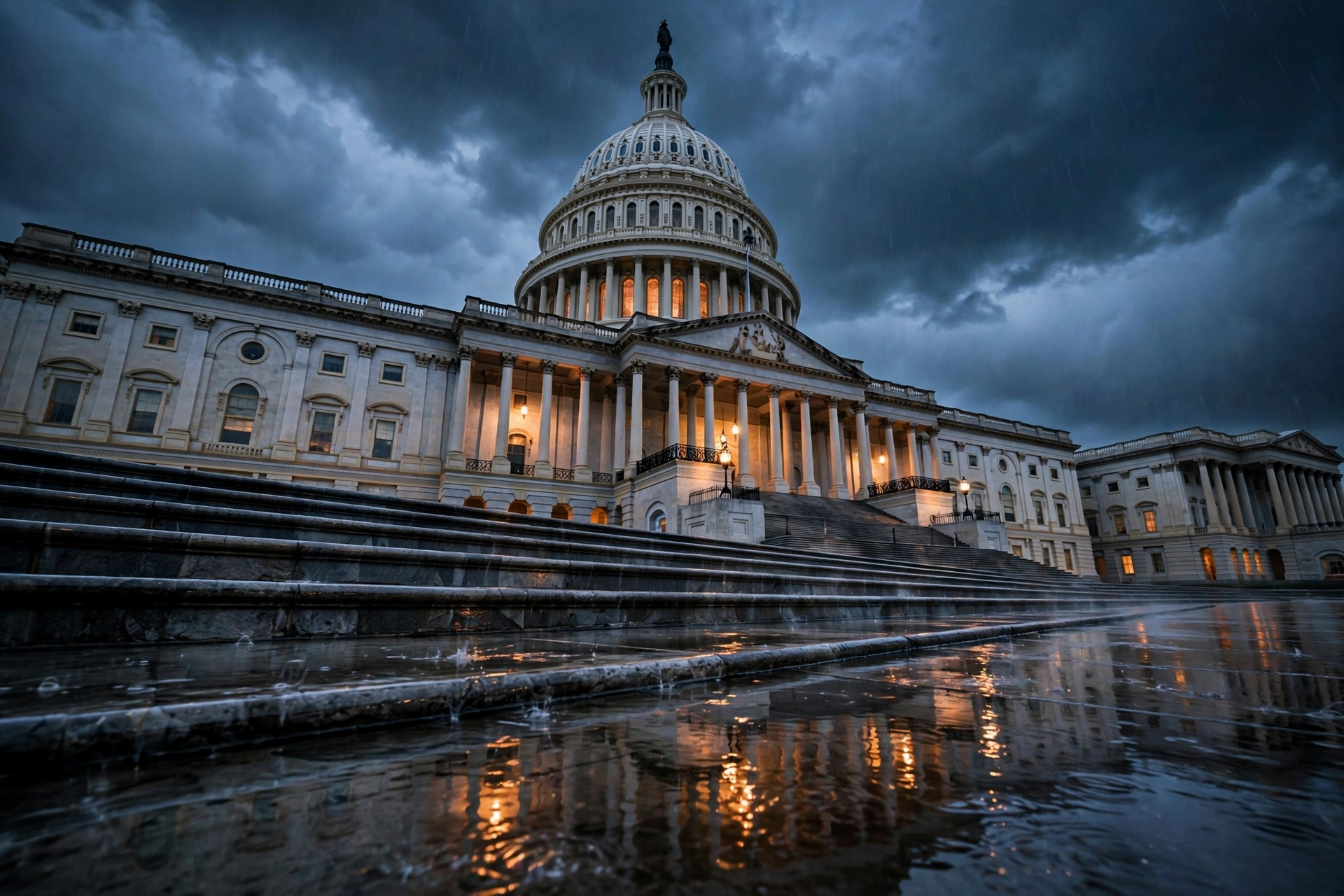
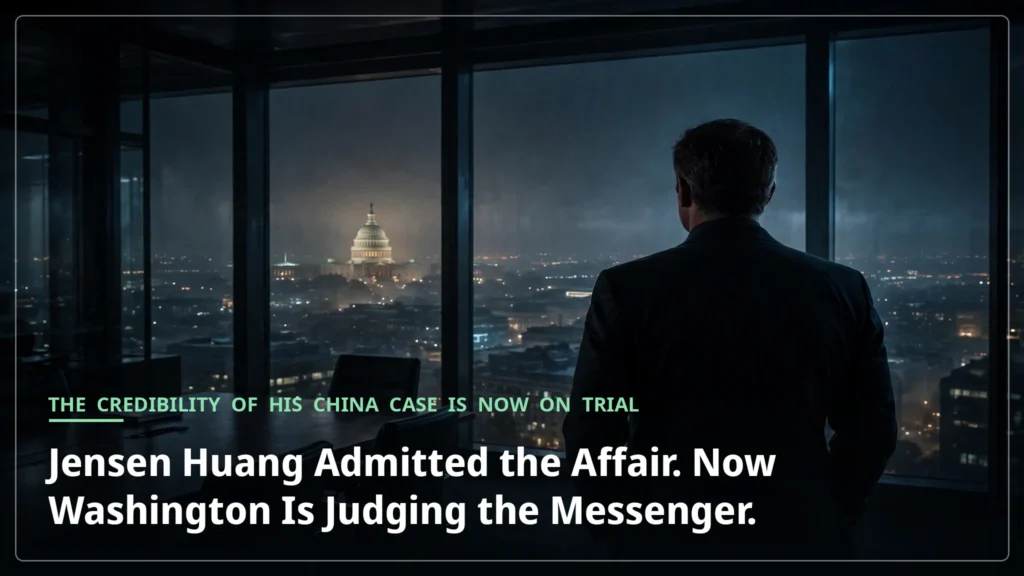
Here is the thing about Huang’s China case. It was never only a policy argument. It was a credibility argument. His case has always rested on trust: on Washington believing that Nvidia could sell into China while keeping its sensitive technology from reaching unauthorized customers.
That is what the allegations put at risk. U.S. intelligence officials believe Alice Huang, a former executive at Megaspeed — a Singapore-based company and a significant Nvidia customer in Southeast Asia — was recruited by China’s Ministry of State Security to collect information on him. She is a Chinese citizen; she is not related to Huang; and she has not been charged with any crime. The reporting itself is now part of the official record in Washington: the Times reported that Trump administration policymakers received an intelligence memo about her last spring, and Secretary of State Marco Rubio reportedly warned officials close to Trump about the relationship earlier this year.
Washington has responded the way Washington responds when trust is the question. Nvidia’s independent directors, working with outside legal counsel, are investigating. Three Republican House committee chairs — Brian Mast, John Moolenaar and Rick Crawford — have asked Huang to attend a closed-door joint briefing on November 18, and to accept or propose another date by November 11. “It is vital that Congress determines the extent to which U.S. national security has been placed at risk,” they wrote. Democrats have called for investigations of their own. Senator Elizabeth Warren, who cited reporting that Megaspeed had bought at least $4.8 billion of advanced Nvidia chips, said “NVIDIA’s Jensen Huang and NVIDIA’s board owe Congress answers.” Senator Chris Coons wrote that “Congress will investigate and get answers.”
Nvidia, for its part, is holding two messages at once. The board said it has “no reason to believe that either national security or NVIDIA secrets were compromised,” while promising its inquiry “will examine all available information.” A company spokesman, John Rizzo, said: “Today’s news will not slow NVIDIA. Jensen is committed to continuing to lead NVIDIA as CEO without interruption.”
The case for doubt — and the case against it
None of this proves that Huang shared anything with anyone. An affair admission does not establish that he knowingly assisted an intelligence operation or disclosed sensitive information, and the investigation’s findings, not the most dramatic descriptions of the relationship, will decide what the board can substantiate.
And the influence theory itself has a hole that TechCrunch pointed out: Huang’s lobbying predates his reported meeting with Alice Huang at an Nvidia event in early 2024. The idea that he needed encouragement from her to push for greater access to China, the outlet wrote, “seems like a stretch.” His motive was never hidden. He is a salesman trying to dominate one of the world’s biggest AI markets, and he has said so in public, many times.
The denials are also on the record. China rejected the espionage allegations at a foreign-ministry briefing in late October. Singapore’s Ministry of Home Affairs said its officials had not expressed the reported concerns about Alice Huang or conducted such investigations — though police confirmed an investigation into Megaspeed itself was ongoing. Megaspeed has separately been the subject of a U.S. investigation into whether it helped China obtain restricted Nvidia chips. Nvidia has said its regional cloud customers receive “ordinary business information” and nothing relevant to national security.
So the story, as it stands, is a set of facts that point in two directions at once. On one side: an admitted affair, an intelligence assessment that the other party was recruited to influence the chief executive, a board investigation and a congressional briefing. On the other: a lobbying campaign that predates the relationship, no evidence that anything was shared, and a board that says it has no reason to believe anything was compromised.
What happens next
The calendar will do some of the talking. Nvidia reports third-quarter earnings on November 17. The proposed congressional briefing is the day after. The board’s inquiry has no announced timetable, and the question it must answer is narrower than the headlines suggest: not whether Huang was unfaithful — he has said he was — but whether access to one of technology’s most influential executives created a national security risk, and whether Nvidia’s controls were enough.
That is the real test, and it is not really about the affair. It is about whether Washington can still separate the salesman from the scandal — whether the chief executive who lobbied for those restrictions to be loosened can still persuade a Congress that his company can be trusted with the keys to the AI race. Rumors of questionable allegiances, once made, can be hard to shake. Even if the investigation finds that Huang shared nothing, the question is whether he will be able to convince Washington that Nvidia can still responsibly do business with China.
The apology is on the record. The intelligence allegations still require answers. And the credibility that Huang’s whole China case rests on is now something he has to defend rather than something he can assume.