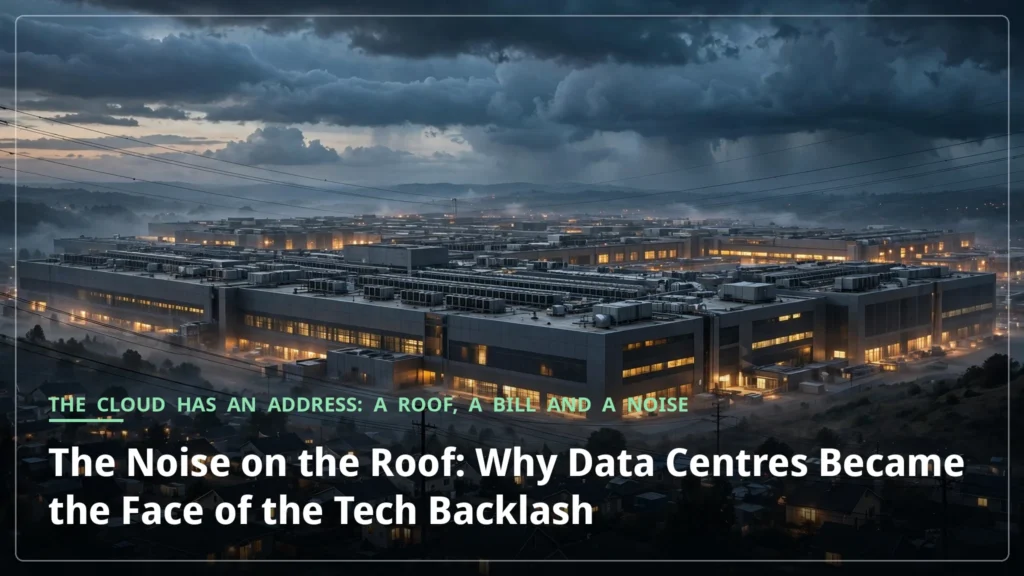



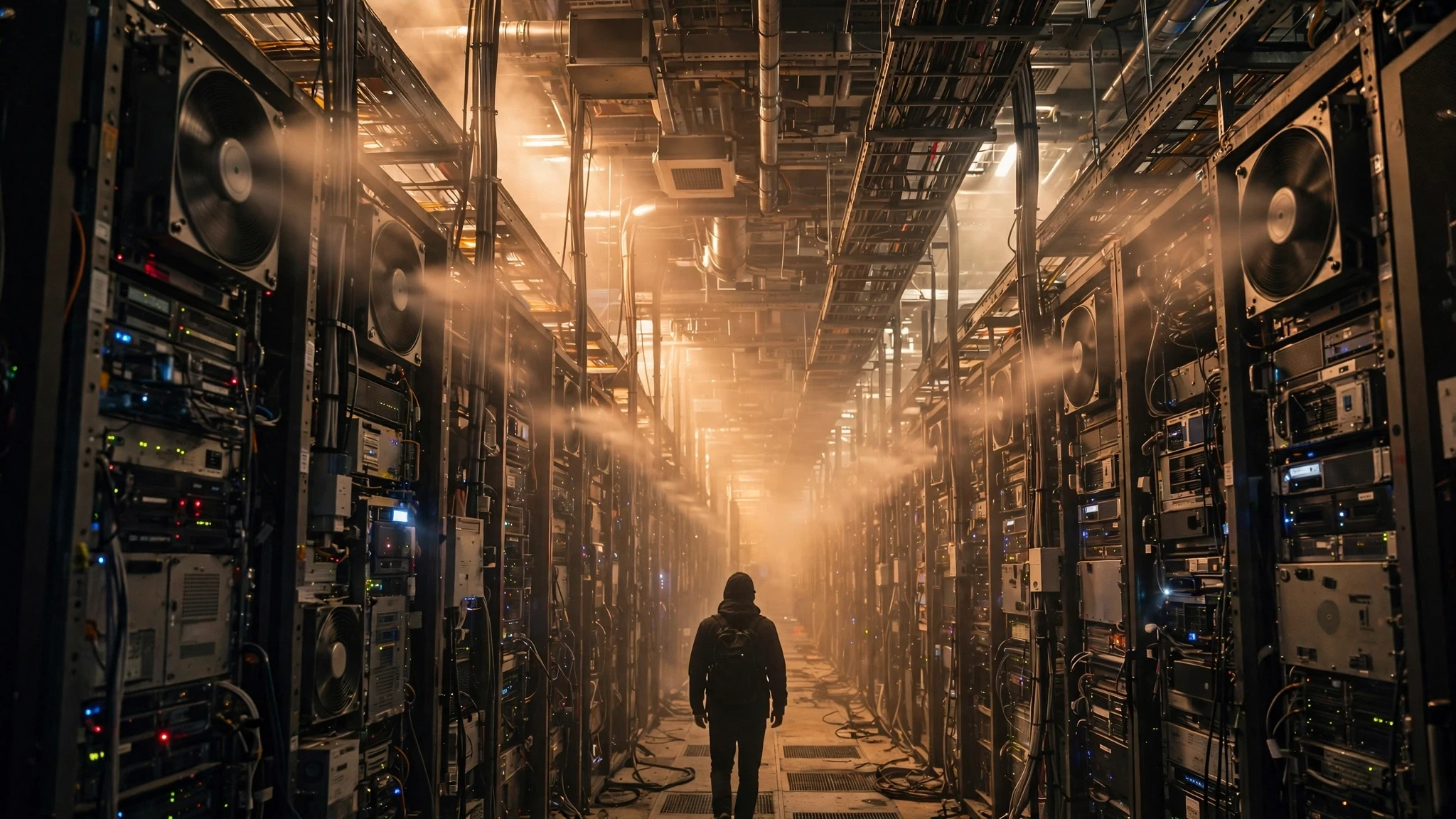
To tour one of the hyperscale data centres in New Zealand, Paris Marx had to send his passport in advance. It was checked on arrival, and every door inside needed a key card. The server room itself was warm and utilitarian, and loud with server fans.
Marx is a journalist whose new book is called Hyperscale, and TechCrunch interviewed him about the book. In his account, data centres have become where wider anger at Big Tech finally lands — because a data centre, unlike an app, arrives in a specific place and stays there.
The argument is physical
Marx’s thesis is that the backlash is not really about servers. It is about what servers demand from the neighbourhood around them. “It’s very physical, it’s very material,” he said. A service on a phone can feel abstract. A building cannot.
“It doesn’t matter what side of the political spectrum that you’re on, you are going to feel the effects of that in your quality of life, in your power bill, potentially in your access to water, potentially in what you hear around your community, if these air conditioning units on the roofs of data centers are making a lot of noise.”
Marx does not claim every community will suffer every harm. He says people may feel the effects, and that possibility is what makes the issue travel. The interview frames it through Ron DeSantis and Bernie Sanders, both described as opposed to data centres. Marx’s explanation is not that left and right have converged on technology policy. It is that a power bill does not ask about your politics first.
The frustration, Marx said, was already there. A proposed building gives that frustration an address. “You can delete an app on your phone, but what difference does that really make to the company?” he asked. “It doesn’t often seem like very much.” You cannot delete a building. You can turn up to a planning meeting about one.
Three places that changed his mind
Marx cited three stories as the examples that tipped him off, he told TechCrunch. The first was around Santiago, Chile, where Google and Microsoft were building data centres and communities were concerned about their access to water. The second was Ireland. The third was The Dalles, Oregon. Each, in his account, is local first and symbolic second.
In Ireland, Marx said data centres consumed more than 20 percent of the country’s electricity, and the grid operator put a moratorium on connections around Dublin in 2022. Reporting since then points the same way: Data Center Dynamics, citing Central Statistics Office figures, said Irish data centres used more than 21 percent of metered electricity in 2023, up from five percent in 2015, and that Dublin faced a de facto moratorium, with grid operator EirGrid saying it would grant no new requests until 2028. The figures do not prove every inference Marx draws. They show why a national AI argument arrives in Ireland as a local argument about the grid.
In The Dalles, Google had built its first company-owned data centres about 20 years ago, Marx recounted. After a lawsuit over disclosure, it emerged that Google was using 29 percent of the city’s water, in Marx’s account. The sequence matters as much as the number. A community kept from knowing what a neighbour uses is unlikely to be reassured by being told not to worry.
Scale, not servers
Marx is careful about his target. He said he is not against technology itself, or even data centres in general, but against the hyperscale approach: ever-larger facilities, built in ever-greater numbers.
“I don’t think that the inherent problem is data centers, because we have had data centers for a long time, and sure, there have been occasional concerns about specific projects, but data centers as a whole have not been an issue that the public has felt merited this degree of attention.”
Scale, he argued, creates the pressures — on communities, on electricity systems, and on the climate through fossil-fuel energy demand. He called the buildout “fundamentally unsustainable” and “completely out of line with a livable planet.” He also tied that judgement to a more contestable claim: that the promised benefits have not arrived for many people. The promised benefits of generative AI, he said — economic, productivity, healthcare and education gains — do not appear to have materialised for many people. That is Marx’s assessment in an interview about his book, not an audit.
Not just data centres
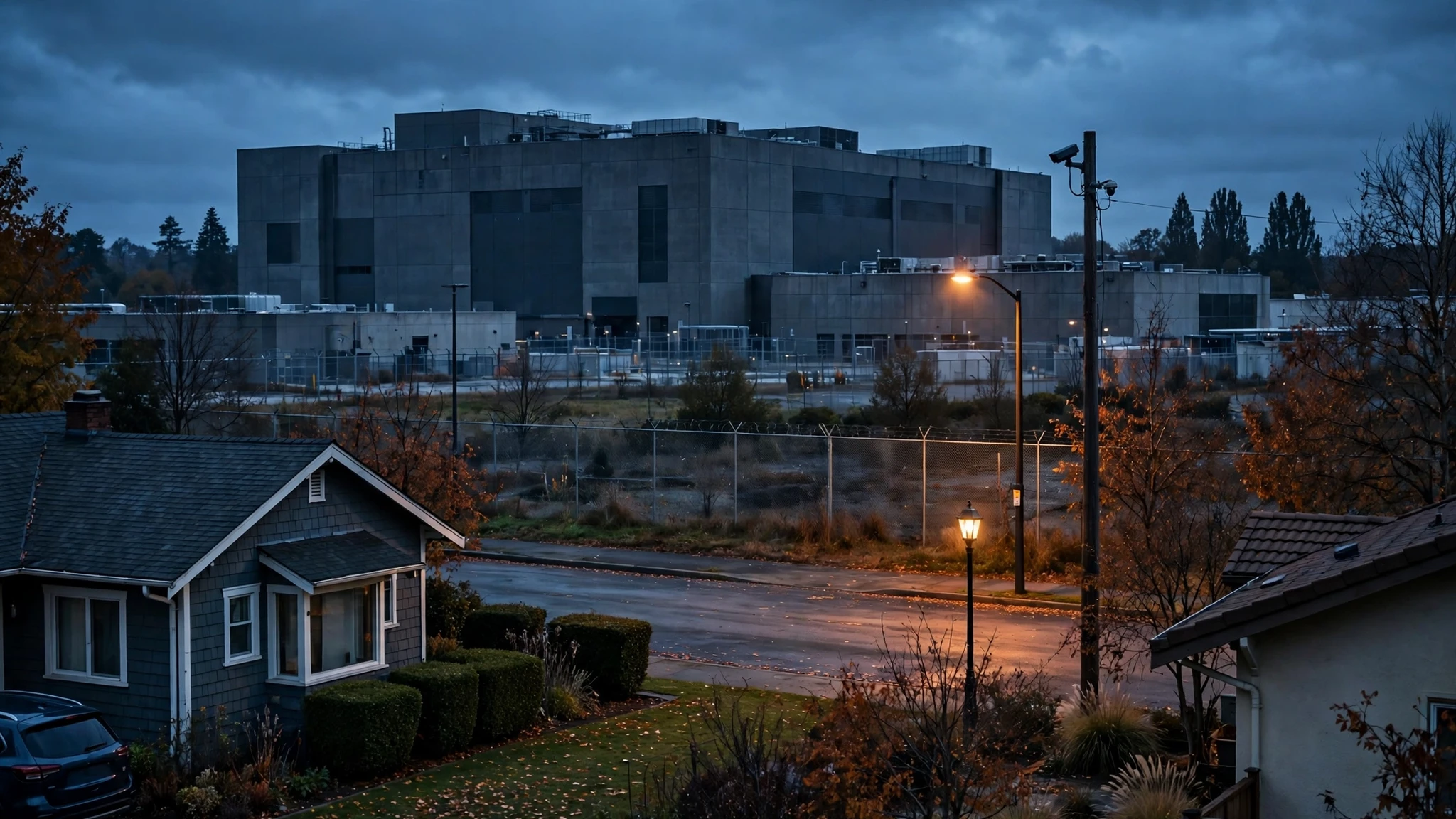
Marx presented data centre opposition as the most visible part of a wider movement against “the physical manifestations of the tech industry”: Flock cameras in the United States, Meta smart glasses, and Waymo self-driving cars. The technology stops being something on a screen and becomes something on a street, a face, or the edge of town. This wave asks people to notice a building, a bill and a noise. It does not require a theory of AI. It requires a postcode.
What the companies say back
The companies have responded, Marx acknowledged, in ways that concede the local argument matters. Microsoft, Amazon and OpenAI have talked about ending non-disclosure agreements with local governments, and the industry has proposed paying for more electricity infrastructure and using cooling systems that need less water. Marx’s verdict on the NDA change was brisk: “Not a huge difference.” Secrecy fuels opposition, he argued, so dropping agreements already working against the companies is as much public relations as reform.
Reporting supports the factual caution. Broadband Breakfast reported that Microsoft said in March it would stop using NDAs with local governments, Amazon followed in October, and OpenAI pledged the same in the week of the midterms, keeping narrow protections for confidential business information — and that the pledges remain limited, covering officials and not always partners or contractors. On cooling, Marx said the industry now uses national water figures to reassure local audiences, though water is a local issue; some communities have plenty, others are water-stressed. Closed-loop systems use less water, he said, but need more electricity, and communities worry about coolants and chemicals leaking into supplies. A fix moves the argument — from the water meter to the electricity meter.
The case against the thesis
The strongest objection is one Marx himself supplies. If harms are local and variable, opposition may be a verdict on particular sitings, deals and failures of disclosure, not on hyperscale building as such. The Dalles is then a story about a lawsuit over disclosure; Ireland, about grid capacity around one city. Neither alone proves every large data centre unsustainable.
Likewise, pledges Marx doubts could reduce local burdens if carried through in specific places. A company paying the full cost of its electricity infrastructure, publishing site-level figures and negotiating openly would look very different from the closed process in Oregon. Whether pledges amount to that can only be judged community by community. Marx’s argument is strongest as an explanation of why the issue became political, weakest as a prediction that every community will agree.
Marx closed by arguing that the tech industry’s one inevitable future is a choice, not a fact, pointing to digital-sovereignty debates and public-sector technology development in Europe as a step toward something different. Whether that something different is built, an interview cannot settle. What it settles, on Marx’s evidence, is simpler: the cloud has an address now — a roof, a bill and a noise. And neighbours, unlike users, cannot log out.