

ai agent decision planning is how an AI agent turns a goal into a sequence of actions it can actually carry out. Instead of answering in one step, the agent works in a loop: it looks at the situation, weighs its options, makes a plan, acts, checks what happened, and changes the plan when the result demands it. This guide walks through that loop step by step, so you can see where each decision is made and what information it rests on.
From goal to action: the decision-planning loop
Every run starts with a stated goal plus constraints, not with a single prompt. The goal might be to resolve a support ticket, prepare a report, or book travel within a budget. The constraints are the boundaries the agent must respect: what it is allowed to touch, how much it may spend, and which actions need a human to approve them first.
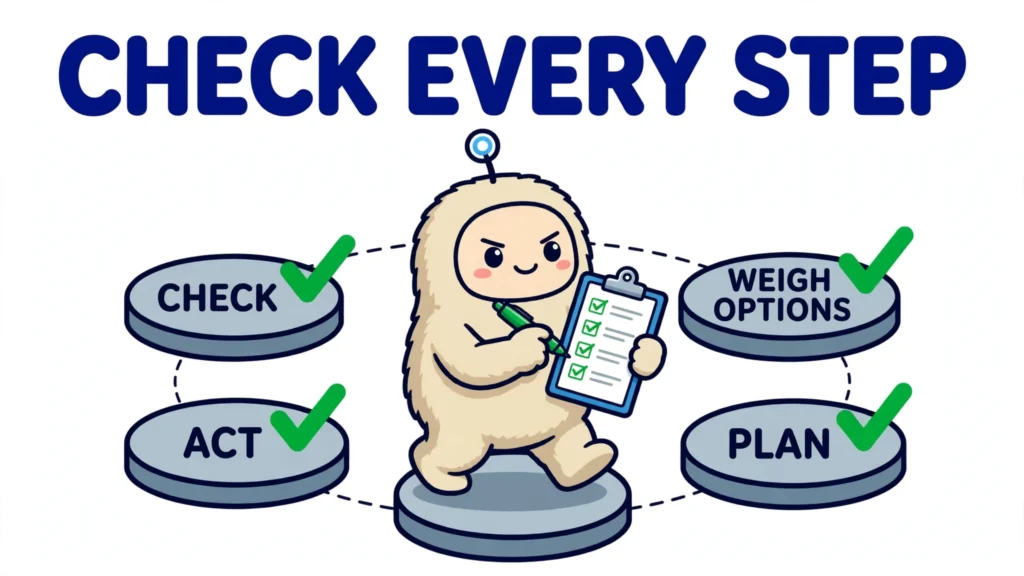
From there, the loop repeats until the task is complete or a stopping condition is met. The agent perceives the current state, reasons about what to do next, plans when the task is complex enough to need one, acts through a tool or an API call, and then observes the result. That observation becomes the input to the next decision. Simpler workflows may skip a dedicated planning step and go straight from reasoning to action, but the loop itself does not change: act, observe, decide again.
Decision and planning belong in the same loop because a plan is only a decision stretched over time. Choosing a restaurant is a decision; choosing a restaurant, checking its opening hours, and then booking a table is a plan. When any step of the plan returns an unexpected result, the agent does not blindly continue. It returns to the decision step with new information.
What the agent decides with: goals, state and constraints
A decision is only as good as the information behind it. Three inputs matter most. First, the goal and its success criteria: what counts as done, and how will the agent know? A vague goal produces a vague plan, so a well-built agent treats an unclear success criterion as a reason to ask a question or to pick a conservative first step, not as a licence to guess.
Second, the state: what the agent knows right now, what it has retrieved, and what is still uncertain. State includes the results of previous steps, the contents of any tools it has called, and the limits of its own context. An agent that treats a retrieved document as current when it is in fact stale is making a decision on false premises, which is why checking freshness and provenance is part of good state handling.
Third, the constraints. Permissions decide which actions are even available. Budget limits decide how many attempts are affordable. Safety limits decide which actions need approval before they run. In production systems, irreversible actions are commonly gated on human approval, and the loop is bounded by a retry policy, a loop limit, a per-step timeout, a cost budget, and explicit termination conditions. Those bounds are what decide whether the agent stops because it succeeded, because it gave up, or because it escalated to a human.
How agents generate and compare options
Once the agent understands its goal, state and constraints, it generates candidate actions. Some candidates come from rules or retrieved procedures. Others are proposed by the model itself, which suggests the next plausible action given everything in context. In the ReAct pattern, this happens as an interleaved stream of reasoning and action: a thought about what to do, an action through a tool, and an observation of the result, repeated until the task reaches a final answer.
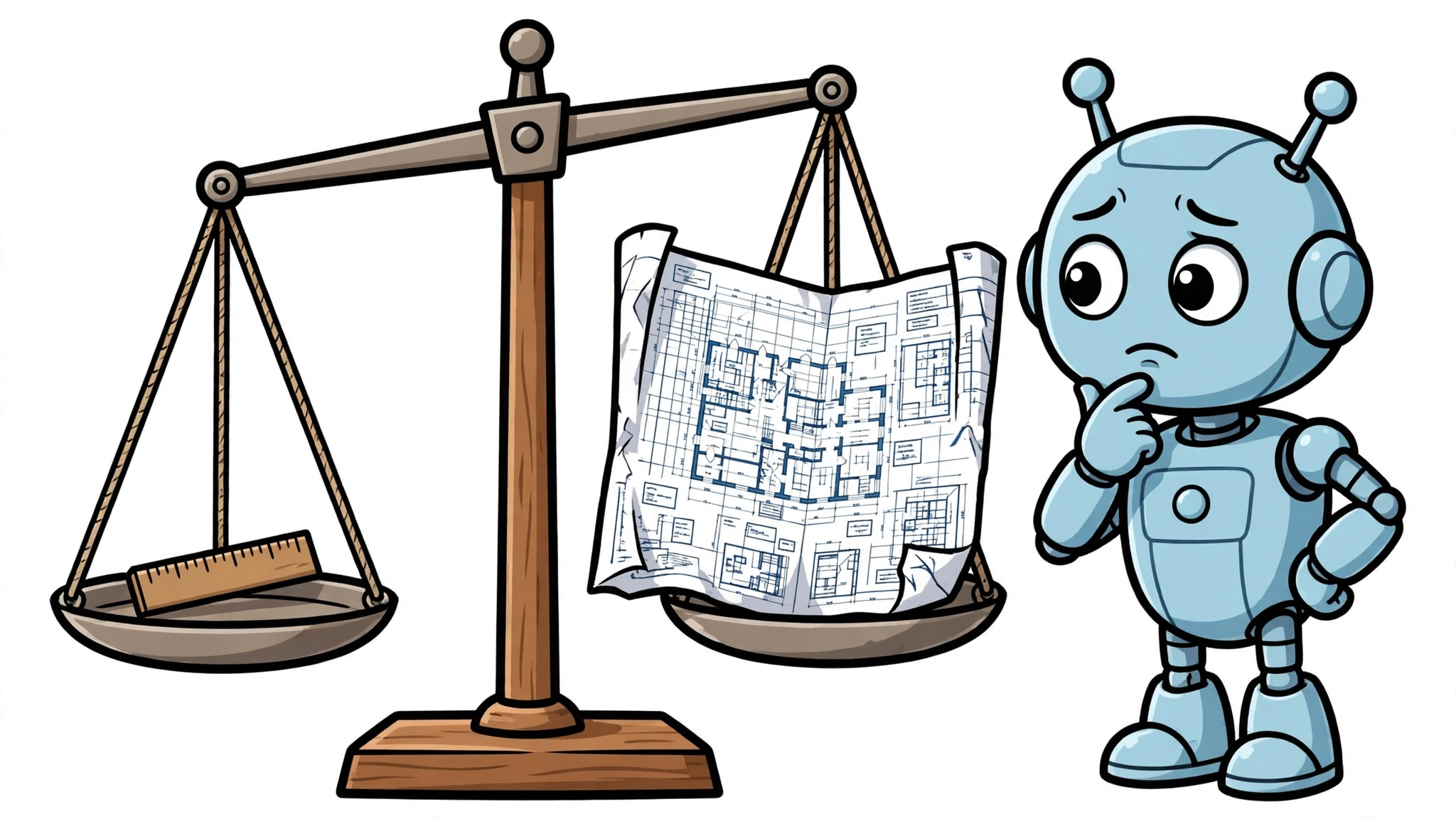
Generating options is only half the decision. The agent must also compare them. A practical comparison weighs the expected outcome against the cost of trying, whether the action can be undone, and the risk if it goes wrong. A cheap, reversible action that gathers information is often worth taking early, even when its direct value is small, because it improves every later decision. An expensive or irreversible action deserves a higher standard of evidence before it is chosen.
There is no single right way to compare options for every task. A simple rule can beat a complex plan when the task is short, well-defined and low-risk. A complex plan earns its keep when the task is long, failure-prone, or depends on information that only appears part-way through. The choice between them is itself a decision, and it should be made on the task’s shape, not on habit.
From a chosen option to an executable plan
A plan turns a chosen option into ordered, checkable steps. Decomposition is the core skill here: breaking a goal into steps where each step has a clear input, a clear action, and a clear way to tell whether it worked. Steps with dependencies must run in the right order, and steps that produce information for later steps must be verified before the plan moves on.
In the plan-execute pattern, this structure is explicit. A planner produces the plan, an executor runs its steps, and a replanner reviews the outcome. The replanner either returns a final response or produces a revised plan built from the original plan, the failed step, the successful results so far, and a reflection on what went wrong. One example implementation caps replanning at three attempts, a safety mechanism that prevents an agent from looping forever on a task it cannot complete. That cap is an implementation choice, not a universal rule, but the principle behind it is universal: every loop needs a limit.
A good plan also carries its contingencies before execution starts. What happens if a search returns nothing? What happens if a tool times out? What is the fallback step, and at what point should the agent stop and ask for help? Answering those questions while planning is far cheaper than answering them in the middle of a failing run.
Executing, monitoring and replanning
Execution is where plans meet reality. The agent runs one step at a time and verifies each result before trusting it. Verification can be as simple as checking that a tool returned the expected shape of data, or as involved as comparing a result against the original goal. A step that cannot be verified should not be treated as complete, because the next step will build on it.
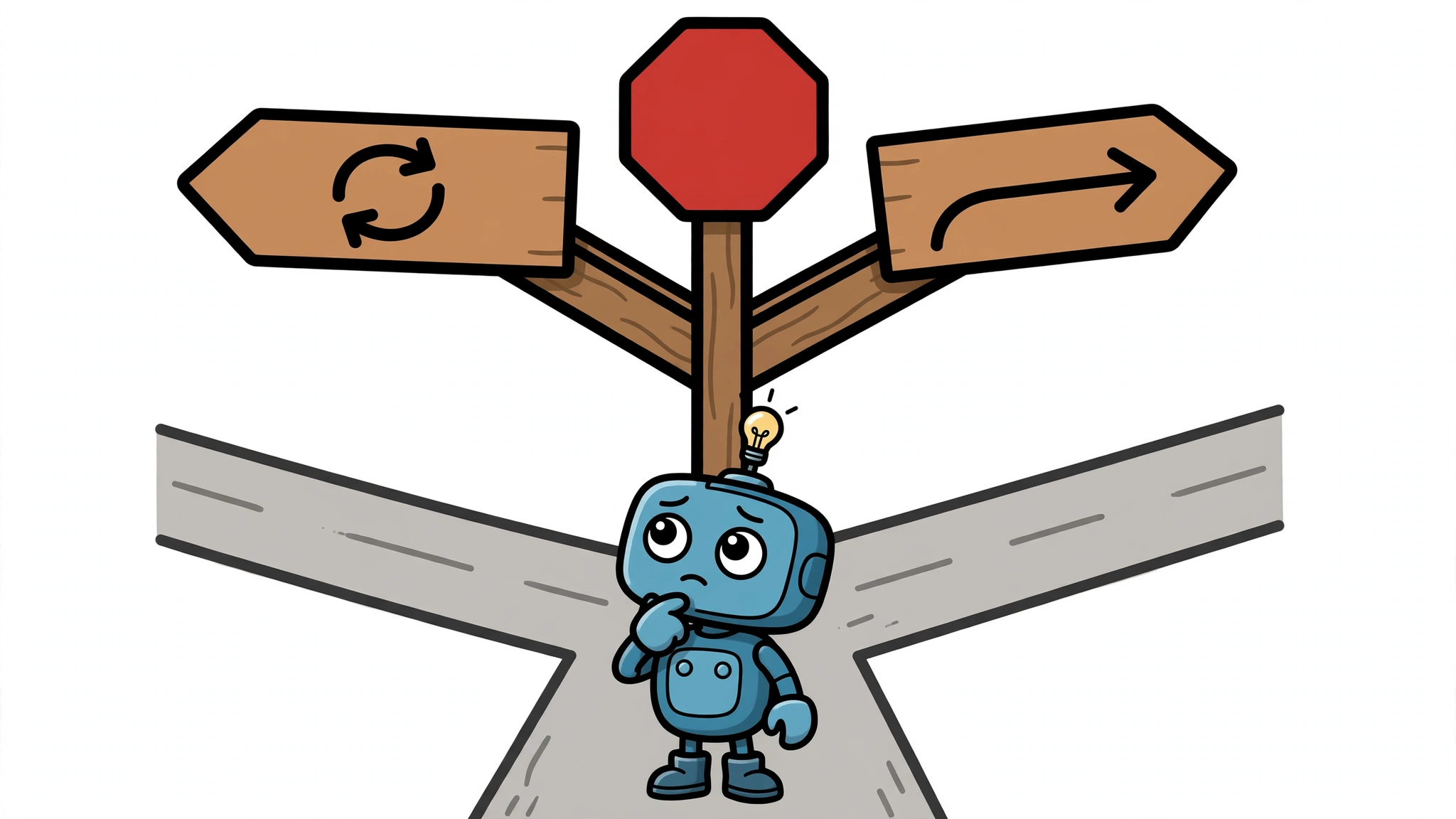
Monitoring is the discipline of watching for the signals that should change the plan. A tool error, an empty result, a result that contradicts an earlier assumption, or a cost that is running ahead of budget are all replan signals. A retry is appropriate when the failure looks transient, such as a timeout. A replan is appropriate when the failure tells the agent something new about the task, such as a missing prerequisite. Stopping is appropriate when the plan cannot proceed safely, when the goal itself turns out to be wrong, or when the next action is irreversible and unapproved.
The distinction between retry, replan and stop is one of the most useful judgements an agent system can encode. Retrying the same failed action again and again, beyond a bounded retry policy and without addressing the cause of a persistent failure, wastes budget. Replanning without checking whether the new plan is actually better wastes time. Stopping without explaining why wastes the human’s attention. Each outcome should be recorded, so the next decision, and the human reviewing the run, can see what happened and why.
A worked walkthrough: ai agent decision planning in action
Consider one clearly illustrative task: preparing a short briefing from three internal documents and one public source, then sending it to a named reviewer. The agent starts by restating the goal and its success criteria: a briefing that covers all four sources, sent to the right person, with nothing sent before the reviewer is confirmed.
Its first decision is to gather information, because the plan cannot be built without knowing what the sources contain. It retrieves the three internal documents and searches for the public source, checking each result before moving on. With the sources in hand, it generates options for structuring the briefing and compares them on coverage, length and risk, choosing the structure that covers every source without inventing anything the sources do not say.
Execution then proceeds step by step: draft, check the draft against the sources, confirm the reviewer, and only then send. If the public source cannot be found, the agent does not silently drop it. It replans: it can note the gap in the briefing, try a different search, or stop and ask the requester whether to proceed without it. If the reviewer cannot be confirmed, it stops before sending, because sending is the irreversible step and the approval condition has not been met. In each branch, the decision, the information behind it, and the next step are all visible.
Limits, failure modes and common mistakes
The loop has real limits, and naming them is part of using it well. Over-planning wastes effort on detail the world will invalidate on the first step. Under-planning leaves the agent improvising on a task that needed structure. Plans built on untrusted or stale data fail in ways that look like reasoning failures but are really information failures.
Loops are the classic failure mode. An agent that repeats a failed action, or that replans without learning from the last failure, burns budget and time. Loop limits, per-step timeouts and a cap on replanning exist precisely to stop this. Another common mistake is acting on unverified assumptions: treating a model’s confident guess as a fact, or treating a tool result as complete when it is only partial.
Finally, the research behind this guide sets a useful benchmark for what the loop can achieve. In the ReAct paper, interleaving reasoning with action improved absolute success rates by 34 percent on the ALFWorld benchmark and by 10 percent on WebShop, compared with the baselines studied. Those numbers describe those benchmarks, not every agent task, but they illustrate the central point of this guide: how an agent decides and plans is not decoration around a model. It is the system that turns a model’s answers into work that can be checked, corrected and trusted.
The oldest definition still fits. Russell and Norvig defined an agent back in 1995 as anything that can be viewed as perceiving its environment through sensors and acting upon it through actuators. Thirty years later, the loop is the same idea with tools attached: perceive, reason, plan, act, observe, and decide again.
Illustrative fragment only, not a working program:
goal, constraints = state.goal, state.constraints
plan = build_plan(first_choice(goal, state))  # ordered, checkable steps
step = 0  # progress through the current plan, kept across iterations
while not done and budget_ok:
    result = execute_step(plan, step)  # one checkable step at a time
    state = observe(result)
    step += 1
    if needs_replan(result):
        plan = replan(plan, result)  # replaces the plan only when needed
        step = 0
    if should_stop(result): break