
Implementing AI agent guardrails is the single highest-leverage step engineering teams take before moving autonomous workflows from local prototypes into live production. When an AI agent holds shell access, browser sessions, or write-capable API tokens, a single prompt injection or reasoning loop can mutate databases, leak secrets, or run up thousands of dollars in compute.
This 2026 reference guide maps out the concrete sandboxing, permission, approval, and observability controls required to enforce reliable AI agent guardrails across coding, browser, and API-calling workflows.

1. The 2026 AI Agent Sandboxing & Permission Matrix
Different agent modalities expose distinct attack surfaces. Use this matrix to match each agent category against its minimum required execution boundary and AI agent guardrails:
| Agent Modality | Primary Blast-Radius Risk | Required Compute Sandbox | Credential & Network Policy | Human-in-the-Loop Gate |
|---|---|---|---|---|
| Coding & CLI Agents | Arbitrary shell execution, secret exfiltration from .env, destructive Git/file writes | Ephemeral microVM or rootless container with read-only base filesystem | No host environment inheritance; egress allowlist restricted to package registries | Mandatory approval for git push, production deploys, and package installs |
| Browser & Computer-Use Agents | Indirect prompt injection via untrusted DOM/emails, unauthorized form submissions or purchases | Isolated headless browser session with fresh profile per task and disabled password autofill | Domain allowlist; strip session cookies across cross-origin navigations | Pause before financial checkout, external message send, or account settings edits |
| API & Enterprise Workflow Agents | Bulk record deletion, privilege escalation, runaway retry loops | Stateless tool-execution worker with strict per-call schema validation | Short-lived OAuth tokens scoped to least-privilege read/write endpoints | Two-phase confirmation for destructive verbs (DELETE, bulk UPDATE, refunds) |
| Multi-Agent Orchestrators | Confused-deputy delegation where a sub-agent inherits parent admin privileges | Per-sub-agent capability tokens; zero shared mutable memory without provenance tags | Token down-scoping at every delegation hop; separate audit identity per worker | Circuit breaker on recursive delegation depth (>3 hops) or token budget spikes |
2. Pre-Deployment AI Agent Guardrails Checklist
Before promoting any autonomous workflow to production, verify each control across your four layers of AI agent guardrails so every tool execution stays bounded:

Layer A: Compute and Filesystem Isolation
- Ephemeral execution environments: Run code execution and browser sessions inside disposable microVMs or containers that terminate and wipe state after task completion.
- Filesystem scoping: Mount project workspaces as scoped working directories; block read access to host SSH keys, cloud credentials (
~/.aws), and system configuration paths. - Resource and timeout ceilings: Enforce hard CPU, memory, and wall-clock execution limits per tool call so hung processes cannot stall worker pools.
Layer B: Identity, Secrets, and Blast-Radius Caps
- No raw secrets in model context: Inject API keys and bearer tokens at the tool-proxy layer rather than passing credentials inside system prompts or tool outputs.
- Scoped, short-lived tokens: Replace static admin keys with task-scoped tokens (TTL under 15 minutes) restricted to the minimum required endpoints—a core requirement when restricting the blast radius of high-privilege agents.
- Egress network filtering: Block outbound HTTP requests to arbitrary external IPs so prompt-injected instructions cannot exfiltrate context data via URL query parameters.
Layer C: Deterministic Tool Guards and Approval Gates
- Schema and parameter validation: Validate every tool argument against a strict JSON schema before execution, rejecting wildcard patterns or unapproved target IDs.
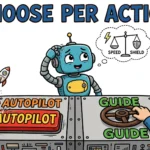
- Action classification tiers: Separate read-only operations (auto-execute), reversible state changes (execute with audit log), and irreversible or external actions (require explicit human approval).
- Hard spend and loop circuit breakers: Cap maximum tool iterations per run (for example, 15 steps) and set hard per-session token and API spend limits to prevent runaway reasoning loops (see our agent token cost management guide).
Layer D: Immutable Audit Trails and Observability
- End-to-end trace logging: Record every prompt, model reasoning step, tool call payload, approval decision, and downstream response with correlation IDs—essential for auditing autonomous agent actions.
- Prompt-injection telemetry: Flag and alert when untrusted external content (web pages, emails, documents) triggers tool-call attempts that deviate from the user’s initial intent.
- Automated rollback hooks: Pair write-capable tools with pre-mutation snapshots or compensating rollback handlers where reversible.
3. Copyable AI Agent Guardrails Policy Template (JSON)
Use this baseline AI agent guardrails configuration as a starting template for your tool-execution proxy or agent harness:
{
  "policy_version": "2026.1",
  "agent_profile": "production-workflow-agent",
  "sandbox": {
    "isolation": "ephemeral-microvm",
    "max_session_seconds": 900,
    "filesystem_mode": "workspace-read-write-only",
    "egress_allowlist": ["api.internal.example.com", "registry.npmjs.org"]
  },
  "budgets": {
    "max_tool_calls_per_run": 15,
    "max_delegation_depth": 2,
    "max_cost_usd_per_session": 2.50
  },
  "tool_gates": {
    "auto_allow": ["search_docs", "read_record", "list_tickets"],
    "require_human_approval": ["delete_record", "send_external_email", "deploy_service", "issue_refund"],
    "deny_always": ["read_env_secrets", "modify_iam_policy", "raw_sql_drop"]
  },
  "observability": {
    "log_tool_payloads": true,
    "redact_pii_and_tokens": true,
    "alert_on_policy_denial": true
  }
}
Frequently Asked Questions About AI Agent Guardrails
Why aren’t system prompts enough as AI agent guardrails?
System prompts are probabilistic instructions that an LLM can ignore when tricked by indirect prompt injection in external web pages, emails, or documents. True AI agent guardrails enforce hard boundaries outside the model—inside the tool proxy, container sandbox, and IAM token layer—so the runtime blocks unauthorized actions even if the model requests them.
What is the difference between sandboxing and human-in-the-loop gates?
Sandboxing restricts where and how an agent executes (for example, an ephemeral microVM with read-only system paths and domain allowlists). Human-in-the-loop gates pause execution before specific high-impact verbs—such as git push, database deletions, or financial transactions—so a human approves the exact payload before it runs.
How do you prevent an AI agent from running up runaway API costs?
Combine three hard circuit breakers in your agent harness: a maximum tool-call ceiling per run (such as 15 steps), a maximum delegation depth for multi-agent sub-tasks, and a hard per-session USD spend cap that terminates execution automatically when reached.
Can engineering teams reuse this AI agent guardrails checklist?
Yes—teams and technical writers are welcome to adapt the sandboxing matrix and JSON policy template above for internal security reviews or architectural documentation with attribution to Agentic Affairs (agentic-affairs.com). For deeper implementation patterns, review the OWASP Top 10 for LLM Applications alongside our guides on how AI agent guardrails prevent destructive actions and how AI agent evaluation frameworks measure reliability.