


Introduction to the 2026 midterm elections and their significance.
The 2026 midterm elections carry two connected stakes for technology policy: how Congress approaches AI regulation, and how it responds to resistance to data centers. The central political question is whether concerns about safety and energy costs translate into a legislative agenda. The evidence identifies those concerns and the political incentives surrounding them; it does not establish election results or a settled policy response.
The Verge’s account of the midterms frames the election as a test of President Donald Trump’s power during his final two years in office and a signal of voters’ priorities ahead of the 2028 presidential election. It expects affordability to define the races broadly, while identifying several technology issues on voters’ minds. Data centers, possible increases in energy costs and AI safety sit within that wider political setting.
That framing matters because it connects AI policy to questions voters can evaluate beyond the technology itself. A debate about AI regulation can involve judgments about safety; a debate about data centers can involve judgments about who bears costs. Those concerns overlap politically, but they are not interchangeable. Support for addressing an energy-cost concern does not, by itself, reveal a voter’s preferred approach to AI safety.
The report expects the next Congress to continue wrestling with AI regulation and the data center backlash. It also says the election will shape that conversation and which technology executives are called to testify on Capitol Hill. Congressional attention is therefore one of the concrete stakes identified in the reporting. Whether that attention produces legislation, and what such legislation contains, remain separate questions.
The available evidence supports an account of the election’s policy stakes rather than a verdict on its consequences. It provides no election returns, detailed legislative proposals or polling breakdowns. Predictions must therefore remain conditional. The useful question is how the concerns and incentives described in the reporting could shape the next debate, without treating an anticipated debate as an accomplished policy change.
Overview of voter concerns regarding data centers and AI.

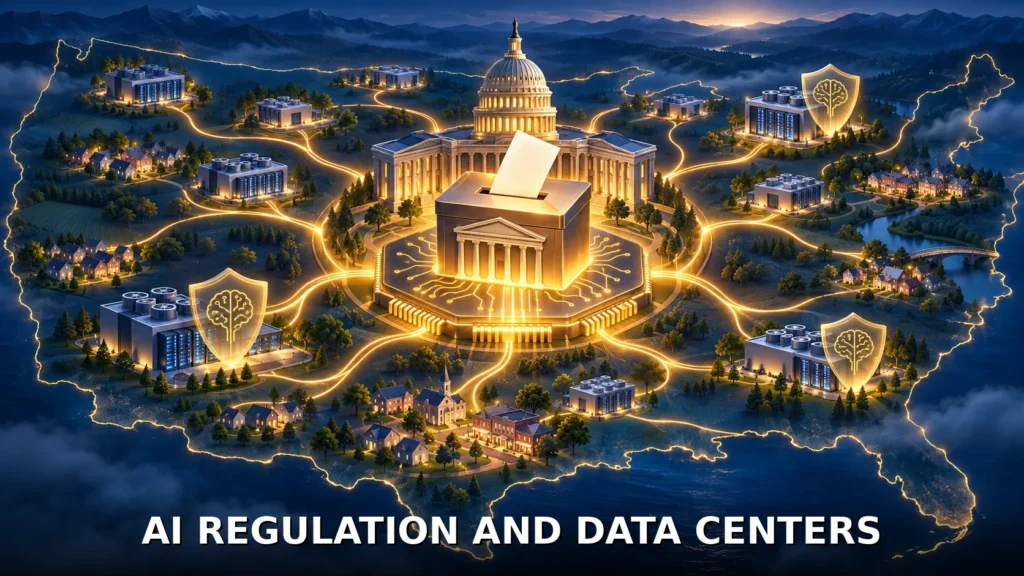
The concerns identified in the reporting span infrastructure, safety and surveillance. Voters are described as concerned about data centers and whether they will bear higher energy costs, alongside AI safety and the expansion of surveillance technology through Flock. The source places these issues in the same electoral landscape, but does not establish that they share one cause or require one regulatory response.
For data centers, the distinction between a feared cost and a demonstrated cost is essential. The report identifies anxiety over whether voters will bear higher energy bills. It does not provide electricity-price measurements, estimates of costs attributable to particular facilities or a comparison of affected communities. The supported finding is that cost concerns are politically salient in the coverage, not that a specific increase has been established or allocated to households.
That qualification does not make the concern irrelevant. As an editorial interpretation, the affordability framing helps explain why data center policy belongs in an election discussion: the question being raised is who pays. But the reporting leaves the answer open. It does not identify a particular arrangement for sharing costs, explain how such an arrangement would operate or show which alternative voters favor.
AI safety is likewise identified as a concern without a detailed account of the risks voters have in mind. There is no basis here for claiming that a particular technical failure, application or model capability dominates the debate. Nor does the evidence describe a specific safety standard that candidates have agreed to adopt. The distinction is between recognition of a policy issue and evidence for a defined policy solution.
Surveillance broadens the picture. The Verge includes the rapid expansion of surveillance technology through Flock among the technology issues attracting concern. That reference shows that its account extends beyond AI models and data center infrastructure. The supplied reporting does not explain Flock’s technical operation or establish a causal connection between its expansion and the other concerns. It should not be used to imply either.
The source also reports that Democrats see a potential political advantage in taking a tougher approach to AI. This is evidence of a perceived electoral opportunity, not proof that voters endorse a particular Democratic proposal. It offers no measured estimate of the advantage, no district-level comparison and no indication of which restrictions would receive support.
Taken together, these concerns suggest an analytical distinction worth preserving throughout the policy debate: identifying public unease is different from identifying a mandate. The report describes reasons for candidates and lawmakers to pay attention. It does not show how voters rank these technology issues against one another, how they weigh them against other affordability questions or which trade-offs they would accept.
Impact of tech billionaire donations on legislative outcomes.
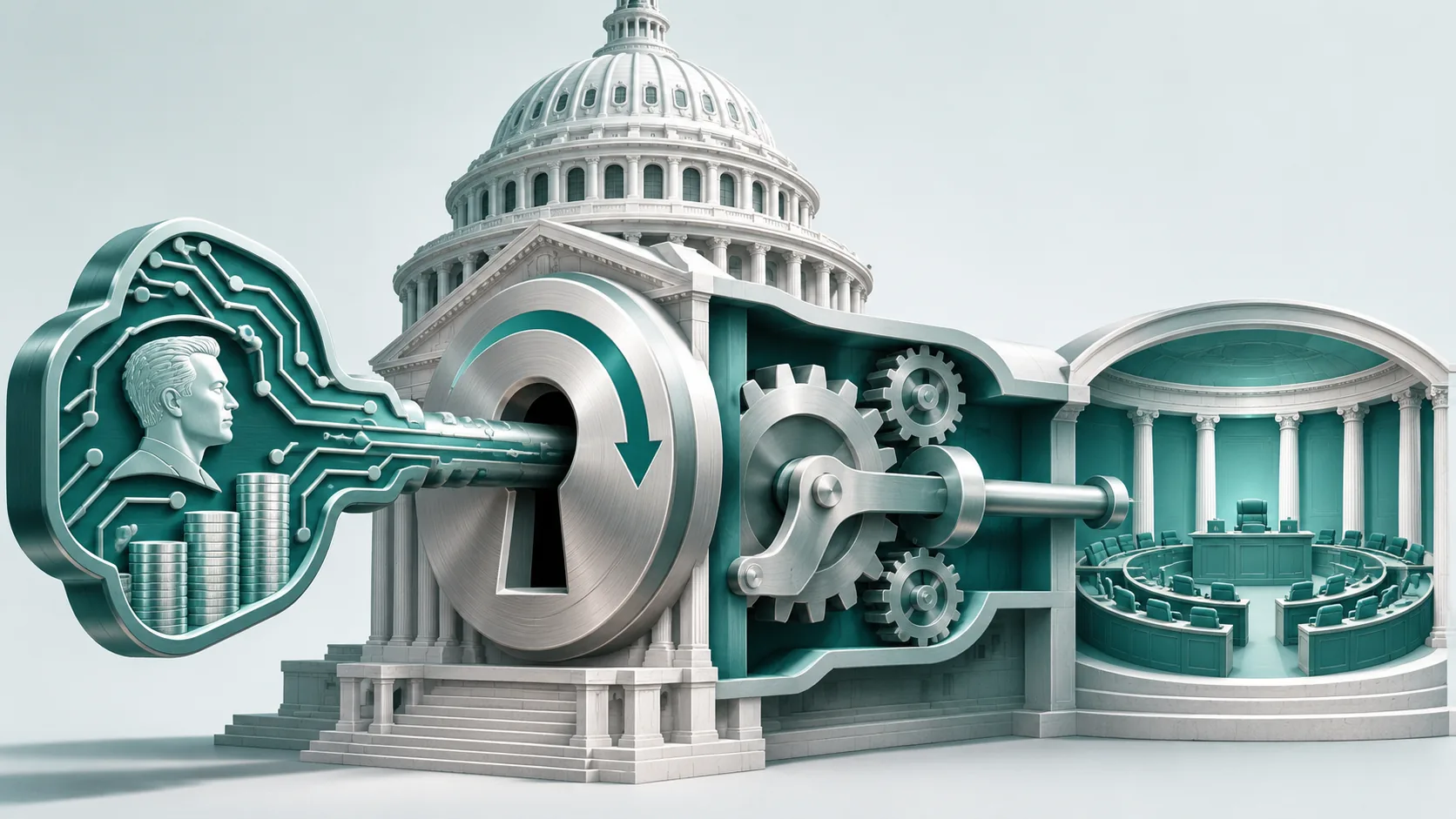
Technology wealth enters this election account through a separate policy fight: taxation in California. The Verge reports that tech billionaires have donated more than $340 million to oppose a wealth tax there. The amount is presented as reported spending, and the subject is a California tax dispute. It is not identified as spending on federal AI legislation or data center regulation.
That distinction limits what can be concluded about legislative outcomes. A substantial sum directed at opposing a tax establishes the scale of the reported financial effort. It does not establish that the effort succeeded, changed a legislator’s position or caused an election result. The evidence contains no such causal finding. Treating donations as proof of policy control would go beyond the reporting.
The California example nevertheless belongs in the broader account because it shows technology fortunes being committed to a political objective. In the same election coverage that identifies concerns about AI and data centers, the report describes a major financial effort over the taxation of wealth. These are different forms of political activity around the technology industry, rather than demonstrated parts of one coordinated campaign.
The source also describes creative stock-class structures intended to keep technology executives from leaving California if a ballot measure passes. This adds a corporate-structuring dimension to its account of the tax fight. But the supplied material does not provide the terms needed to evaluate those structures, their effectiveness or their implications for AI policy. Their presence in the coverage should not become a substitute for those missing details.
For readers assessing the role of tech billionaire donations, three distinctions matter. The stated purpose of spending is one question; its effect on an election is another; its eventual effect on policy is a third. Here, the report provides an amount and an objective for the California wealth-tax campaign. It does not supply the evidence needed to complete the remaining steps.
Nor does opposition to that tax establish a donor’s position on every other technology issue. The article’s evidence does not map the reported contributors onto AI-safety proposals, data center policy preferences or congressional testimony. Inferring those positions from a tax campaign would collapse separate disputes into one unsupported account of industry interests.
The defensible conclusion is narrower: significant reported technology wealth is being used to contest a tax measure during an election cycle in which AI and data centers are also political issues. Whether that spending alters legislation remains unresolved in the supplied evidence. Understanding its influence would require a documented connection between the financial activity, the relevant political decision and the resulting policy.
Predictions for AI regulation and data center policies post-elections.
The clearest forward-looking assessment in The Verge’s reporting is that the next Congress is likely to continue grappling with AI regulation and resistance to data centers. That is an expectation of continued political attention. It does not establish the passage of a law, the content of a regulatory framework or a timetable for action.
The report’s description of Democratic thinking offers one conditional direction for that attention. If Democrats pursue the advantage they perceive in a tougher stance toward AI, scrutiny of the industry could become part of their agenda. The source supports the existence of that perceived opportunity. It does not establish electoral success, a unified legislative program or the ability to enact one.
For data centers, the documented energy-cost concern gives a concrete question around which debate could develop: whether voters will be asked to bear higher costs. A response that claims to address that concern would need to explain what happens to those costs and who bears them. This is an analytical criterion for evaluating a response, not a description of a proposal established by the reporting.
AI safety presents a different unresolved task. Because the evidence does not specify a policy mechanism, it cannot support predictions about particular requirements or restrictions. A pledge to take AI safety seriously would still leave questions about the conduct being addressed and the obligations being proposed. Without those details, the direction of political rhetoric is clearer than the direction of regulation.
The source’s emphasis on which technology executives might testify also points to an outcome short of legislation: a changed congressional conversation. Testimony and scrutiny are among the developments the report says the election could shape. Their significance should be assessed on their own terms, without assuming that a hearing necessarily leads to a binding rule or that a prominent confrontation resolves the underlying issue.
The California tax fight remains a separate uncertainty. Reported spending against a wealth tax cannot establish what Congress will do about AI or data centers. Even within the tax dispute, the available account does not demonstrate an outcome attributable to the donations. Any forecast that joins those events into a single chain of political influence would require evidence absent here.
The election’s significance is therefore best understood through the choices the reporting identifies: how lawmakers respond to AI-safety concerns, how they address the data center backlash and how the congressional debate changes. The evidence establishes reasons those questions may command attention. It leaves the decisive next step open: whether political interest becomes a specific, assessable policy response.