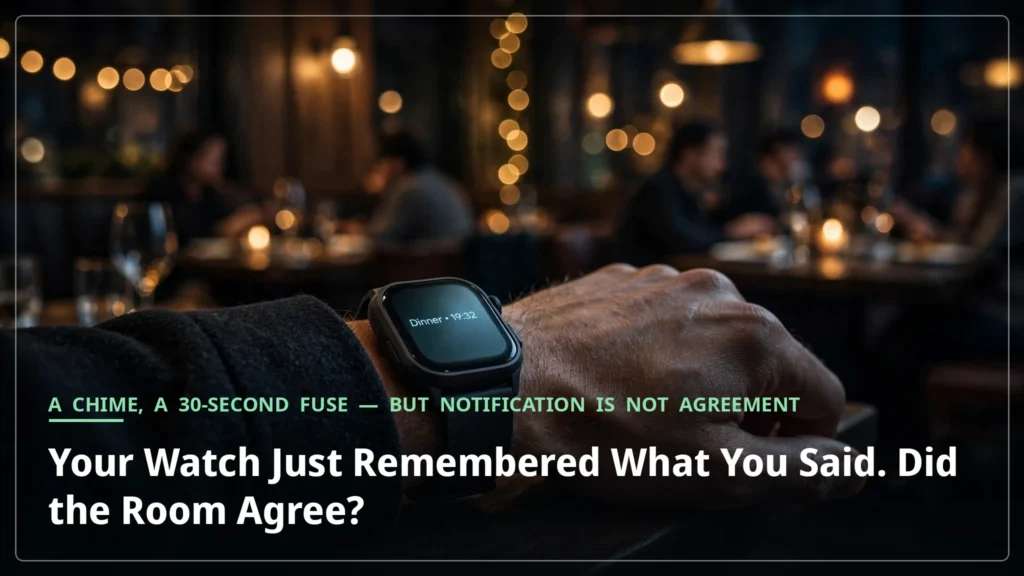



Picture the scene: a waiter is reading out a long list of specials, you missed the third one, and instead of asking him to repeat himself, you double-press the crown of your watch. That is Live Rewind. On the watch face, in text, is what he just said. A chime sounds. An animation plays. And thirty seconds later, if you do nothing, the words vanish for good.
That is Live Rewind, one of two conversation features in Apple’s new Audio Intelligence suite for the Apple Watch, which has just entered developer beta with iOS 27.3 and watchOS 27.3. The other, Siri Recaps, goes further: it listens to your conversations and turns them into short summaries, a sentence and a few bullet points, covering things like dates, deadlines and prices. Both are opt-in. Both are, for now, limited to the Apple Watch Series 12 and Apple Watch Ultra 4, paired with an iPhone 16 or later — not the 16e — running Apple Intelligence.
The watch that takes notes
Audio Intelligence, announced at Apple’s September hardware event, is a suite of four features. Two of them do not listen to conversation: sound recognition, which flags important sounds like sirens, alarms or doorbells for deaf and hard-of-hearing users, and song identification through Shazam. The other two listen to human conversation, and TechCrunch called them the more potentially controversial ones.
Live Rewind is the simpler of the pair. Double-press the Digital Crown and the watch shows the last fifteen seconds of speech as text. Consider when it might come in handy: verbal directions you missed, a fast-paced presentation, or that list of specials. An “Ask Siri” option below the snippet lets you ask about something that was said. Do nothing and the snippet disappears permanently; save it and it goes to the Siri app.
Siri Recaps is the bigger swing. Switch it on — manually, or on a schedule, say only at work, or never at night — and it produces high-level notes of your conversations. Apple says it does not identify speakers, save raw audio, or provide word-for-word transcripts. The recaps are designed to omit sensitive information: government-assigned identifiers, financial and authentication data, certain personal identifiers, and language promoting self-harm. You are prompted to review your saved recaps each day, and again when you first unlock your watch in the morning, and choose which to keep, in Notes or in Journal. Anything untouched deletes itself within seven days.
The machinery of trust
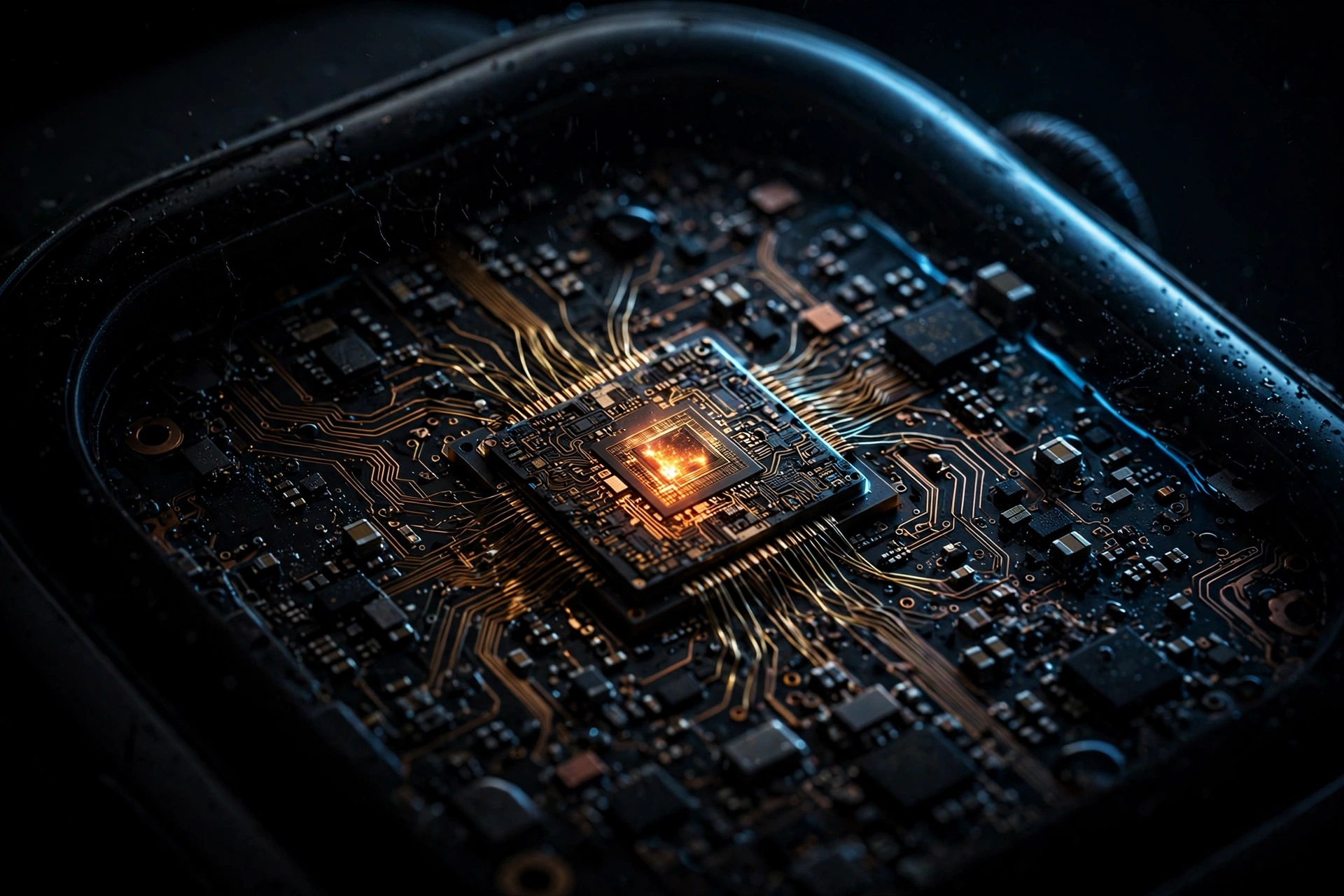
Apple’s pitch for why this is acceptable rests on machinery, and the machinery is genuinely elaborate. Apple describes a staged pipeline: the S11 chip detects whether a conversation the wearer is part of is happening; raw audio is handled in a secure-enclave audio buffer with isolated S11 handling; on-device processing on the paired iPhone turns the audio into condensed text; that condensed text is encrypted and sent to Apple’s Private Cloud Compute to generate the recap. The recap and the summarization material used to create it are deleted from Private Cloud Compute immediately afterwards, Apple says, and the recaps you can access are encrypted when synced between your devices.
Apple also says neither feature creates or stores audio recordings, that the S11 chip processes sound in isolation and then deletes it, and that its operating systems, apps, users and Apple itself cannot access the raw audio. Engadget, covering the beta, noted there are “inevitably going to be privacy concerns around an always-on microphone” — and that is the sentence the whole product has to answer.
Live Rewind’s chime is not consent
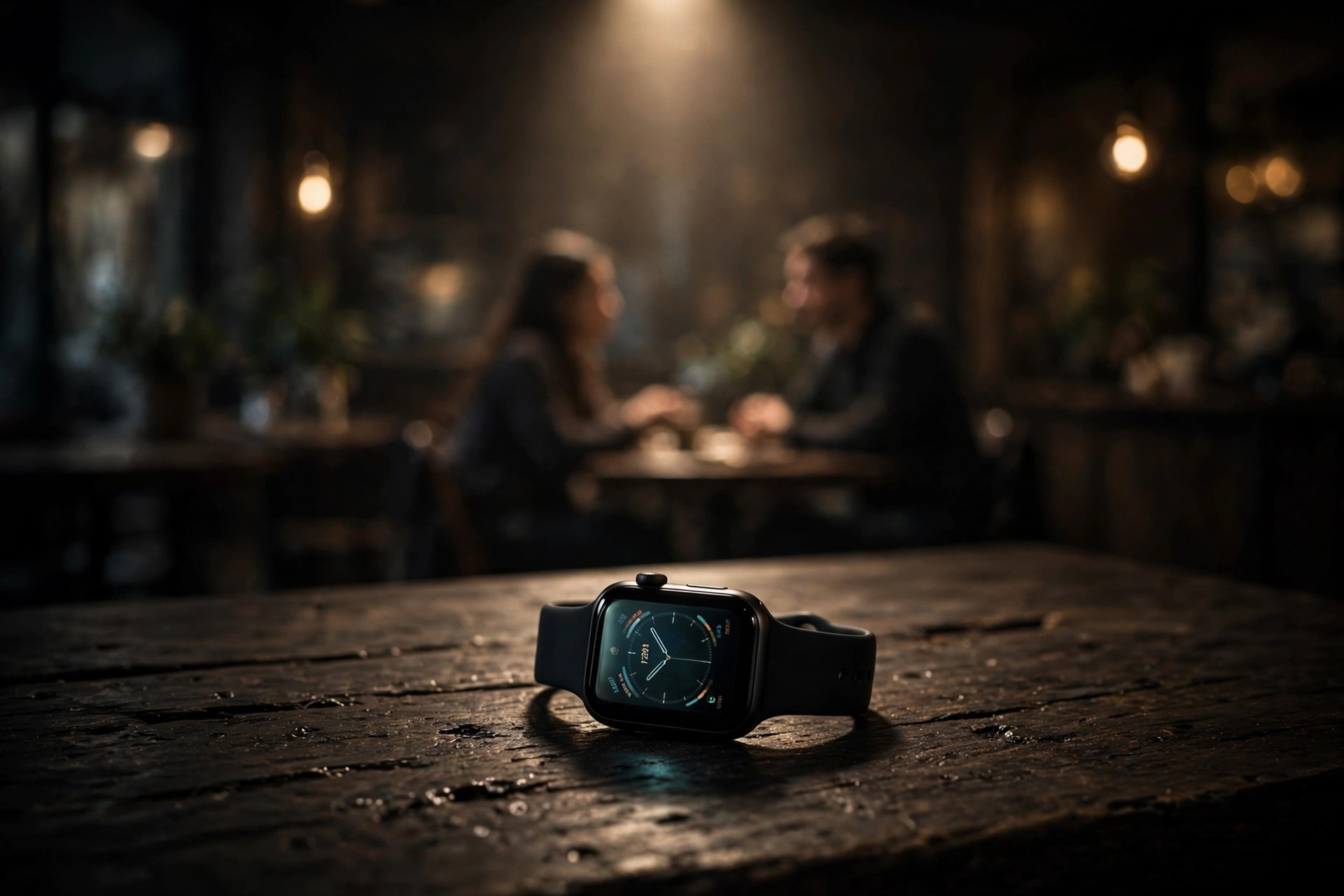
Here is where Apple’s design gets interesting, and where it gets uncomfortable. When you double-press the crown, the watch plays an audible chime and shows an animation plus a microphone indicator — even, Engadget reports, when the watch is set to silent. The combination is meant to signal to people nearby, through the gesture, the sound and the visual display, that something said was recorded.
That is a real design decision, and it is aimed squarely at the recent history of this category. TechCrunch frames it directly: against the backlash to AI recording devices such as Meta’s AI glasses and other AI wearables, Apple has attempted to carve out a space where the features can be useful to Apple Watch owners, while still respecting the privacy of those around them.
But notice what the design does and does not do. The chime sounds when the wearer activates Live Rewind — after the fifteen seconds of speech it retrieves were already spoken. Notification, in other words, arrives after the fact. And the person across the table is not the one who opted in: the wearer did, while bystander agreement is unestablished. The sources do not establish whether a bystander who notices the chime has any way to object, or whether users can independently verify that deletion from Private Cloud Compute really happens. Those are open questions, not settled facts.
There is also the question of whether the signal lands at all. A chime and a watch animation are easy to miss in a noisy restaurant or a meeting. Digital Trends described the idea as either brilliant or mildly unsettling, depending on how you feel about having microphones on your wrist or someone else’s. That unease points at the gap the design leaves open: the documented chime and animation are intended as notification, but notification is not agreement, and whether bystanders notice or understand it is unproven.
The strongest case for the other side
Fairness demands the counter-case, and it is substantial. Compared with silent recording, this design narrows every dimension that matters: retrieval is capped at fifteen seconds, a chime and animation announce the retrieval, unsaved snippets delete after thirty seconds, and recaps carry summaries rather than transcripts or raw audio. Apple has narrowed what is captured, how long it is kept, and what form it takes. That is a genuine reduction in intrusion — and it is not the same thing as bystander acceptance, which remains unproven.
There is also a humane use case that should not be dismissed. They could help in moments like work meetings, parent-teacher conferences and personal training sessions — moments when your hands are full or you need to concentrate on what is being said rather than on writing it down. A watch that remembers the deadline mentioned in passing is, for the wearer, simply a better notebook. The tension is that a notebook never had an audience.
What the beta is really testing
The beta itself is narrow: developers first, a public beta reported as possibly following in mid-December, and no confirmed date for general availability. The features are initially English-only, not available in the EU, and subject to daily usage limits. Those limits will tell us something about how Apple expects the features to be used — and how heavily.
But the deeper question the beta raises is not only technical. It is whether a chime, an animation and a thirty-second fuse are enough to make retrieving someone else’s words feel normal. The design raises a question: can notification stand in for agreement, in rooms full of people whose agreement was never established? Technical reliability, recap accuracy and whether the features ship unchanged remain open questions too.
The watch remembers for you now. The question the beta leaves hanging is whether the room agreed to be remembered — and whether anyone in it even noticed the chime.