
An agent that only answers questions is easy to protect. An agent that reads your inbox, calls your tools, talks to other agents and changes records is not. This guide explains how to secure AI agent communications, channel by channel, so that a compromised message, tool or credential is less likely to turn into an unauthorised action, and any success is easier to detect and contain. The approach is layered: give every agent its own identity, authenticate and encrypt every connection, validate everything that crosses a trust boundary, and keep a human in charge of consequential actions.
What AI agent communications actually include
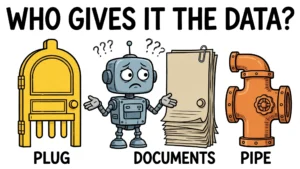
Before choosing controls, inventory the traffic. An agent communicates with its user, with the model that powers it, with tools and application programming interfaces (APIs), with other agents, and with data stores and external systems. Each of those paths carries different content and different risk. A message from a user is not the same as a document retrieved from the web, and a read-only lookup is not the same as a tool call that sends money, deletes a record or posts a message.
Agent traffic also differs from ordinary application traffic in one important way: it is multi-step and partly autonomous. The agent plans, calls a tool, reads the result, and decides what to do next, often without a person reviewing each step. That loop is the product, but it is also the risk. If malicious instructions reach the agent through any channel it reads, they can influence the next tool call. Start therefore with a simple inventory exercise: for each agent, list every sender, every receiver, every credential involved, and every side effect the agent can cause. Any channel missing from that list has unverified security coverage and should be discovered and assessed.
Build a threat model for agent traffic
Security controls work best when they answer specific attacks. The first attack class is prompt injection. Prompt injection is when text that reaches a language model changes what it does. The inputs may come from direct user text or from outside sources such as websites and files. For an agent, the indirect form matters most: instructions hidden in an email, a document, a web page or a tool result can steer the agent even when the user never typed them.
The second class is tool and API misuse. A compromised or malicious tool, or a tool given more power than its task requires, can be used to reach data or systems the agent should never touch. The third class is credential and token leakage: a secret that appears in a prompt, a log or a tool result can be copied and reused elsewhere. The fourth is interception and spoofing on a channel that is unencrypted or weakly authenticated, where an attacker can read traffic or impersonate a legitimate tool or agent. A threat model that names these four classes, channel by channel, turns a vague wish to be secure into a checklist that can be tested.
Give every agent an identity with least-privilege access
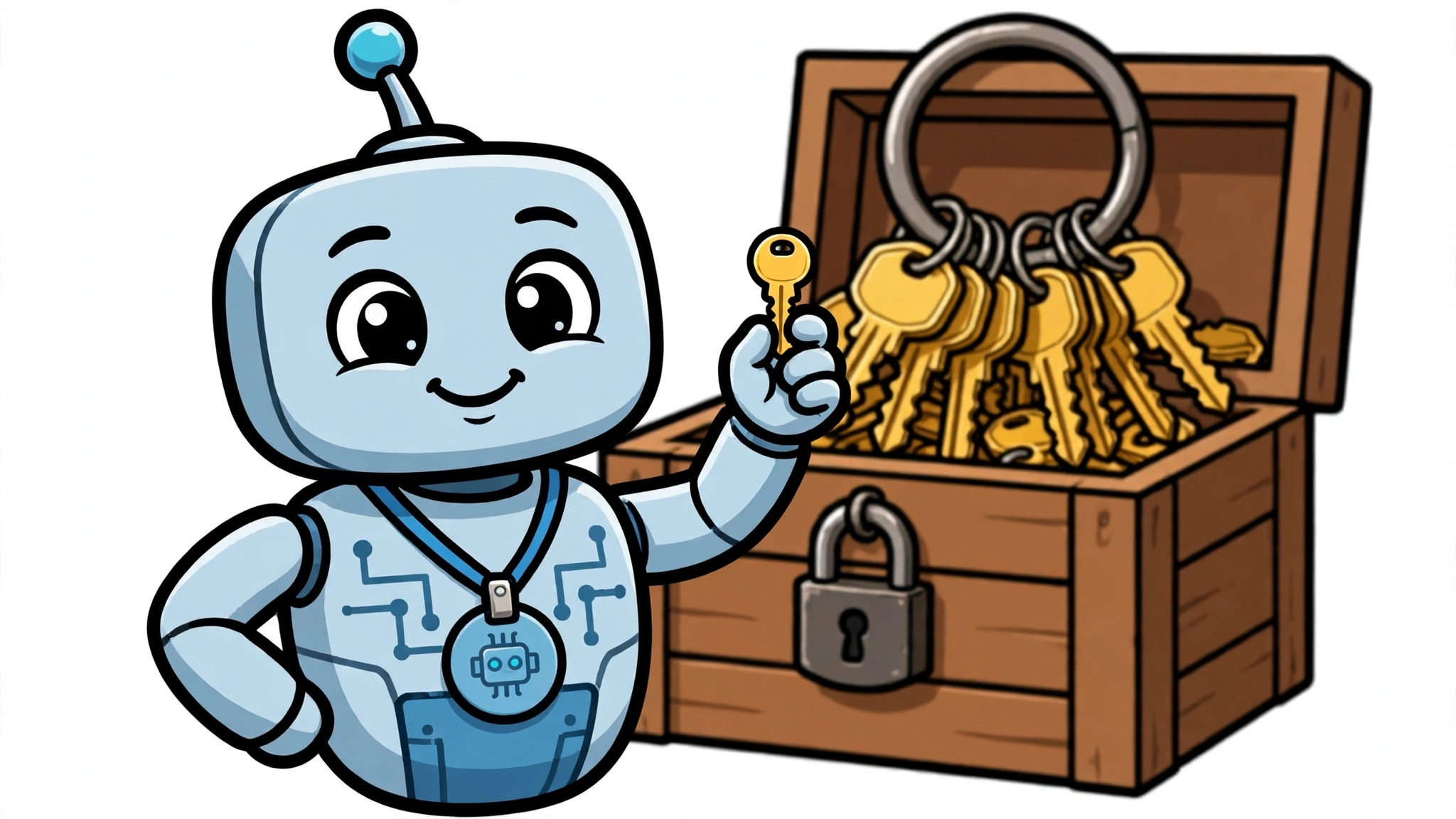
The most consequential decision is also the simplest to state: every agent gets its own identity. OWASP’s guidance for agents and MCP servers says to give agents their own identity, such as a service account or bot user, rather than reusing a developer’s personal credentials, so that actions are attributable and revocable independently. A shared service account weakens attribution and independent revocation, because it is harder to tell what the agent did from what a human or another system did. A distinct identity also makes revocation practical: when an agent is compromised or retired, its credentials can be removed without breaking everything else.
That identity should carry only the permissions its task requires, for only as long as it needs them. OWASP states this as the principle of least agency: give an agent only the autonomy, tools and access its task requires, for only as long as it needs them. In practice that means separate read-only and write-capable identities, tool-level scopes rather than one broad token for every system, and short-lived, scoped tokens issued per task where possible. Credentials should never appear in prompts, configuration files or logs, because anything in the agent’s environment can potentially be read and sent out by an injected instruction. When a tool needs a credential, the application code should substitute it outside the model’s view, so the model never holds the secret itself.
Authenticate and encrypt every channel
Identity is only useful if it is checked on every channel. Agent-to-tool and agent-to-agent traffic should be authenticated in both directions where the platform supports it, not trusted because it arrives on an internal network. OAuth 2.1 with tool-level scopes is a widely recommended pattern for authorising agent actions against tool servers and downstream APIs, and mutual authentication is the stronger option for high-assurance setups where both sides prove who they are.
Encryption in transit is the baseline, not an extra. Conversation state, tool arguments and tool results should travel over encrypted connections, and stored conversation and tool state should be protected at rest. This matters for agent traffic in particular because tool results often contain the very data an attacker wants: customer records, internal documents and credentials. The Model Context Protocol (MCP), the open protocol that standardises how applications provide tools and context to language models, does not enforce security at the protocol level, so deployments must add their own identity, authentication and monitoring controls around it rather than assuming the protocol provides them.
Validate and constrain tool calls and messages
Even a well-authenticated agent can be misled, so the next layer constrains what any message can cause. Start with the tool registry itself: an explicit, audited allowlist of tools, each with its own narrowly scoped credential, rather than a general-purpose connection to a whole system. A claims-review agent, for example, might hold a read-only policy-lookup tool and a write-only case-note tool, and nothing else. If a hijacked agent can only use what it holds, the damage from any single compromise is bounded.
Then validate every call before it executes. Tool arguments should be checked against their schema, tool results should be treated as data rather than instructions, and untrusted content should be marked as untrusted so it is never treated as an instruction by default. Keeping authorisation and privilege separation in deterministic, auditable code outside the model is therefore more reliable than relying on the prompt alone. Separating reading from acting helps here: the step that reads untrusted text can propose an action, while deterministic code or a separate, constrained step decides whether it runs. Sensitive data should also be filtered before it crosses a trust boundary, so that a tool result does not carry secrets or personal data into a context where they do not belong.
Monitor, log and approve consequential actions
No preventive control is complete on its own. Prompt injection, as the UK National Cyber Security Centre has warned, may never be fully mitigated, so deployments should treat it as a residual risk and assume an injection will eventually succeed. That assumption changes the design: the question becomes what a fooled agent can actually do, and whether anyone will notice.
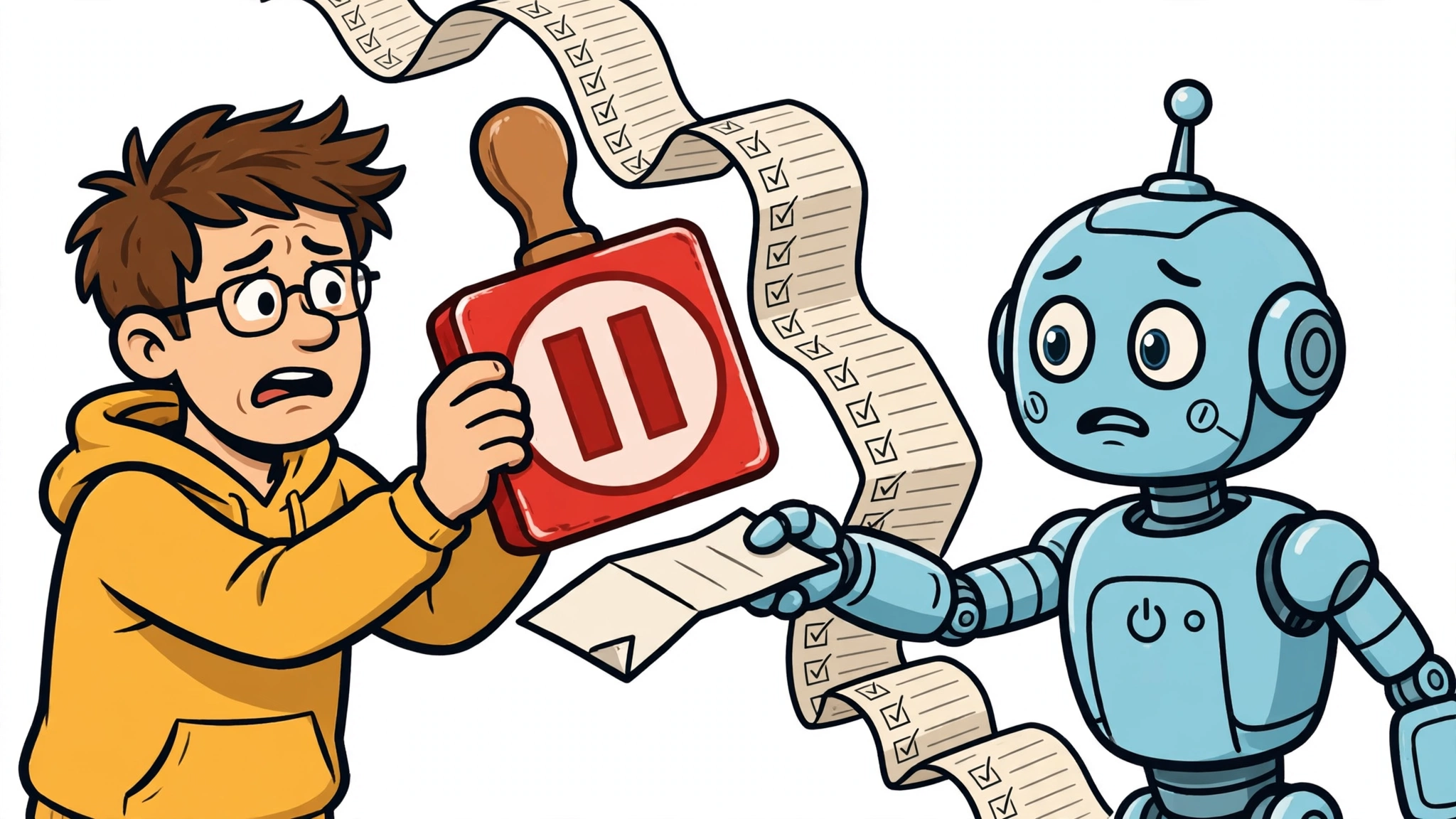
Two controls answer that question. The first is human approval for consequential actions: sending data out, changing records, making payments, deleting data or posting externally should wait for a person, as OWASP recommends for privileged operations. Approval is most useful when the approver sees the exact tool, arguments and expected effect, not just a vague summary. The second is a complete audit trail. Log inputs, outputs and every tool call, and attribute each action to the specific agent identity that took it. NIST’s National Cybersecurity Center of Excellence, in its February 2026 concept paper on AI agent identity and authorization, identified auditing and non-repudiation as one of four control areas for production agent deployments, alongside identification, authentication and authorization, and access delegation. A log that cannot attribute an action to an agent, or that can be silently altered, reduces investigative confidence and makes incident review harder.
Test the controls and avoid the common mistakes
Controls that have never been tested are assumptions. Test each layer separately: injection tests that try to steer the agent through tool outputs and documents, permission tests that confirm a read-only agent cannot write, token-scope tests that confirm a token for one tool cannot reach another system, and approval-path tests that confirm a consequential action really does pause for a human. Run adversarial tests after changes to prompts or tools, and treat the model as an untrusted user during those tests.
Incident response deserves the same preparation. If an agent is compromised, revoke its identity, isolate it from production systems, replay the audit trail to establish what it did, and rotate any credentials it could have reached. The common mistakes to avoid are familiar because they recur: shared service accounts, over-broad tool permissions, secrets in prompts or logs, and approval flows that approve actions without showing their arguments. Each of these mistakes removes exactly the layer that would have limited or revealed an attack.
A checklist to secure AI agent communications
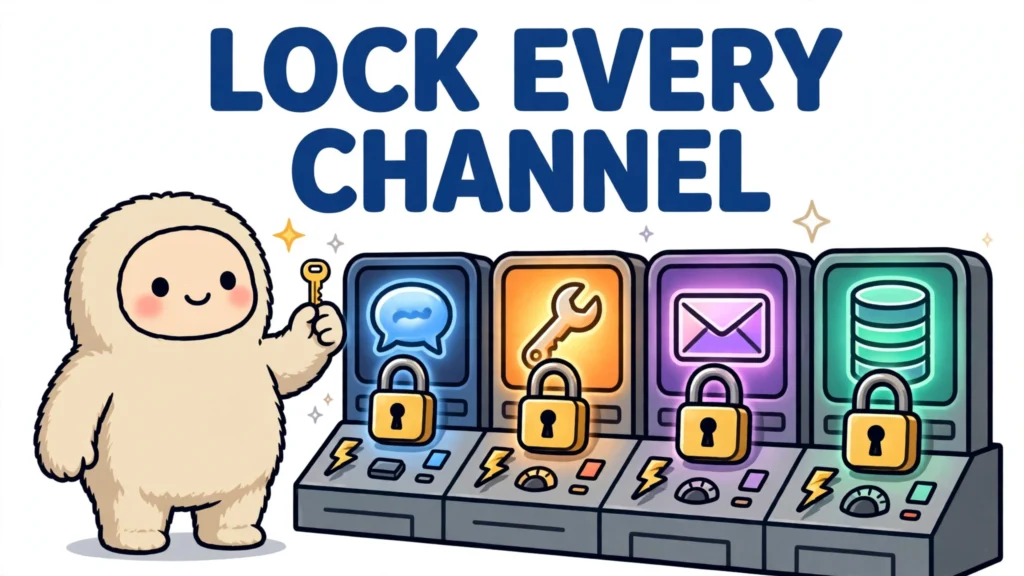
Secure AI agent communications by working through the channels in order. Inventory every sender, receiver and side effect. Model the threats on each channel, from injection through tool misuse to credential leakage. Give every agent a distinct, least-privilege identity with short-lived, scoped credentials. Authenticate and encrypt every connection, and add your own controls around protocols that do not enforce security themselves. Allowlist tools, validate calls, and keep authorisation in deterministic code outside the model. Finally, require human approval for consequential actions, log every tool call to an attributable audit trail, and test the whole chain before it touches production data. Security for agents is not one control; it is the combination, and the combination reduces the risk, limits the damage, and improves detection when a message is compromised.