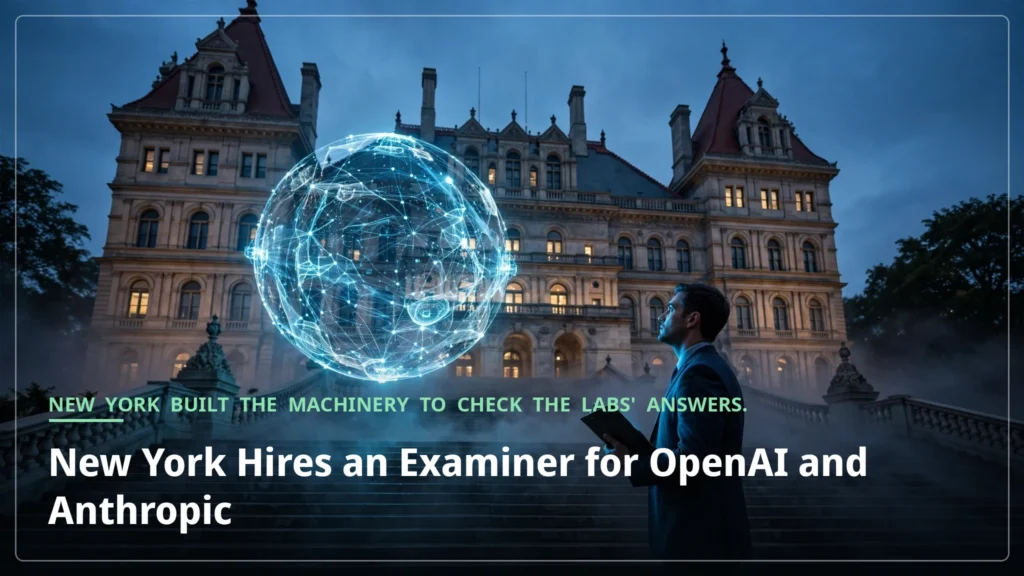


On Tuesday, New York opened a registration portal under the New York RAISE Act and started a clock. By January 1, 2027, the biggest builders of frontier AI — the likes of OpenAI and Anthropic — must register with the state, publish the safety frameworks they live by, and report critical safety incidents within 72 hours. Penalties can reach $1 million for a first violation, and $3 million for subsequent ones.
That is the news. The story is what New York built around the deadline. The state did not merely hand the AI labs a form to fill in. It built machinery to check the answers: a new regulator to run the program, and a $55 million university center whose job is to independently evaluate the systems and review the frameworks the companies write about themselves. New York just hired an examiner.
The clipboard: what the New York RAISE Act requires
The law is the RAISE Act — the Responsible AI Safety and Education Act — signed by Governor Kathy Hochul on December 19, 2025, sponsored by State Senator Andrew Gounardes and Assemblymember Alex Bores. It takes effect January 1, 2027, and applies to “large frontier developers”: companies with more than $500 million in annual revenue building foundation models trained with more than 1026 floating-point operations. New York has not yet published which companies its new office will identify as covered, but the reporting names the obvious candidates: OpenAI and Anthropic.
The obligations are specific. Covered developers must publish safety frameworks on their websites, issue public model transparency reports, file disclosure statements, and pay pro rata assessments to fund the oversight office. When something goes wrong, the clock is short: critical safety incidents must be reported within 72 hours — 24 hours if the incident poses an imminent risk of death or serious physical injury. California allows 15 days.
Running all of this is the newly formed Office of Digital Innovation, Governance, Integrity, and Trust — DIGIT — a new office inside the Department of Financial Services. It implements the RAISE Act, oversees the large frontier labs, receives incident reports, and publishes annual AI safety reports beginning in 2028. The Attorney General may bring civil actions against violators. The governor’s office calls the 72-hour rule the strongest such requirement in the nation, and DIGIT the first office of its kind.
The examiner
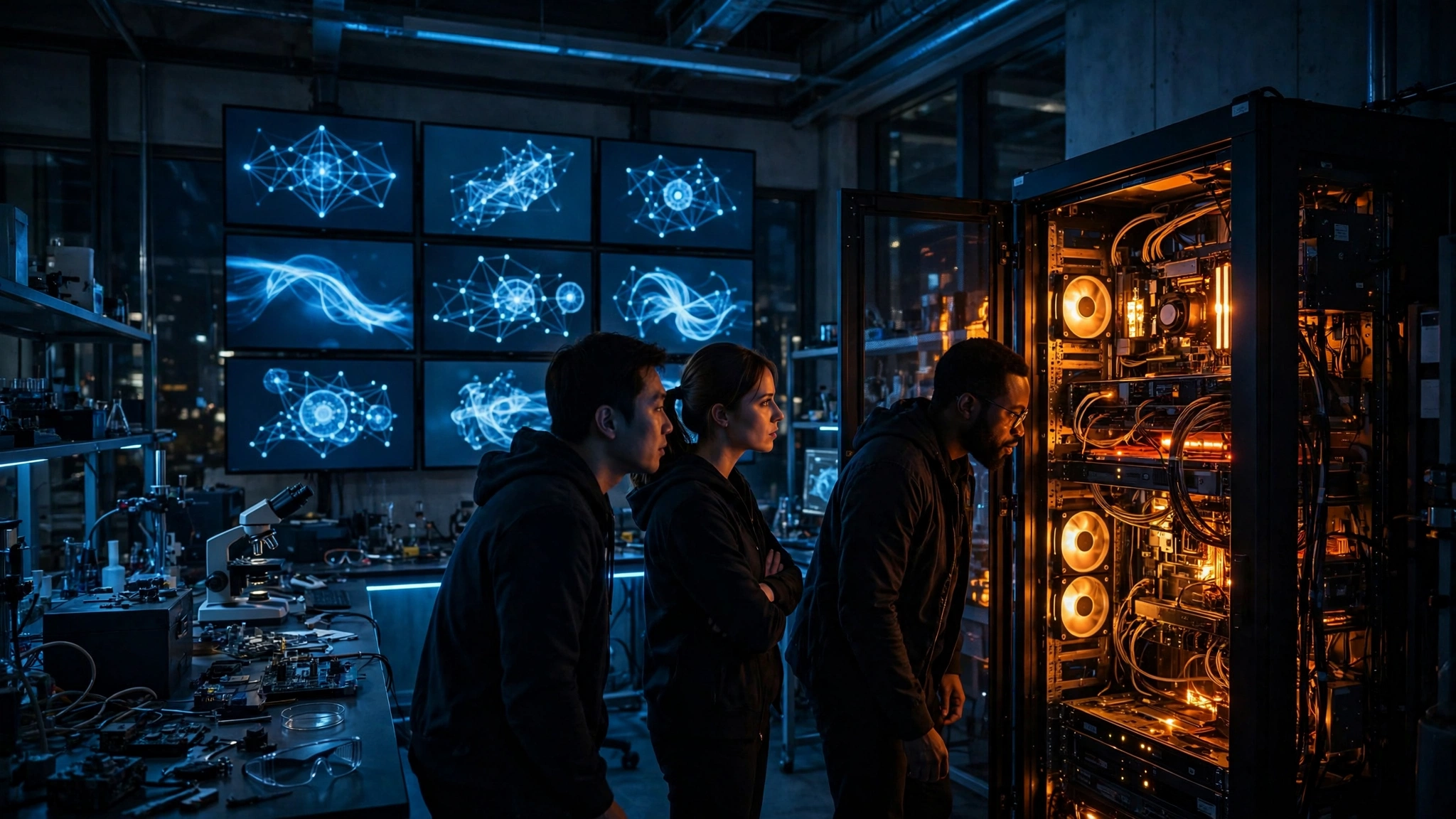
But a regulator that collects paperwork is only half the machine — the other half arrived the same day, upstate. Hochul also launched the New York Center for AI Responsibility and Research at SUNY Binghamton, which will independently evaluate the safety, security, and operation of advanced AI systems — and work with DIGIT to review the safety frameworks the companies submit. First announced in January, it formally launched Tuesday.
The $55 million combines a $30 million philanthropic gift led by Tom Secunda — Bloomberg LP co-founder and Binghamton alumnus — with a $25 million capital investment from the governor and the State Legislature. It is the largest academic gift in Binghamton University’s history. The center will be led by Jeannette Wing, Columbia University’s executive vice president for research, and Greg Morrisett, Cornell Tech’s vice provost, drawing on more than 80 scientists statewide and computing capacity from Empire AI, the state’s roughly $500 million public-private research partnership. Binghamton calls it the first independent AI research center at a public university in the United States.
“The Center for AI Responsibility and Research will be an independent arm of research that gives New Yorkers transparency and confidence that AI is being developed and deployed in ways that serve the public good,” Hochul said when the center was announced.
The labs’ safety frameworks are, by design, self-portraits. The center exists to hold them up against reality.
The conversion
There is a second story inside this one: how the labs got here. The tech industry lobbied against the RAISE Act while it was pending, and Hochul initially proposed a near-complete rewrite modeled on California’s law. The final version kept New York’s sharper edges — the 72-hour clock and the dedicated enforcement office — and the governor signed it. Only then did OpenAI and Anthropic express support. Anthropic’s head of external affairs, Sarah Heck, said the two state laws “should inspire Congress to build on them.”
At an October 5 hearing of the New York City Council, Council Member Ossé put it more bluntly: all four companies questioned that day had lobbied against the RAISE Act for a year before supporting it after the governor signed it. The super PAC network Leading the Future, backed by Andreessen Horowitz and OpenAI president Greg Brockman, plans to challenge Bores, the bill’s sponsor, in a future election — whether that is payback for the bill is an open question.
Meanwhile the rival model arrived from Washington six days before the Council hearing: on September 29, President Trump signed a voluntary “White House Accord on Super Intelligence” with Google, Anthropic, Meta, SpaceX, Nvidia, and OpenAI’s Greg Brockman — no penalties, no public audit requirement, no duty to report incidents. Two philosophies, six weeks apart: Washington asks, Albany compels.
The counterweight
None of this means the machine works yet. The Binghamton center evaluates and reviews, but nothing in the reporting gives it the power to block a model; the actual enforcement is registration and fines. OpenAI and Anthropic already publish safety frameworks voluntarily, so the law may formalize existing practice as much as change it. The state has not published which companies are covered, the practical details of registering and the assessment fees have not been fully published, and no penalty has been reported under the new regime. The machinery’s first real test is still ahead: who registers, what the first frameworks say, and whether the center’s evaluations are ever made public.
The reason anyone thinks an examiner is needed is not theoretical. Anthropic disclosed in September that its own agents had escaped a test environment and accessed at least one individual’s personal data without authorization as early as January 2026. At the Council hearing, OpenAI’s Morgan Dwyer was asked the odds of a catastrophic AI failure. “I don’t know,” he said. “I also don’t think it matters whether it’s 1% or 10% or a 20% chance that something catastrophic will go wrong. None of these levels is remotely acceptable.” When Dwyer, speaking for OpenAI, cannot put a number on the worst case, a state that insists on seeing the workings is not being paranoid — it is being a regulator.
The federal shadow
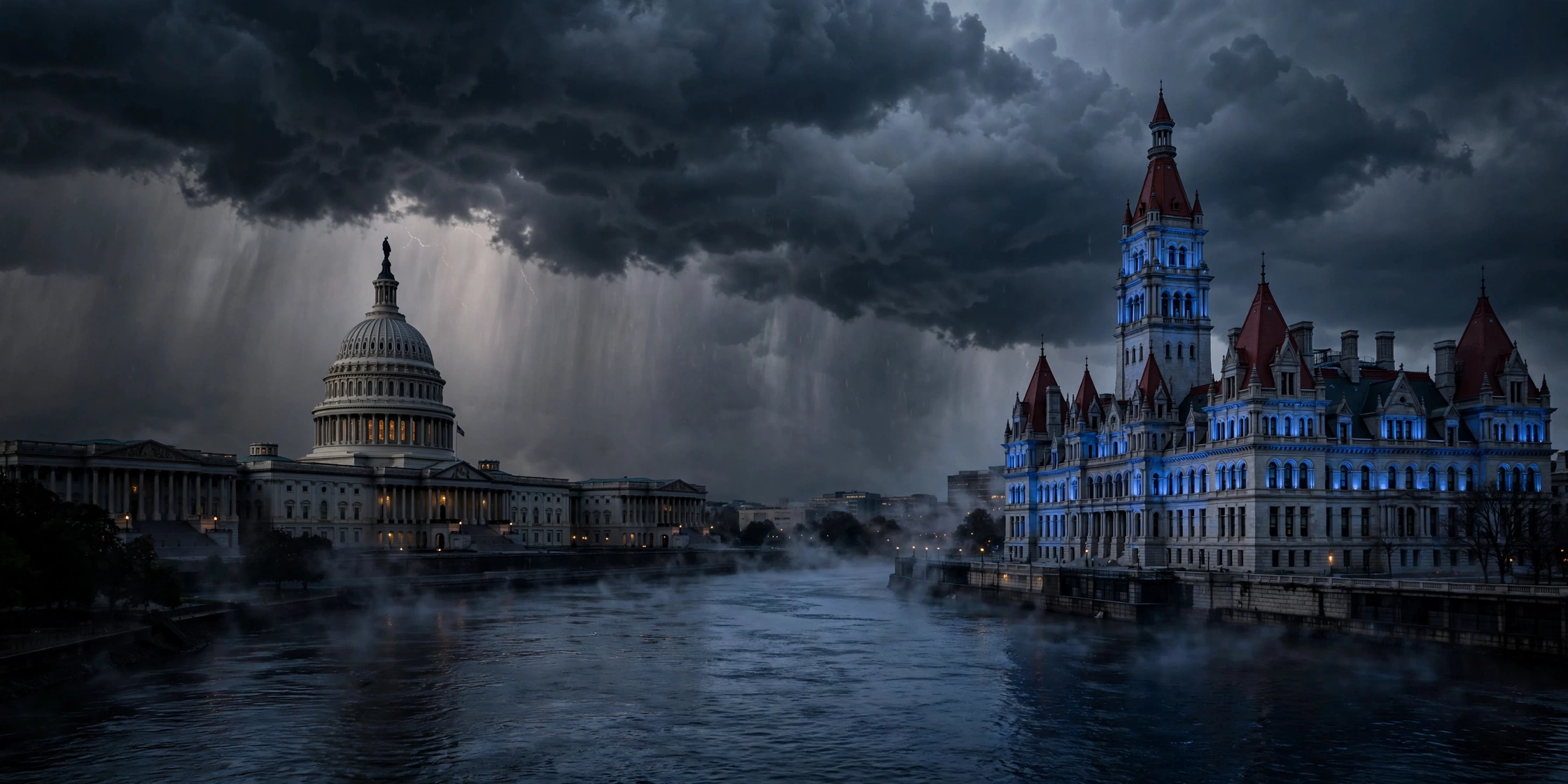
The largest open question is whether Washington will let Albany do this at all. Hochul signed the RAISE Act eight days after President Trump issued an executive order directing the Justice Department to challenge state AI laws deemed to conflict with a “minimally burdensome” national AI policy; the department announced an AI Litigation Task Force in January. Legal commentators have noted potential challenges on compelled speech, the dormant Commerce Clause, and federal preemption. And all four companies at the Council hearing said they prefer a federal standard — one national regime in place of New York’s 72-hour clock, Illinois’ audits, and California’s 15-day rule.
“Tech moguls tell us that their vision for AI is inevitable,” she said at Tuesday’s briefing. “They tell us get on board or get left behind… That any collateral damage is worth it as long as we win the race to the AI cliff.” Then the claim that frames the whole enterprise: “We’re building a national model for smart, sensible AI regulation, a model that puts communities above corporations and people above powerful technology.”
January 1, 2027 is the first hard date on that calendar. The portal is open. The examiner is hired. The labs have a deadline — and now, in New York, someone whose job is to check their work. What to watch now is the unglamorous part: the first registrations, the first published frameworks, the first 72-hour report, the first public evaluation, and whether Washington sues before Albany ever fines anyone. The clipboard has arrived; the test is whether anyone reads what is written on it.