
The cosigner at the top of the stack
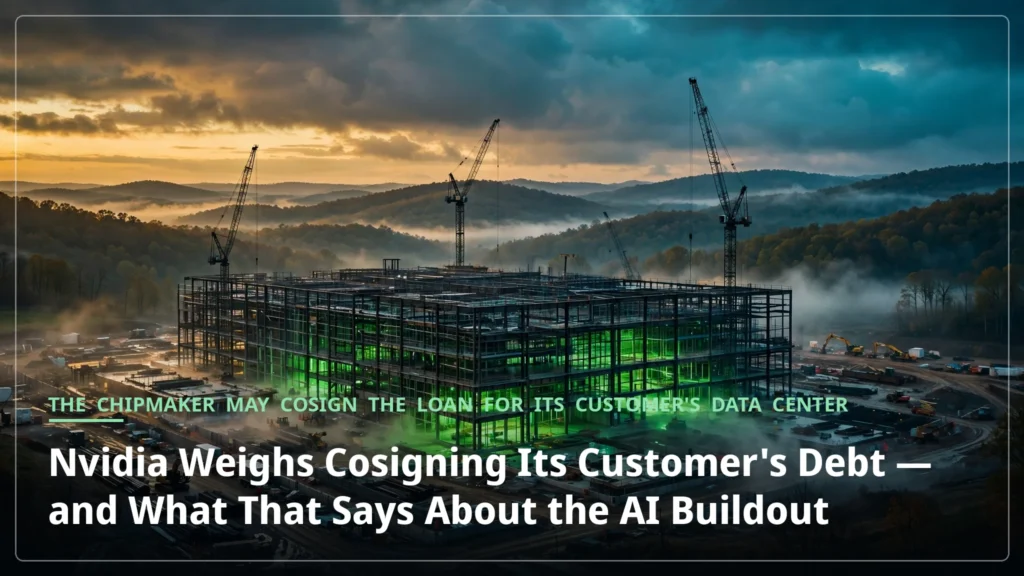
When investors start asking hard questions about AI spending, it helps to have the company selling the chips step in as cosigner on the loan. That, in essence, is the arrangement Nvidia is reported to be discussing with Nscale: the chipmaker would guarantee billions in debt financing for an AI cloud provider’s planned data center in West Virginia, built for Anthropic.
The report, from The Information and later corroborated by Bloomberg, describes talks, not a signed deal. Nothing has been agreed, and the size and terms of any guarantee have not been reported. But the shape of the proposal alone is revealing, because it would move Nvidia’s support for a customer into new territory.
From selling chips to guaranteeing the building
Under the proposed arrangement, known as a residual value guarantee, Nvidia would help Nscale secure financing for the electricity and construction costs of its West Virginia campus. If Nscale defaulted on construction payments, Nvidia would step in, temporarily take over the facility, and help find a buyer and a new tenant, according to The Information.
That is a different kind of exposure from what came before. Nvidia’s earlier support for cloud providers has mostly covered leases and chip purchases, not construction. A lease can be re-let. Chips can be resold. A half-built data center in West Virginia is harder to move, and that is precisely the point of a guarantee: it reassures lenders that someone with a strong balance sheet stands behind the borrower.
The stakes are tied to a very large contract. Anthropic has signed a $44.6 billion contract for the project’s first building alone, according to Nscale’s IPO filing. That first building is 460 megawatts and is expected to use Nvidia’s next-generation Vera Rubin chips. The companies are also discussing a second deal worth roughly $45 billion for another building. For Nvidia, this is not a marginal customer. It is a pipeline for its newest hardware, routed through a company that still has to build the place to put it in.
Why Nscale needs a cosigner
Nscale’s own filings make the financing gap plain. The company had about 25,000 advanced AI chips running in August, a fraction of the nearly 500,000 it plans to deploy, according to the Financial Times via TechCrunch. Its September IPO filing showed that the financing needed for the Anthropic buildout had not yet been secured through binding commitments.
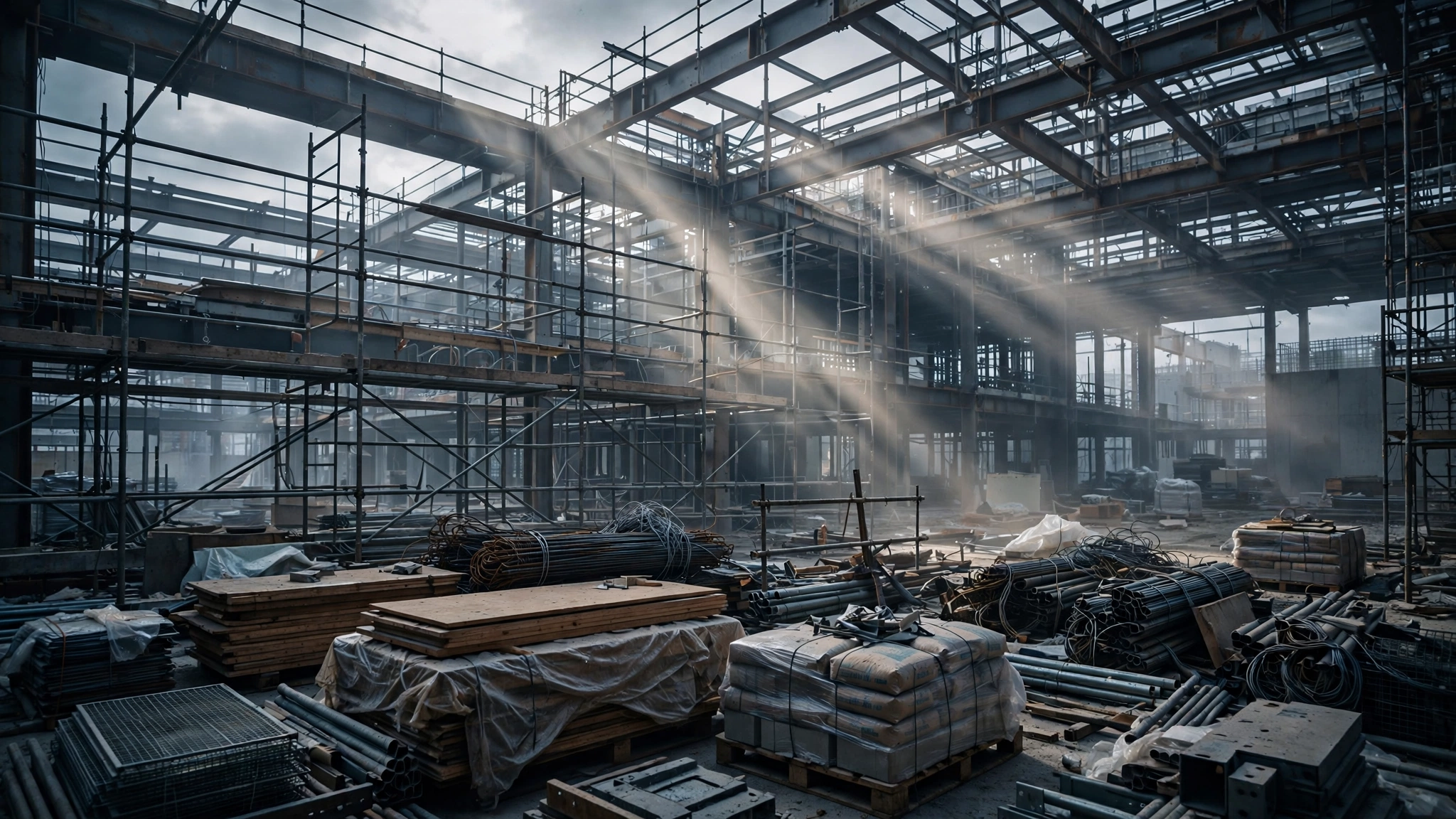
The West Virginia campus, known as Monarch, has had a troubled start. Runoff from the construction site has flooded nearby homes more than once, and the project only won state certification in September after months of negotiations. Nscale is seeking to go public at a valuation of up to $35 billion despite growing concerns about its ability to deliver on ambitious data center projects. And this month, Microsoft pulled out of a planned Nscale site in England after grid power for it was pushed into the 2030s.
None of that means the West Virginia project will fail. It means lenders have reasons to ask for extra reassurance, and a guarantee from Nvidia is about as strong a form of reassurance as this industry can offer.
Why Nvidia might say yes
Nvidia has already become a major financial backer of the sector, extending roughly $170 billion in investments and credit support to neoclouds and large customers, according to The Information. That includes $1 billion in convertible financing committed to Nscale in September. The proposed guarantee would deepen those ties, and it would do so for a customer whose business directly creates demand for Nvidia chips.
One investor told The Information that Anthropic’s involvement likely explains Nvidia’s interest in keeping Nscale’s project on track. That attribution stops short of a confirmed motive. Anthropic has spread its infrastructure spending across multiple chipmakers, and the first West Virginia building is expected to use Nvidia’s Vera Rubin chips. Whether keeping this project moving would benefit Nvidia further is an open question, not an established outcome.
There is also the wider mood to consider. Neoclouds rent out AI computing power. Shares of CoreWeave, Nebius, and IREN had each fallen more than 30% in October as of last week, according to CNBC. Whether that repricing of infrastructure companies has consequences for their suppliers is an open question.
The Anthropic financing question
The discussions also come as Anthropic faces questions about how it will finance its own rapid expansion. The company filed to go public this week, but Blackstone has warned investors that Anthropic may receive a below-investment-grade credit rating after its IPO. A junk rating would raise Anthropic’s borrowing costs and could push it to keep relying on stronger partners to back its debt.
That warning is not a rating decision. No agency has formally assigned Anthropic a rating in the reporting cited here, and Blackstone’s warning is about what may happen, not what has happened. Still, it frames the Nvidia talks in a useful way: in a market where the end customer may borrow more expensively, a guarantee from a stronger balance sheet further up the chain becomes more valuable, not less.
What this is not — yet
It is worth stating the counterweight plainly. A residual value guarantee is a known way to de-risk construction finance, and protecting a major customer for a new chip generation could be prudent commercial risk management rather than a sign of distress. The talks may not close, the terms could change, and the amount at stake is described only as billions. Some secondary coverage, citing industry estimates, puts the support above $5 billion, but that figure is not in the primary report and should not be treated as confirmed.
Anthropic, for its part, has not put all its eggs in one basket. It has spread its spending across multiple chipmakers, so this deal is one leg of a much larger infrastructure strategy, not the whole story. And Nscale’s ambitions remain just that until the buildings are delivered and the chips are running.
What to watch
The next facts to look for are straightforward. Will the talks close, and on what terms? Which building would the guarantee cover — the first 460-megawatt building, a second building, or the wider campus? What would Nvidia actually lose if Nscale defaulted, and how would a takeover and re-tenanting work in practice? And how will Nscale’s IPO investors price a guarantee that has not yet been signed?
If the proposed guarantee proceeds, it would mean that, for this one project, Nvidia’s support for a chip customer extends from leases and chip purchases to cosigning construction loans. Any broader reading — that the pace of the AI buildout generally depends on lender confidence as much as on chip demand — is an inference from this single proposed deal plus falling neocloud shares, not an established fact. But it is an inference worth watching, because the next time a chipmaker cosigns a loan, it will be a little less surprising.