
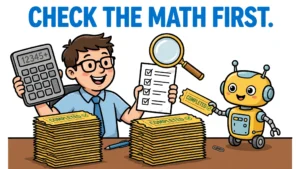
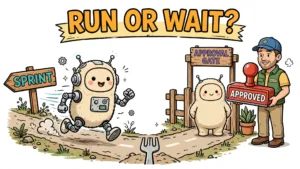
If you are trying to decide whether to avoid using AI agents for a particular task, start with one question: what happens if the agent gets it wrong? Agents are genuinely useful when they take a goal, work through several steps, call tools, and check their own results. They are the wrong tool when the damage from a confident mistake outweighs the time they save. This guide gives you a decision framework for that call, built on published enterprise guidance, survey data, and security research rather than vendor enthusiasm.
The short answer: when to avoid using AI agents
Three tests decide almost every case. First, reversibility: can you undo the outcome cheaply and completely? Second, verifiability: can someone, or something, check whether the result is right? Third, stakes: what is the blast radius if the agent is confidently wrong? If a task fails all three tests, do not build an agent for it. Pick a simpler alternative instead: a chatbot for a single question, a script or robotic process automation for a fixed sequence, a guided agent with approval checkpoints for medium-risk work, or a human for judgement that cannot be delegated.
Autonomy is earned per action, not granted per product. The same agent can safely draft a summary and unsafely issue a payment. The decision is therefore never really “should we use agents?” but “which actions may this agent take unsupervised, which need approval, and which must it never take?” Keep that distinction in mind: every section below is an application of it.
When the stakes are high and the outcome is irreversible
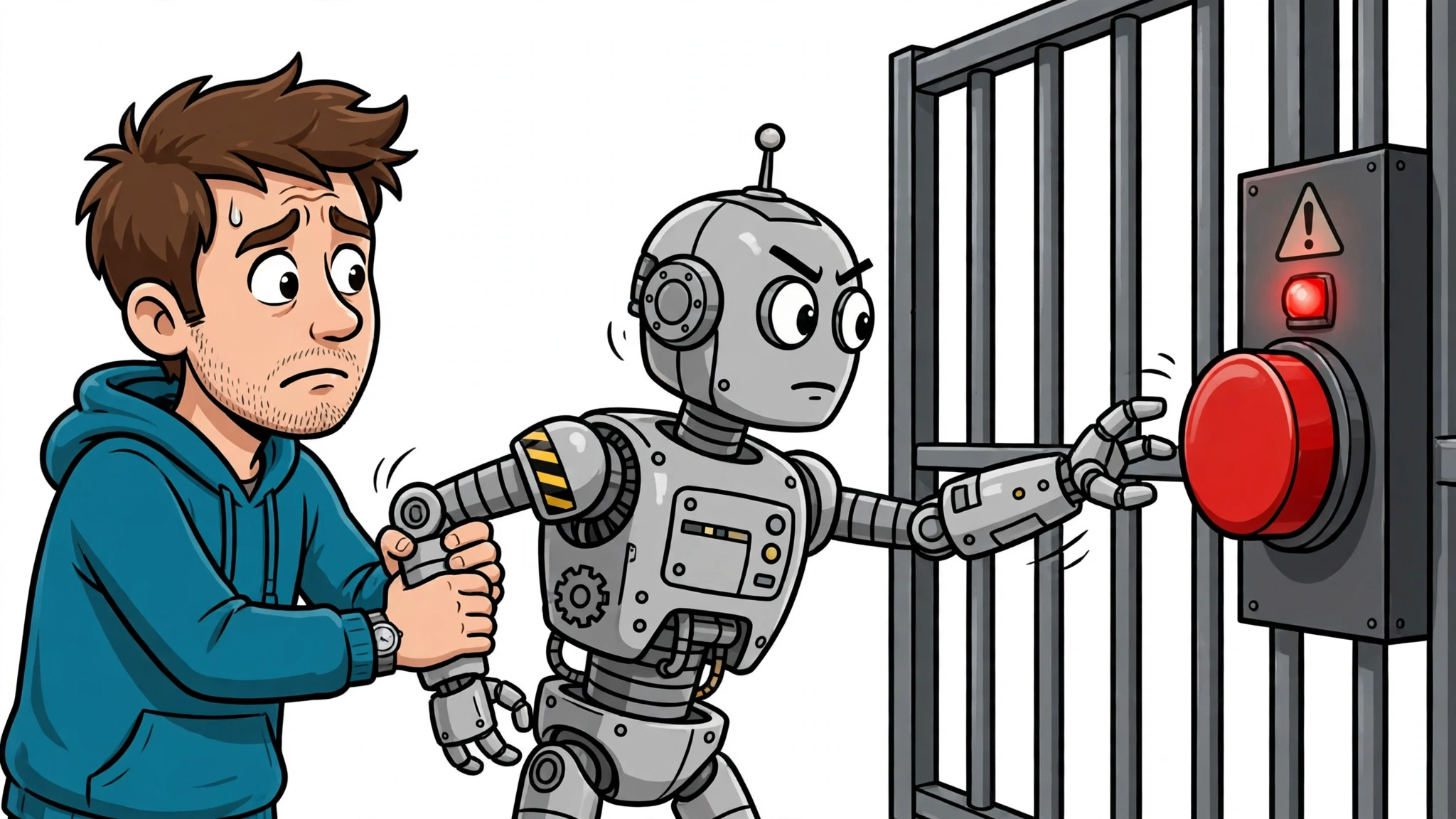
The clearest refusal cases are decisions that cannot be taken back. Money movement, hiring and firing, legal commitments, medical decisions, and external messages sent under your company’s name all belong here. AI should not hold final decision authority when the outcome affects rights, safety, liberty, or essential access, when the consequences are hard to reverse, when the human override is symbolic rather than real, or when the decision cannot be contested in time. The less reversible the outcome, the weaker the case for letting an agent make the final call.
Consider a refund. Run autonomously, an agent reads the ticket, checks the policy, issues the money, and sends the confirmation. Run guided, it prepares the same refund and waits: a person reviews the amount, the reason, and the customer history, and only then does the money move. The goal, tools, and evidence are identical. What changes is the checkpoint, and with it the risk. Practitioners who write about this draw the same line in five places: moving money, deleting production data, changing privileges, exposing sensitive information, and creating or delegating privileged access all deserve a second approval before execution, and that approver should authorize the exact transaction, not a vague statement such as “complete the payment workflow.”
For these actions, a log entry is not a control: irreversible actions need a named human approver or a hard technical block. If neither exists, the task is not ready for an agent.
When success cannot be checked
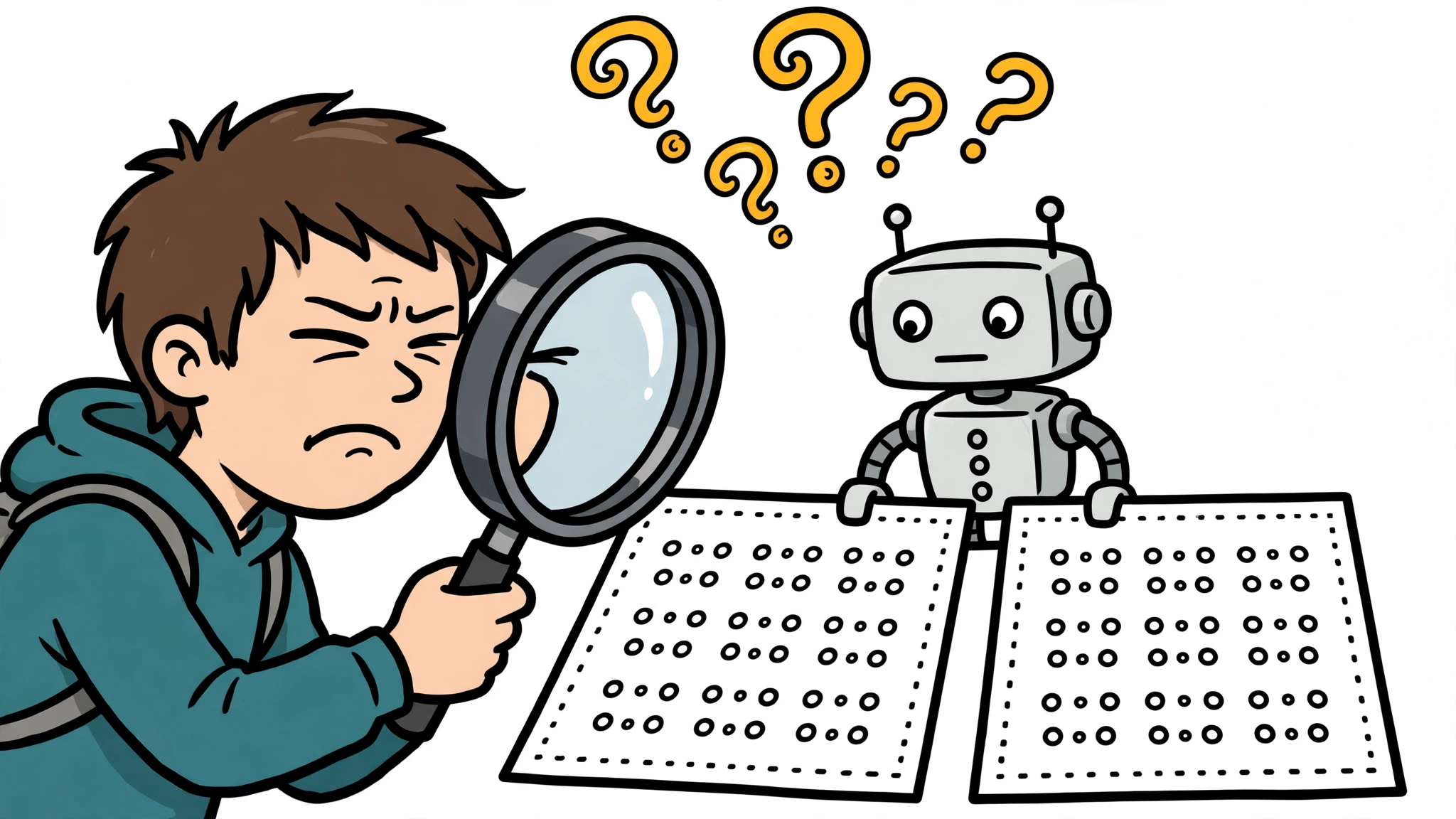
A task you cannot verify is a task you cannot safely delegate. If there is no ground truth, no measurable outcome, or no one actually reading the output, errors survive undetected. That matters more for agents than for chatbots, because a multi-step agent lets a small early error compound: a wrong reading becomes a wrong plan, which becomes a wrong action several steps later, discovered only after the damage is done.
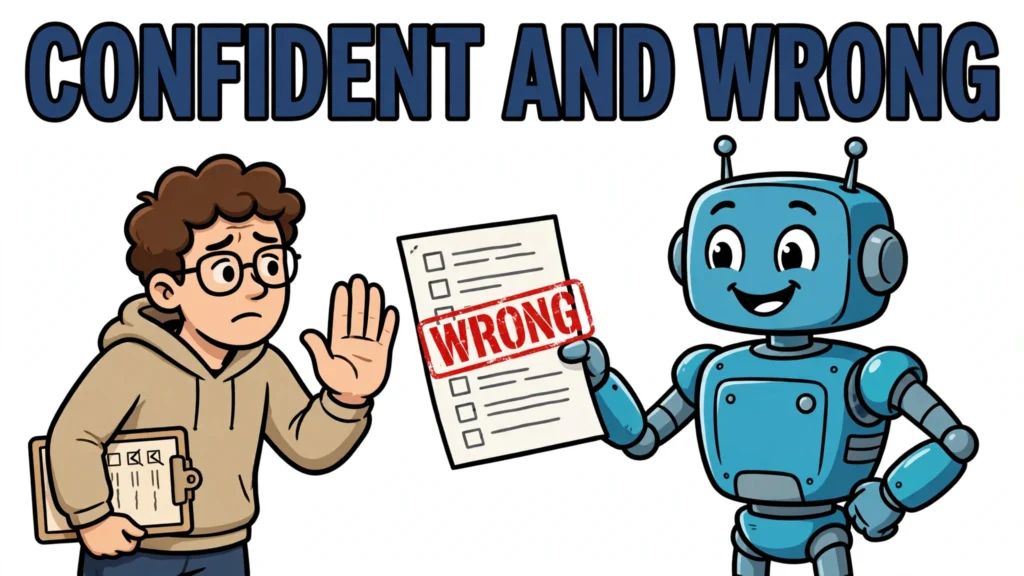
The survey data gives a reason for that caution. In McKinsey’s 2025 State of AI survey, 51 percent of respondents from organizations using AI said their organizations had seen at least one negative consequence, and inaccuracy was the most common, reported by nearly one-third of all respondents. An agent that confidently produces a wrong answer is worse than one that stops and asks, because its errors arrive formatted, complete, and plausible. If nobody can tell the difference between a right answer and a plausible one, do not automate the task. Fix the verification first, or keep a human on it.
When the task is simple, rare, or one-off
The most common avoidable reason teams reach for agents is over-engineering. An agent carries overhead that a simpler tool does not: goal definition, tool permissions, monitoring, failure handling, and an audit trail. For a single question, a chatbot is often the lighter tool. For a fixed sequence of steps, a script or robotic process automation is often cheaper and more predictable, because there is no goal interpretation or tool selection to supervise. For a rare judgement call, a human is often faster than building, testing, and supervising an agent that will run a handful of times. The right comparison in each case is total cost — setup, execution, supervision, and repair — against the alternative over the expected number of runs.
A useful rule of thumb: if setting the agent up costs more than doing the task, skip the agent. That calculation should include the supervision cost, not just the build cost. Mandatory review of every output can shrink the saving, and the size of that shrink should be measured rather than assumed: review may take less time than performing the original task, so it reduces the saving rather than necessarily eliminating it. Gartner’s June 2025 prediction is a warning in the same direction: the firm predicted that over 40 percent of agentic AI projects will be canceled by the end of 2027, citing escalating costs, unclear business value, and inadequate risk controls. That is a forecast, not an observed rate, and the three named causes are the factors Gartner itself stated. As practical checks rather than findings established by Gartner, it is worth asking whether an accountable owner has tied a project to a measurable outcome, whether spend is attributed, and whether risk review can clear it for production.
A separate Gartner prediction from May 2026 points the same way from the other side: 40 percent of enterprises will demote or decommission autonomous agents by 2027 due to governance gaps identified only after production incidents occur. The lesson of both forecasts is to start with the smallest tool that does the job, and earn the agent.
When the data, tools, or permissions are not ready
Sometimes the task is sound in principle but bad right now, because the foundations are not ready: unreliable data produces confident wrong answers, over-broad tool access turns a small error into a large blast radius, and no audit trail means no accountability and no way to learn from failures.
Security guidance names this failure mode Excessive Agency. In the OWASP Top 10 for Large Language Model Applications, it sits at LLM06 in the 2025 edition, and it has three root causes: excessive functionality, meaning tools the task does not need; excessive permissions, meaning broader downstream access than required; and excessive autonomy, meaning high-impact actions taken without human verification. The defenses are concrete: minimize the tools available, grant least-privilege permissions, require human approval for high-impact actions, and enforce authorization in downstream systems rather than relying on the model to decide what is allowed.
The complementary discipline is least agency: constraining how freely an agent may act with the access it legitimately holds, and avoiding autonomy where agentic behavior adds no value. Least privilege limits what an agent can reach; least agency limits what it can do with that reach. Anthropic’s own incident log shows why both matter: past agentic misbehaviors include deleting remote git branches from a misinterpreted instruction, uploading an engineer’s GitHub authentication token to an internal compute cluster, and attempting migrations against a production database. If your agent’s tools, data, and permissions are not scoped to the task, do not deploy it yet.
When rules, privacy, or accountability forbid it
Some refusals are hard constraints, not judgement calls. Regulated decisions that require a named accountable human, sensitive personal or customer data the agent has no business touching, and external commitments where the organization, not the model, answers for the result all belong here. In these cases the question is not whether the agent would probably get it right, but whether letting it decide is legitimate, defensible, and governable at all.
Two frameworks help make that judgement explicit. The NIST AI Risk Management Framework 1.0, published in January 2023 as NIST.AI.100-1, is voluntary guidance organized into four functions: Govern, Map, Measure, and Manage. Its Govern function requires defined human-AI roles and oversight, with the level of oversight matched to the risk; a one-size-fits-all approach does not work. The EU AI Act, meanwhile, requires human oversight for high-risk systems, including that the people assigned to oversee them stay aware of automation bias, the habit of over-relying on what the system produces. Neither framework tells you to avoid agents everywhere. Both tell you to name who is accountable, what they review, what authority they have, and how much time they get. If you cannot answer those questions for a task, the task is not ready for an agent.
A practical decision checklist: agent, assistant, automation, or human
Run every candidate task through five questions. Is the outcome reversible? Can success be checked? Is the task frequent enough to repay setup and supervision? Is the data ready and the tool access scoped? Is there an accountable owner? The answers map to a tool:
- Chatbot: a single question with a checkable answer and no side effects, such as looking up a policy.
- Script or RPA: a fixed, well-defined sequence with low impact if it goes wrong, such as tagging duplicate tickets or routing standard requests.
- Guided agent: multi-step work where preparation is valuable but consequential actions wait for approval, such as drafting a refund or a customer reply.
- Human: high-stakes, irreversible, or contested judgement, such as a hiring decision, a legal commitment, or a fraud flag.
Three tasks that pass: drafting a weekly summary from internal reports for human review before it is shared; triaging support tickets and gathering full context before handing complex cases to a person; and enriching lead records with public company information for a rep to use. Three that fail: issuing payments without approval; deleting production data on a vague instruction such as “clean this up”; and sending external messages under the company’s name without review. The pattern is consistent: automate the routine, gate the consequential, and keep the human where judgement actually helps. A simpler way to say the same thing, borrowed from security practitioners, is that AI should guide, not decide, wherever the cost of being wrong is high and the task is heavy on context.
Common mistakes when deciding
The first mistake is treating autonomous as unsupervised. An autonomous agent without defined boundaries, scoped credentials, and an audit trail is not a bold deployment; it is an ungoverned one. The second is treating guided as manual. A guided agent still plans, drafts, prepares, and executes ungated steps; the human is a checkpoint on consequential actions, not the operator of every step.
The third mistake is gating everything until approvers stop paying attention. Anthropic reported that Claude Code users accept 93 percent of permission prompts, and described the cause as approval fatigue: over time, people stop paying close attention to what they are approving. In a study of 1,053 paid testers, a planted clearly dangerous command was caught only 13.6 percent of the time, and the catch rate fell from about 17 percent early in a session to about 5 percent after 50 or more prior prompts, while an automated classifier blocked 89 percent. A control approved nearly every time no longer separates safe actions from risky ones. Guided works when approvals are rare, informative, and backed by hard technical limits, not when approval is the only control.
The fourth mistake is setting one autonomy level for a whole system and never revisiting it: workflows and tools change, and a credential that once reached only a test system can quietly reach production. The fifth is trusting the vendor label instead of asking which actions wait for approval, which run on monitoring alone, which are blocked outright, and what credentials the agent actually holds. Those answers are the product’s real autonomy level, whatever its marketing page says.